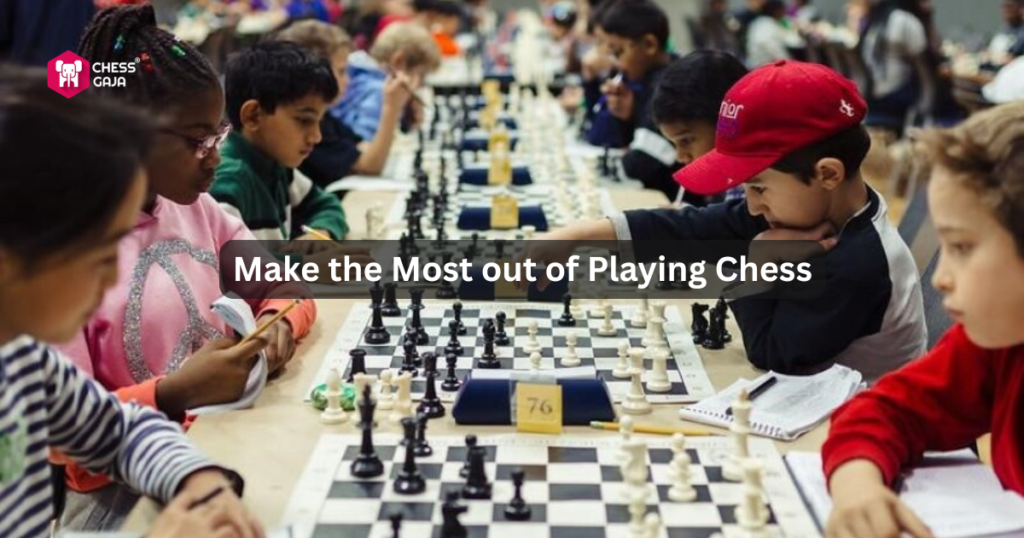
Chess is one of the most ancient and royal strategy games played around the world — a tradition that has elevated minds from the courts of kings to the classrooms of today.
Chess was originally designed to extend the strategic capabilities of rulers and strengthen decision-making — qualities just as vital on today’s competitive stage. Whether you’re guiding a child’s development or sharpening your own mind, chess benefits extend far beyond the 64 squares of the board. According to the FIDE (Fédération Internationale des Échecs), chess is now recognized globally as a tool for cognitive and social development.
As a grown-up, playing chess teaches abstract thinking, analytical reasoning, and the discipline to critically evaluate every move. For children, it is one of the most powerful brain development games available — free of screens and full of substance. Scientific American has highlighted how strategy games like chess directly stimulate neural pathways responsible for planning and problem-solving.
Key benefits of chess for children & adults
Chess builds patience
When children begin learning chess, they discover a world that rewards stillness and thought. Each move demands waiting, weighing, and resisting the impulse to act without reason. Over time, this cultivates deep, enduring patience — a life skill that extends well beyond the board. Research cited by Psychology Today links delayed gratification training — exactly what chess provides — to improved academic and social outcomes in children.
Chess = Patience
Chess teaches time management
As players progress through structured chess training, they learn to make thoughtful decisions under time pressure. Chess trains children in conscious planning, prioritization, and limiting distraction — all cornerstones of strong time management skills that serve them in school and beyond.
Chess = Time Management
Chess sharpens concentration
- Staying focused during play is essential — every move requires strategic calculation against your opponent. Studies published in peer-reviewed journals (PubMed) confirm that chess improves attention span, visual memory, and reasoning ability. At Chess Gaja Academy, our programs are specifically designed to build this kind of deep, disciplined concentration in every student.Chess = Concentration
Chess soothes anxiety
Playing chess daily helps manage anxiety and unstable emotions. As a healthy brain-stimulating sport, chess encourages calmness and composure — helping players stay grounded under pressure. The World Health Organization emphasizes the importance of structured mental activity for emotional regulation — making chess an ideal daily habit for both children and adults.
Chess = Soothe Anxiety
Does chess increase IQ? Yes — here’s why.
There is a long-standing question: do intelligent people play chess, or does chess make them intelligent? The answer is both. Playing chess at a structured level has been shown to improve memory power and increase IQ. During a game, a player must hold the positions of all pieces in mind, recall past patterns, and project future moves — building a uniquely powerful form of working memory and strategic intelligence. A landmark study by Education Week found that students who played chess scored measurably higher in math and reading assessments.
Chess improvement does not happen overnight. Consistent practice, guided by an expert mentor who has made the journey earlier, accelerates progress dramatically. That is exactly what Grandmaster Priyadharshan Kannappan — FIDE Trainer and founder of Chess Gaja — brings to every student’s journey.