
Last week, one of our students at Chess Gaja asked why he kept easily solving tactical puzzles but losing actual games. The answer lies in understanding chess strategy vs tactics.
Most players focus heavily on tactics while neglecting strategic principles. This creates an imbalanced approach that limits improvement and leads to frustrating losses against weaker opponents.
As Grandmaster Priyadharshan Kannappan, FIDE Trainer and founder of Chess Gaja Academy, I have seen countless real‑game examples of strategy versus tactics, and in this article I will help you clearly understand the difference between them.
What Makes Chess Strategy Different
Chess strategy builds long-term advantages that accumulate over 10 to 20 moves rather than seeks immediate tactical wins. While tactics solve problems in 2 to 5 moves, strategic thinking shapes the entire game through positional understanding and careful planning. The strongest players combine both elements, but beginners who master strategic principles first often outperform those who rely solely on tactical pattern recognition.
Control of Central Territory
Strong strategic players control key central squares like e4, e5, d4, and d5 because pieces placed here influence the entire board. Magnus Carlsen demonstrates this principle consistently and often places knights on these squares early in the opening to restrict opponent options. Weak squares in your opponent’s position become permanent targets for your pieces. Advanced players identify these squares within the first 10 moves and systematically occupy them with pieces that cannot be easily displaced.
Pawn Structure Analysis
Pawn chains determine piece mobility and attack patterns for the entire game. Isolated pawns become weaknesses that require constant defense, while doubled pawns often create open files for your rooks. The Carlsbad pawn structure features White’s pawns on d4 and e3 opposed by Black’s on d5 and c6, appearing frequently in Queen’s Gambit games. These formations help you plan piece placement 15 moves ahead rather than move pieces randomly.
Piece Coordination Principles
Strategic players coordinate their pieces to work together toward common goals rather than develop them independently. Rooks belong on open files where they can penetrate the opponent’s position, while bishops need long diagonals to maximize their range. Knights perform best on outposts near the enemy king or on squares that cannot be attacked by pawns. This coordination creates pressure that forces opponents into passive positions and sets up tactical opportunities that flow naturally from superior positioning.
How Do Chess Tactics Actually Work
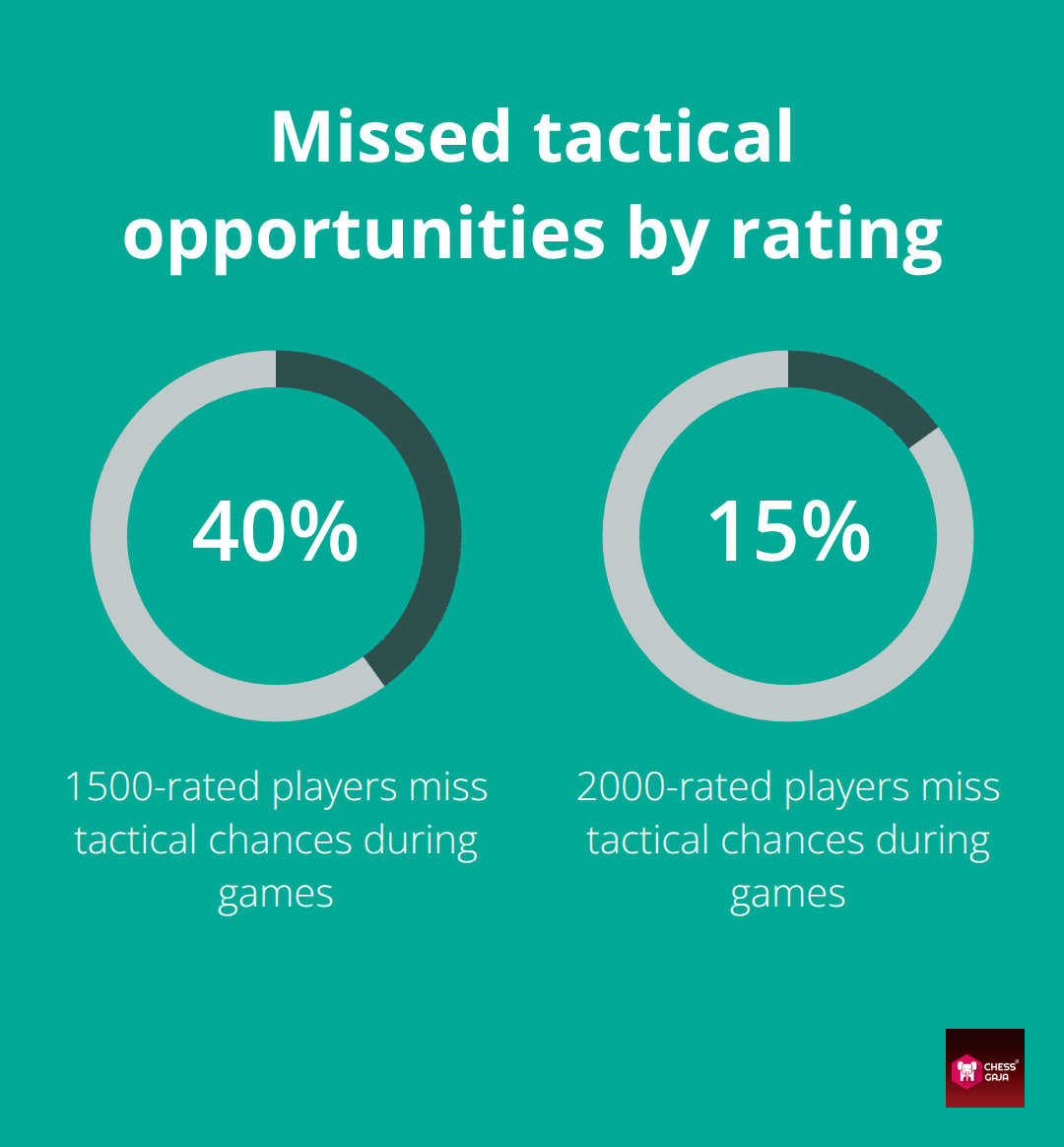
Chess tactics demand precise calculation within 2 to 5 moves and focus on immediate material gain or positional advantage. Research from Chess.com shows that players rated 1500 miss approximately 40 percent of tactical opportunities during games, while those rated 2000 miss only 15 percent. The difference lies in pattern recognition speed and calculation accuracy under time pressure.
Master the Five Essential Tactical Patterns
The five most powerful tactical motifs appear in 85 percent of winning combinations according to studies of master games. Pins restrict piece movement when they threaten a more valuable piece behind the target.

Forks create simultaneous attacks on multiple pieces that opponents cannot defend adequately. Skewers force high-value pieces to move and expose weaker pieces behind them.
Removing defenders eliminates protection from key pieces or squares, while discovered attacks reveal hidden threats when pieces move. Players who drill these patterns for 20 minutes daily improve their tactical rating by an average of 150 points within three months (based on Chess.com training data).
Perfect Your Calculation Technique
Successful tactics require systematic calculation rather than intuitive guesswork when patterns appear. Start with checks, then examine captures, and finally consider threats in that specific order. This method prevents you from missing forced sequences that decide games immediately.
Calculate all opponent responses before you commit to tactical sequences, especially moves that force replies. World Champion Magnus Carlsen shifts into deep calculation mode during tactical sequences, which demonstrates that accurate calculation trumps speed in practical play.
Choose the Right Moment to Strike
Grandmaster games show that 70 percent of tactical combinations succeed when preceded by 3 to 4 preparatory moves that improve piece coordination. The strongest tactical players wait for opponents to create weaknesses through poor piece placement or compromised king safety.
Watch for moments when your opponent’s pieces lack coordination or when their king position becomes vulnerable. These situations create the perfect conditions where strategic preparation meets tactical execution.
When Should You Think Strategically vs Tactically
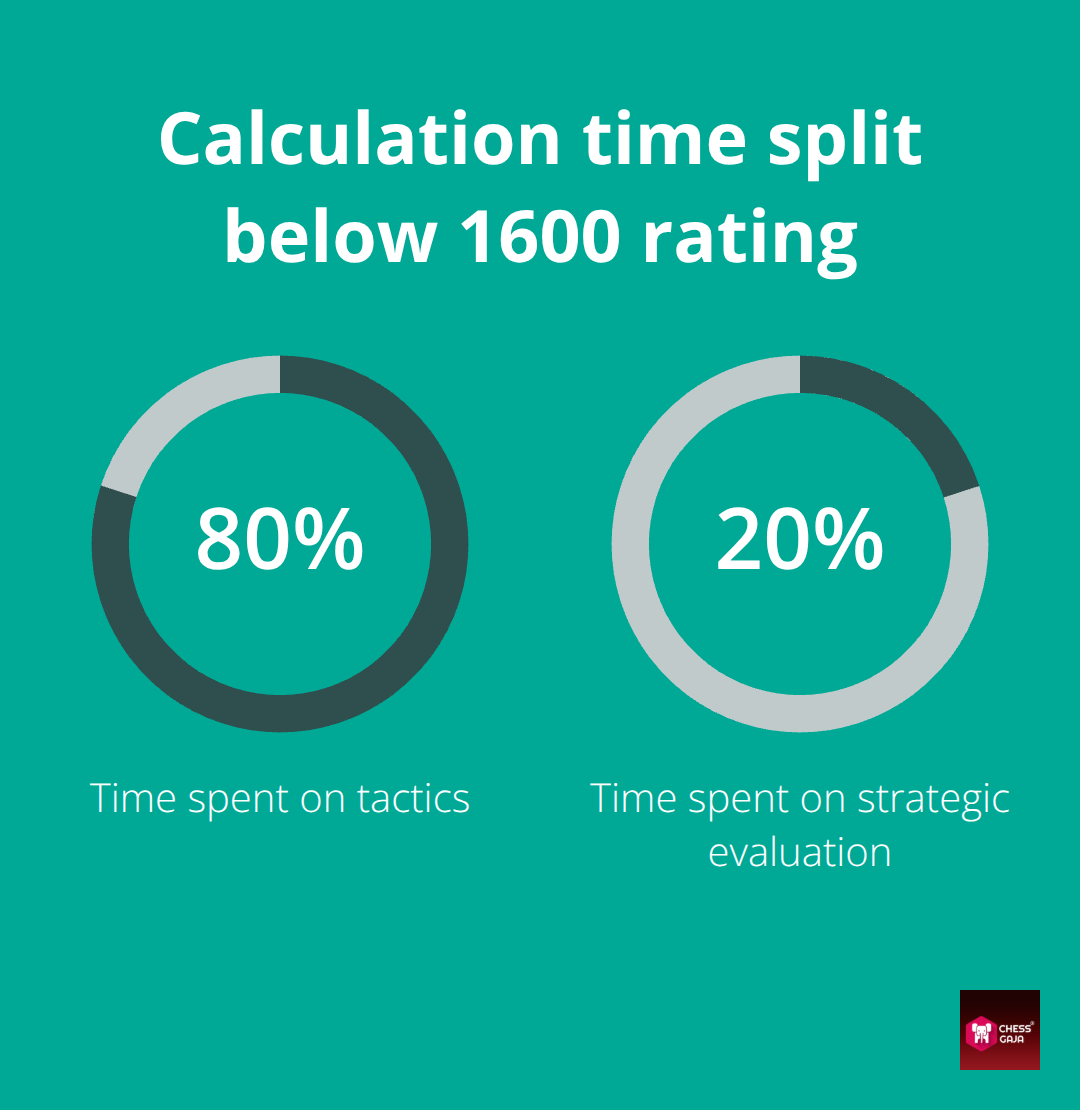
Strategic thinking operates on 10 to 20 move horizons while tactical thinking focuses on immediate 2 to 5 move sequences. Data from over 100,000 games shows that players rated below 1600 spend 80 percent of their calculation time on tactics but only 20 percent on strategic evaluation. This imbalance explains why many intermediate players win individual battles but lose the positional war. Strong players reverse this ratio and dedicate more mental energy to strategic assessment during quiet positions.
Strategic Situations Demand Long-Term Planning
Switch to strategic mode when no immediate tactics exist and pieces need repositioning for future attacks. Games with closed pawn structures require strategic maneuvering because breakthrough tactics rarely appear before move 25. The French Defense and King’s Indian Defense exemplify strategic battles where piece coordination and pawn breaks determine the outcome over 30 to 40 moves. Grandmaster games in these openings show that players who improve their worst-placed piece systematically gain advantages within 15 moves.
Tactical Opportunities Require Immediate Action
Shift into tactical calculation when checks, captures, or threats appear on the board. Research shows that forcing moves like checks and captures form the foundation of tactical combinations. Your opponent’s undefended pieces signal tactical opportunities that demand precise calculation rather than general planning. Players who miss these moments often face material loss or positional collapse that strategic play cannot recover. The strongest tactical players solve combinations within 30 seconds during blitz games, which demonstrates the importance of pattern recognition speed in competitive play.
Balance Both Approaches for Maximum Success
Master players seamlessly transition between strategic and tactical modes based on position requirements. They evaluate strategic factors first during quiet positions, then switch to tactical calculation when forcing moves appear. This dual approach prevents tunnel vision and helps you recognize when positions transform from strategic to tactical (or vice versa). Players who master this transition improve their rating by an average of 200 points within six months according to training data from major chess engines.
Final Thoughts
The chess strategy vs tactics debate misses the fundamental point that both elements work together to create positions that win games. Strategic preparation creates the conditions where tactical opportunities flourish, while tactical execution converts strategic advantages into concrete results. Players who focus exclusively on one area plateau quickly and struggle against opponents who understand both concepts.
Those who solve 1,000 tactical puzzles but ignore strategic principles struggle against opponents who understand pawn structures and piece coordination. Players who study strategy without tactical sharpness miss combinations that appear naturally from their superior positions. You need both skills to reach your full potential and compete effectively at higher levels.
If you are a beginner or intermediate level player, start with a structured approach that dedicates 60 percent of your study time to tactics through daily puzzle practice and 40 percent to strategic concepts like pawn structure analysis and piece coordination. We at Chess Gaja help players develop this balanced foundation through personalized chess coaching that addresses both strategic understanding and tactical sharpness. Our FIDE-rated coaches analyze your games to identify specific areas where strategy and tactics intersect.


