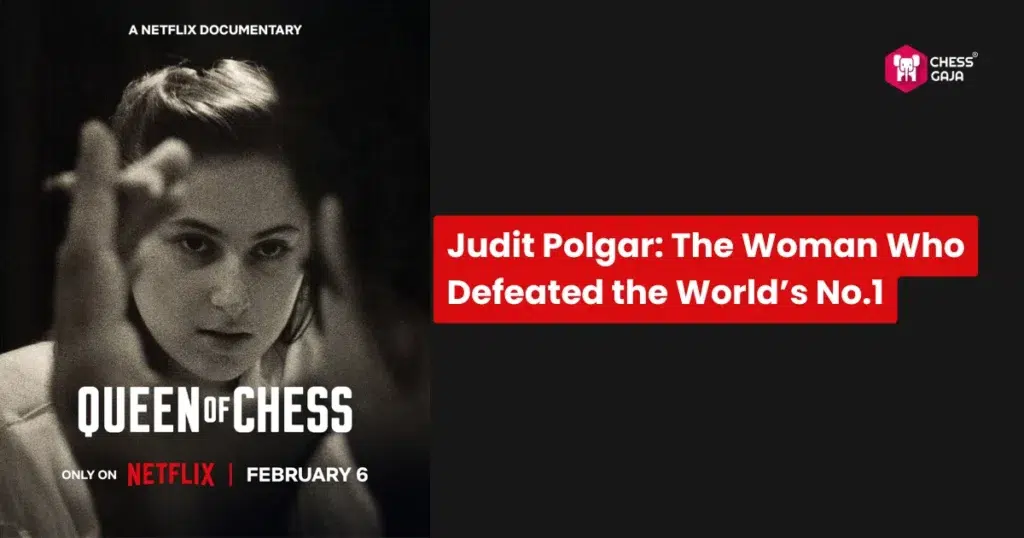
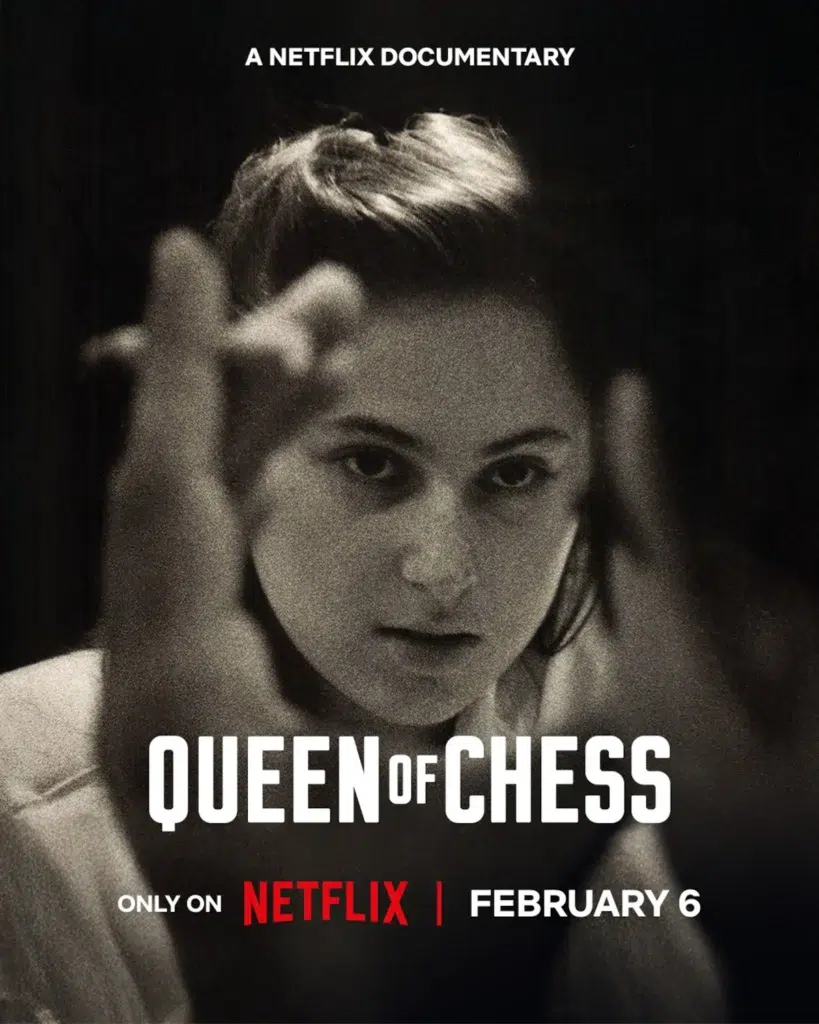
Netflix’s new documentary Queen of Chess — now streaming and already a global Top 10 hit — tells the story of the greatest female chess player who ever lived. Here is everything you need to know about Judit Polgár, and why her story matters far beyond the 64 squares.
Why Queen of Chess Is the Documentary Everyone Is Talking About
If you loved The Queen’s Gambit, Netflix’s smash-hit drama about a fictional chess prodigy, Queen of Chess is its real-life answer — and in many ways, the truth is more extraordinary than the fiction. Directed by Academy Award–nominated filmmaker Rory Kennedy, the 94-minute documentary premiered at the 2026 Sundance Film Festival to a standing ovation from 1,200 people, and arrived on Netflix on February 6, 2026. Within four days it had climbed to number seven on Netflix’s global chart, reaching the top five in 18 countries. In Hungary — Judit’s home — it held the number one spot for four consecutive days.
So who is Judit Polgár, and why does her story command this kind of global attention?
Who Is Judit Polgár? The Short Answer
Judit Polgár is a Hungarian chess grandmaster, widely considered the greatest female chess player in history. She is the only woman ever to break into the world’s overall top 10 rankings, the only woman to surpass a 2700 Elo rating (she peaked at 2735), and the only woman to defeat the world’s number one player in competitive play. She retired in 2014, was inducted into the World Chess Hall of Fame in 2021, and remains a towering figure in the sport.
Her peak world ranking was number 8, achieved in 2005. She defeated eleven current or former world champions across classical and rapid formats, including Garry Kasparov, Magnus Carlsen, Viswanathan Anand, and Anatoly Karpov.
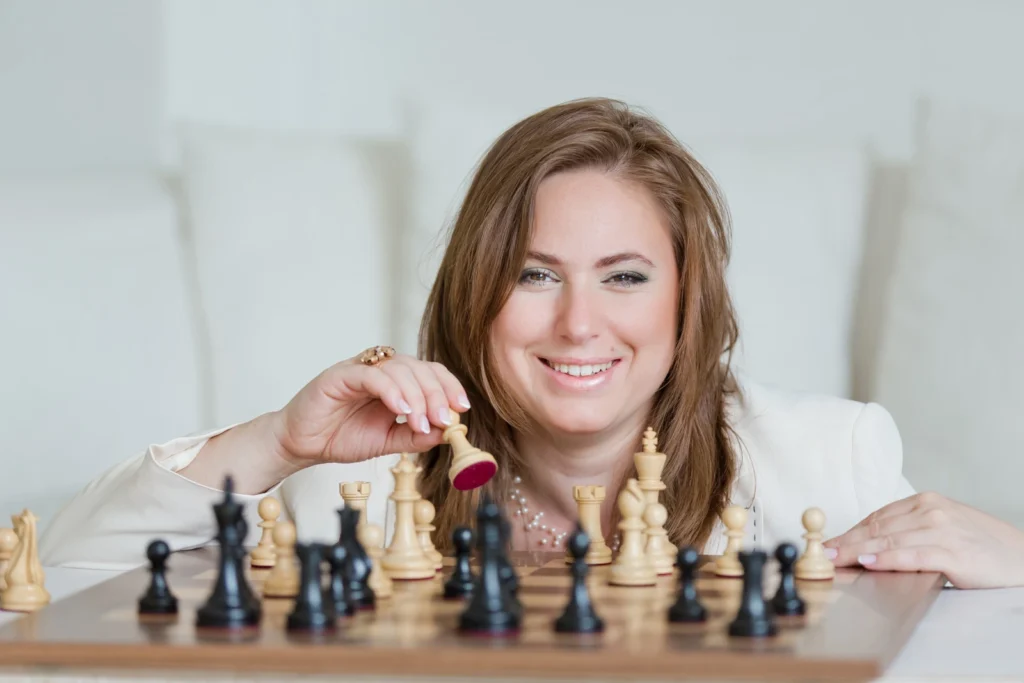
The Polgar Experiment: Geniuses Are Made, Not Born
Judit’s story starts in 1976 in Budapest, Hungary, where she was born the youngest of three daughters to László and Klára Polgár. László, an educational psychologist, had a radical thesis he was determined to prove: that genius is not a gift you are born with, but a product of deliberate, intensive training. He chose chess as his instrument and his three daughters — Susan, Sofia, and Judit — as his subjects.
The family was homeschooled in a manner that alarmed the Hungarian government of the time. This was the Cold War era, when chess carried enormous political weight. The Soviet Union viewed chess as a tool to demonstrate its intellectual superiority over the West, and Hungary’s chess establishment was deeply conservative, fiercely resistant to the idea of women competing alongside men.
The authorities made things difficult. The family received threats, including an antisemitic letter left at their door. There were attempts to take the children away. Travel permits were denied. None of it stopped László.
The results were extraordinary. Susan Polgár won her first chess tournament at four years old, with a perfect 10–0 score at the Budapest Girls’ Under-11 Championship. She became the third woman ever awarded the Grandmaster title by FIDE in January 1991. Middle sister Sofia earned the title of International Master.
And then there was Judit.
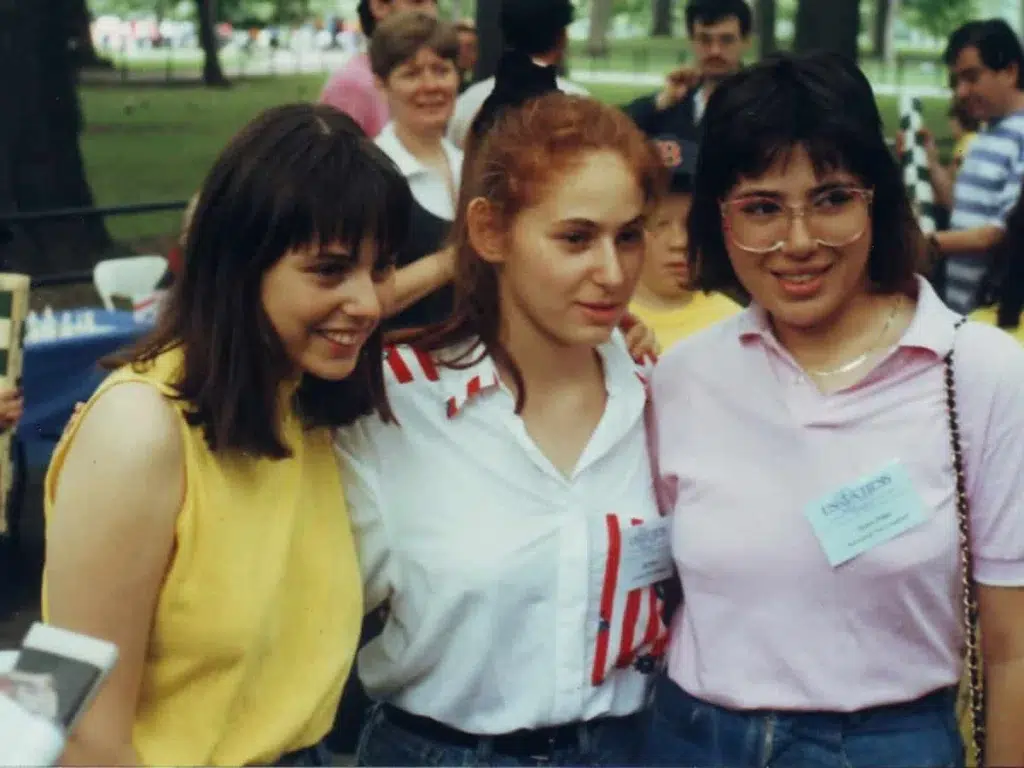
From Slow Starter to the Youngest Grandmaster in History
Judit was, by her own sister’s account, not the most naturally gifted of the three. Susan recalls that she was “a slow starter, but very hard-working.” Judit herself has spoken about her obsession with chess from a very young age. What she lacked in natural flair she more than compensated for with an intensity that would define her entire career.
At ten years old, she defeated Romanian International Master Dolfi Drimer in an international tournament in Adelaide, Australia. At twelve, she became the youngest player ever to break into the FIDE top 100, ranked number 55 in the January 1989 rating list. She earned the International Master title at twelve — at an age when both Bobby Fischer and Gary Kasparov had achieved it at fourteen.
In December 1991, at the age of 15 years and 4 months, Judit became the youngest Grandmaster in history — in both men’s and women’s chess — breaking the record previously held by Fischer. It is worth noting that Susan had earned the title just months earlier, in January of the same year, so within 1991 both sisters broke historic ground. (The youngest Grandmaster today is Abhimanyu Mishra, who achieved the title at twelve, but Judit’s record stood for over a decade.)
The legendary Mikhail Tal, himself a former World Champion, had already said publicly that Judit had the potential to win the World Championship outright.
Breaking Into Men’s Chess — and Winning
For years, the Hungarian chess establishment resisted letting the Polgárs compete against men. In 1988, the sisters represented Hungary in the women’s section of the 28th Chess Olympiad in Thessaloniki, Greece, alongside Ildikó Mádl. The Soviets were heavy favourites. Nobody expected what happened next.
The Hungarian team won the championship. Judit finished with the highest individual score and won the gold medal. It was a statement that the chess establishment could no longer ignore. The Hungarian government began to recognise the Polgárs, and structural barriers slowly began to fall. Judit started competing in men’s tournaments.
The chess world took notice — but not everyone was impressed. Garry Kasparov, the reigning World Champion, dismissed her: “She has fantastic chess talent, but she is, after all, a woman. It all comes down to the imperfections of the feminine psyche. No woman can sustain a prolonged battle.”
Judit’s response was not a press conference. It was her next game.
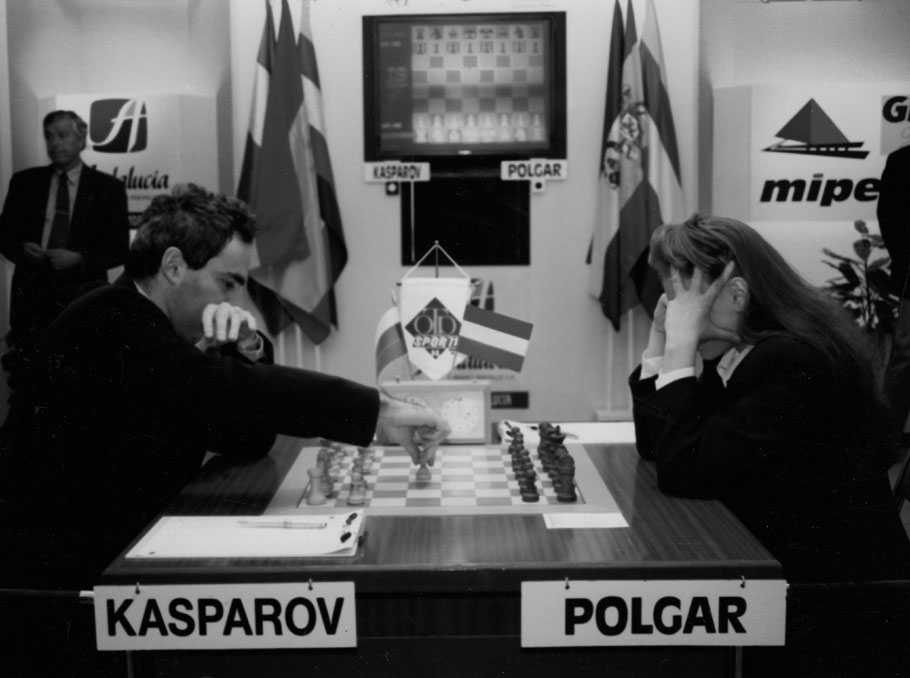
The Kasparov Rivalry: Chess’s Greatest Personal Battle
No relationship defined Judit’s career more than her long, complicated, and ultimately triumphant rivalry with Garry Kasparov. It is the red thread running through Queen of Chess, and it is one of sport’s most compelling stories.
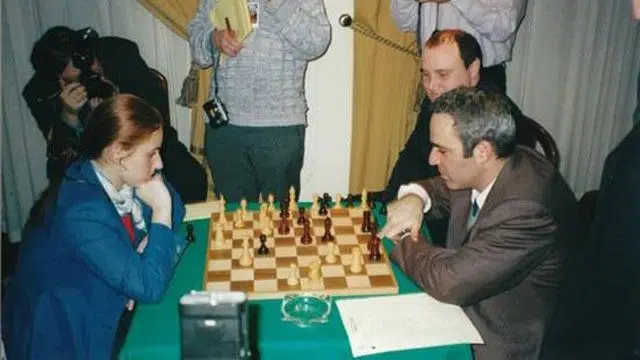
Their first meeting came at the Linares supertournament in Spain in 1994. Judit was seventeen; Kasparov was thirty and the World Champion. During their game, Kasparov played a blunder — and then, caught on camera by a Spanish TV crew, illegally retracted the move, a violation of chess’s most fundamental rule: the touch-move rule, which states that once you touch a piece, you must move it. Judit, young and conscious of the politics involved, chose not to protest. Kasparov won the game. But the footage was made public and caused a scandal across the chess world. It is still available on YouTube today.
The two did not speak to each other for three years. When they eventually resumed their over-the-board battles, Judit was no longer an intimidated teenager. She was one of the strongest players on the planet.
In September 2002, at the Russia vs. Rest of the World rapid match in Moscow, Judit sat across from Kasparov again. She played an exceptional positional game, attacking his king with her rooks in the centre of the board and grinding him down methodically. When Kasparov resigned, he immediately left through a passageway closed to journalists. The game was historic — the first time in chess history that a female player had defeated the world’s number one in competitive play. Judit called it “one of the most remarkable moments of my career.”
Kasparov, who had once called her a “circus puppet,” later revised his view entirely: “The Polgárs showed that there are no inherent limitations to their aptitude.” The documentary captures this journey in full, including contemporary interviews in which Kasparov, even now, occasionally reveals traces of the attitudes Judit spent her career dismantling.
How Judit Played Chess — and Why It Was Revolutionary
Judit’s style was relentless, aggressive, and utterly fearless. She consistently chose activity over caution, initiative over safety, and complexity over formulaic simplicity. Watching a Polgár game feels alive — pieces spring forward with intent, kings are denied comfort, and positions are in constant danger of transformation. Win or lose, her games demanded full engagement from opponent and spectator alike.
In an era when many top players built their careers on deep preparation and patient maneuvering, Judit attacked. She played as if every game might be her last. And at the highest level — against Kasparov, Anand, Karpov, Carlsen, and others — that style not only worked, it produced some of the most memorable chess of her generation.
What to Expect from Queen of Chess on Netflix
The documentary runs 94 minutes and is accessible to viewers who have never played a single game of chess. Director Rory Kennedy weaves together rare archival footage from the 1988 Chess Olympiad, the Hungarian Championship of 1991, Linares 1994, and other landmarks, alongside personal family footage and brand-new interviews.
The film features Judit herself, her parents László and Klára, her sisters Susan and Sofia, and her husband Gusztav Font. It also features chess voices including GM Maurice Ashley, IM Jovanka Houska, and IM Anna Rudolf. And yes — Garry Kasparov sits for a lengthy interview, and the documentary does not shy away from his past comments or his evolution.
One area reviewers have noted the film could have explored more deeply is the family’s Jewish identity and how antisemitism in communist Hungary shaped the Polgárs’ experience. The threats, travel restrictions, and social hostility the family faced had cultural dimensions the film largely leaves aside. Susan Polgár confirmed that this came up in interviews, but much was left on the cutting room floor. It is a gap worth knowing about — and one that makes the story richer, not simpler.
If you want to understand what it looks like when one person challenges an entire institutional structure through sheer force of ability, Queen of Chess is essential viewing.
Frequently Asked Questions
Is Judit Polgár better than Magnus Carlsen?
Carlsen, widely considered the greatest chess player of all time, held a higher peak rating than Judit. But Judit defeated him in competitive play — one of eleven world champions she beat across her career. They competed in different eras, making direct comparison difficult, but Judit is widely regarded as one of the greatest players of either gender in history.
Why did Judit Polgár retire?
Judit announced her retirement in August 2014 to focus on family and her work promoting chess education globally through the Judit Polgár Chess Foundation. She has been a vocal advocate for chess being taught in schools worldwide.
Who are the Polgár sisters?
Susan (Zsuzsa) Polgár is the eldest, a Grandmaster and former Women’s World Champion. Sofia Polgár is the middle sister, an International Master. Judit is the youngest and the most decorated of the three.
Did Kasparov ever apologise for the Linares touch-move incident?
It was never formally resolved at the time, and the controversy lingered for years. The two eventually moved on. According to Judit, they have since encountered each other at chess conferences and even played recreational freestyle chess together.
Is Queen of Chess suitable for non-chess fans?
Absolutely. Multiple reviews specifically highlight its accessibility to people who don’t know chess. Collider called it “fascinating” precisely because it works as a human story first.
The Legacy: Why Judit Polgár Still Matters
Judit Polgár’s career dismantled one of the most stubborn myths in competitive sport — that gender determines intellectual capacity or competitive aptitude. She did not do this through activism or public advocacy alone. She did it over the board, move by move, against the most decorated players in the world.
Her father’s thesis — that geniuses are made, not born — was proved correct. All three daughters became remarkable achievers. And Judit, the youngest, the self-described “slow starter,” became the greatest female chess player in the history of the game.
Her legacy is not simply that a woman reached the top of a male-dominated sport. It is that she exposed the absurdity of the structure that had insisted she couldn’t. Chess still has work to do on gender equality. But thanks to Judit Polgár, it can no longer pretend the gap is natural.
Queen of Chess is streaming now on Netflix. If you have 94 minutes, use them well.


