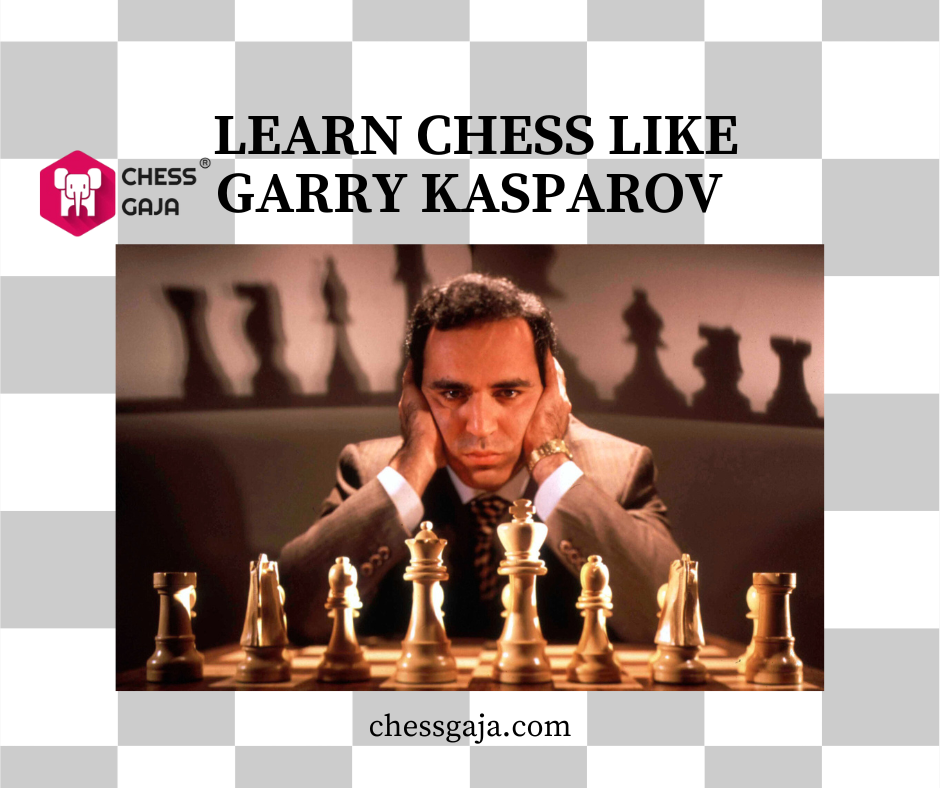
Ever heard the name Garry Kasparov? If you love chess or follow famous chess players, you’ve definitely heard about him! This blog tells you everything you need to know about Garry Kasparov, the greatest chess player who ever lived. Don’t worry—we’ll explain it all simply, so even if you’re new to chess, you’ll understand!
I am Priyadharshan Kannappan, a Chess Grandmaster and FIDE Trainer. As a professional chess player and trainer Garry Kasparov has had an incredible level of influence when I was growing up as a chess player, and I still use Kasparov games as reference material to teach chess concepts to my students. In this article, I will show some spotlight on Garry Kasparov the legend!
Who is Garry Kasparov?
- Quick Facts About Garry Kasparov
- The Battle for World Champion: Kasparov vs. Karpov
- Kasparov's Playing Style: What Made Him Special? Attacking Chess
- The "Kasparov Phenomenon"
- Kasparov and Chess Computers The Historic Match: Man vs. Machine
- Why Kasparov is the "Greatest Chess Player Ever"
- Kasparov Retires: What Happened?
- Garry Kasparov After Chess: His New Life Teaching and Writing
- Kasparov's Famous Quote
- Fun Facts About Garry Kasparov
- How Can YOU Learn Like Kasparov?
Garry Kasparov is a legendary Russian chess Grandmaster who became the World Chess Champion at age 22—one of the youngest champions in history! He stayed the world’s #1 player for 15 years, crushing competitors and breaking records everywhere.
After he retired from professional chess, people still call him the greatest chess player of all time. Kids learn from his games. Grandmasters study his strategies. His name is famous throughout the chess world.
Quick Facts About Garry Kasparov
Basic Information:
- Full Name: Garry Kimovich Kasparov
- Born: April 13, 1963 (in Baku, Azerbaijan)
- Nationality: Born in Soviet Azerbaijan; long associated with Russia in chess
- Title: Grandmaster, World Chess Champion
- Years as World Champion: 1985-2000 (15 years!)
- Highest Rating: 2851. This record stood for 14 years until Magnus Carlsen finally surpassed it in 2013.
Early Life: How It All Started Learning Chess as a Kid
Little Garry’s parents taught him chess when he was only 6 years old. They weren’t super famous chess players—they just loved the game and wanted to share it with their son.
Kasparov loved chess immediately! While other kids played outside, he studied chess books and played against anyone who would challenge him. By age 10, he was already beating adults!
Rising Star
By his teenage years, Kasparov was winning national championships and becoming famous in the Soviet Union. Coaches recognized his special talent for attacking, aggressive chess. He didn’t just play safe—he played bold and creative moves that surprised even the strongest players!
Becoming a Grandmaster
Kasparov earned his Grandmaster title at just 17 years old. That’s incredibly young! Most players spend decades trying to become Grandmasters. Kasparov did it before he could even vote!
With his Grandmaster title, he was ready for the biggest chess stage in the world: the fight for World Champion.
The Battle for World Champion: Kasparov vs. Karpov
In 1985, Kasparov challenged the current World Chess Champion Anatoly Karpov. This was THE biggest chess match of the century!
The Match
- Kasparov’s Age: 22
- Karpov’s Title: Current World Champion (defending his throne)
- The Result: Kasparov won! He scored 5 wins to Karpov’s 3, with 16 draws across 24 games.
Why This Was Historic
Kasparov beat the defending champion! Young players could now see: You can beat the best if you play smart and creative!
More Epic Battles
Kasparov and Karpov played FIVE times for the World Championship! Their battles are legendary in chess:
- 1985: Kasparov wins (becomes World Champion for the first time)
- 1986: Kasparov wins (defends his title)
- 1987: Match tied 12-12 — Kasparov retains title as defending champion
- 1990: Kasparov wins (final Kasparov-Karpov match)
In 2000, Kasparov lost his title to Vladimir Kramnik in a separate match, ending his 15-year reign as World Champion.
Kasparov’s Playing Style: What Made Him Special?
Attacking Chess
Kasparov played bold, attacking chess. Instead of playing it safe like some champions, he:
- Took big risks
- Created wild, complicated positions
- Attacked the opponent’s King relentlessly
- Found brilliant, surprising moves
The “Kasparov Phenomenon”
Players said Kasparov made chess look like art and warfare combined. His games were exciting to watch because something dramatic always happened!
Famous Games
Some of Kasparov’s games are so brilliant that chess teachers still study them 20+ years later:
Game 1: Kasparov vs. Topalov (1999)
- Called Kasparov’s “Immortal Game” and widely regarded as one of the most brilliant games ever played in tournament chess
- Kasparov performed a legendary Rook sacrifice on d4 that forced the Black King on a ‘death march’ across the entire board. It is widely considered the most brilliant combination in the history of tournament chess.
- Chess fans still say “WOW!” when they see this game
Game 2: Kasparov vs. Karpov (1985)
- The game that proved Kasparov was World Champion material
- Kasparov demonstrated the power of a ‘super-knight’ (the Octopus Knight) to paralyze the opponent’s entire army. This game changed how players evaluate piece activity versus material.
- This game revolutionized how players think about piece activity and long-term positional sacrifices — a middlegame masterpiece still studied today.
Kasparov and Chess Computers The Historic Match: Man vs. Machine
In 1997, Kasparov played Deep Blue, a super-smart chess computer made by IBM.
Kasparov had actually beaten an earlier version of Deep Blue in 1996 (winning 4-2). The 1997 rematch was the historic upset. The Result: Deep Blue won the 1997 rematch 3.5 to 2.5.
This was HUGE in chess history. It proved that computers could beat even the world’s greatest human player!
What Did This Mean?
- Chess computers weren’t just for fun anymore—they were actually stronger than humans!
- But Kasparov played brilliantly. He won one game (showing humans still had something special)
- This match got millions of people interested in chess
Why Kasparov is the “Greatest Chess Player Ever”
Reason #1: His Record
- World Champion for 15 years
- Won more elite tournaments than almost anyone
- Highest rating ever (at his time)
Reason #2: His Innovation
- Changed how people play chess
- Introduced new strategies and ideas
- Proved that aggressive, creative play could beat defensive play
Reason #3: His Legacy
- Players still study his games
- His books teach chess strategy
- Kids learn from his moves
- He inspired millions to love chess
Kasparov Retires: What Happened?
In 2000, Kasparov lost his World Championship title to Vladimir Kramnik in a match held in London. He continued playing professional chess until 2005, when he retired from competitive chess entirely.
Why did he retire?
- He wanted to focus on writing, education, and political activism
- He felt he had achieved everything possible in chess
- He was ready for new challenges outside the chess world
Garry Kasparov After Chess: His New Life
Teaching and Writing
Kasparov didn’t disappear after retiring! He:
- Wrote chess books teaching strategy and tactics
- Created the Kasparov Chess Foundation to teach kids chess worldwide
- Gave lectures and talks about chess and thinking
- Appeared in documentaries about chess history
Political Activity
Kasparov became involved in Russian politics and activism. He fought for free speech and democracy in Russia. He used his fame to speak up for what he believed in.
Media and Entertainment
- Appeared in movies and TV shows
- Gave interviews to famous podcasts
- Stayed involved in chess through commentary and analysis
- Became a public intellectual discussing strategy, risk, and decision-making
Kasparov’s Famous Quote
“Chess is life in miniature.”
This quote explains why Kasparov loved chess so much. Every chess game teaches you about:
- Making decisions under pressure
- Planning ahead
- Taking calculated risks
- Adapting to unexpected situations
Fun Facts About Garry Kasparov
Fact #1: Super Memory
Kasparov could remember thousands of chess games—he didn’t need to look them up!
Fact #2: Speaking Skills
He’s not just a chess genius—he’s a brilliant speaker! His lectures are interesting and inspiring.
Fact #3: Multiple Talents
Kasparov studied languages, politics, and history. He’s not ONLY a chess player—he’s well-educated about many things!
Fact #4: Still Plays Casually
Even retired, Kasparov still plays chess for fun! You can sometimes see him playing casually online.
Fact #5: Influenced Modern Chess
Today’s best young players all study Kasparov’s games to learn how to play brilliantly!
How Can YOU Learn Like Kasparov?
Want to play like Garry Kasparov? Here’s what experts recommend:
1. Study Kasparov’s Games
Watch and analyze his most famous games. See how he attacked, how he thought, how he won!
2. Learn His Opening Ideas
Kasparov had favorite openings (the first moves). Study these to understand his style!
3. Practice Attacking Chess
Don’t just defend—learn to attack! Kasparov showed that attacking play could win championships.
4. Solve Tactics Puzzles
Kasparov was a tactics genius. Solving puzzles helps you spot tactics like he did!
5. Play Real Games
Practice against real opponents (not just computers). This teaches you to handle pressure!
Learn from Kasparov’s Legacy at Chess Gaja
Kasparov proved that attacking, creative chess wins championships. At Chess Gaja, our Grandmaster coaches teach you this same style!
Why Chess Gaja?
- Coaches available across all rating levels, from beginner to GM
- Advanced Learning Management System (LMS) for instant feedback, mobile alerts, and effortless tracking of classes
- Monthly parent-teacher meetings with GM Priyadharshan for progress updates
- Open to students of all ages worldwide
- Exclusive student newsletter with latest chess insights and tips
- Multiple monthly online tournaments to test skills in competitive settings
- Dedicated WhatsApp support team for quick assistance
- Over 5000 students from more than 40+ countries
With Chess Gaja’s fully online platform, students can train comfortably from home, choosing times that fit their schedule without any travel hassles. This flexible, expert-driven approach delivers unmatched value and results for chess learners worldwide.
Contact Chess Gaja: https://chessgaja.com/contactnew/
Website: https://chessgaja.com
Frequently Asked Questions
Was Garry Kasparov the best chess player ever?
Most people say yes! He had the highest rating ever and was World Champion for 15 years. Some argue about modern players, but Kasparov’s record is unbeatable.
Why did Kasparov lose to Deep Blue?
Computers became stronger than humans at chess. Deep Blue was a specialized chess computer with enormous calculating power, able to evaluate millions of positions per second — beyond what any human could match. It wasn’t that Kasparov played poorly—computers were just better at chess!
What is Kasparov doing now?
Kasparov teaches chess through his foundation, writes books, gives lectures, and is involved in politics. He still loves chess but focuses on many different things.
Can I learn chess from Kasparov’s games?
Absolutely! His games are brilliant examples of chess strategy. Many coaches recommend studying his games to improve.
How old was Kasparov when he became World Champion?
He was just 22 years old—one of the youngest World Champions ever!
Did Kasparov play online chess?
He rarely played online, but he has appeared in online chess events occasionally. He mostly played over-the-board (in person) during his career.
The Kasparov Legacy Lives On
Garry Kasparov changed chess forever. He proved that:
- Young players can beat established champions
- Attacking, creative play wins
- Chess is art, science, and warfare combined
- One person can inspire millions
Every chess player today benefits from Kasparov’s innovations and ideas. When you study his games or learn his strategies, you’re connecting with chess history!


