Chess has always been a game of intelligence, strategy, calculation, and creativity. For centuries, players relied entirely on human intuition, preparation, and experience to improve their skills. Today, artificial intelligence in chess has completely transformed the way the game is played, studied, analyzed, and taught.
From world champions preparing with advanced chess engines to beginners learning through personalized training tools, AI has become an inseparable part of modern chess. The relationship between chess and artificial intelligence is no longer about humans versus machines. Instead, it is about humans learning with machines.
The Early Days of Artificial Intelligence in Chess
The idea of computers playing chess fascinated researchers long before modern AI systems existed. During the 1950s and 1960s, scientists began developing early chess programs capable of calculating moves and evaluating positions using basic rules.
Although these early chess engines were limited, they laid the foundation for one of the biggest technological revolutions in chess history.
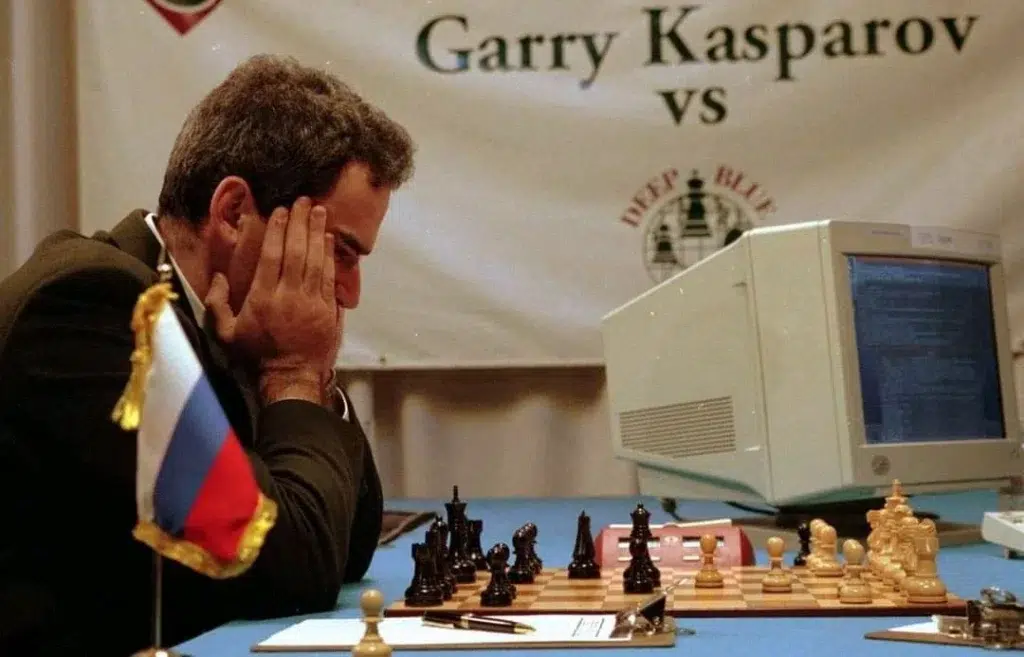
The turning point came in 1997 when Garry Kasparov faced IBM’s Deep Blue in a historic match. Kasparov, widely regarded as one of the greatest chess players of all time, lost to a computer, marking a major milestone in artificial intelligence and computer-assisted decision-making.
At the time, many people viewed the event as a battle between humans and machines. In reality, it marked the beginning of a new era where AI would eventually become a powerful training partner for chess players around the world.
How AI Changed Chess Preparation
Before AI-powered chess engines became widely available, players relied heavily on books, manual game analysis, and hours of work with coaches to improve their understanding.
Today, AI chess engines can instantly evaluate positions, detect tactical opportunities, uncover strategic mistakes, and recommend stronger alternatives within seconds.
Modern chess software such as Stockfish and Leela Chess Zero has dramatically elevated the standard of chess preparation at every level.
Stockfish is one of the world’s strongest open-source chess engines, known for its deep calculation abilities and accurate evaluations. Leela Chess Zero uses neural-network-based learning inspired by AlphaZero, allowing it to develop highly creative and unconventional positional ideas.
Here are some of the biggest ways AI in chess has transformed training and improvement:
Faster Game Analysis
Players can now upload their games to chess platforms and receive instant evaluations. AI engines quickly identify blunders, inaccuracies, missed tactics, and stronger move alternatives.
This type of AI-powered chess analysis helps players improve much faster than traditional manual review methods.
Better Opening Preparation
Opening databases combined with chess AI allow players to prepare deeply against opponents and discover new opening ideas.
Professional chess players extensively use engines before tournaments to refine opening preparation and explore advanced variations. Consistently before tournaments.
Personalized Learning
Modern AI-powered chess coaching systems can identify weaknesses in a player’s style and recommend personalized puzzles, openings, endgame exercises, and study plans.
This makes online chess learning more efficient and targeted.
Improved Tactical Training
AI-generated tactical exercises adapt to a player’s skill level and learning progress. This creates a more effective and engaging training experience compared to static puzzle collections.
AI and the Rise of Online Chess
The rapid growth of online chess platforms has also been fueled by artificial intelligence.
Features such as automated game reviews, adaptive lessons, puzzle recommendations, performance tracking, and smart learning systems rely heavily on AI technology.
During the global online chess boom, millions of players gained access to tools that were once available only to elite grandmasters and professional coaches. Today, even beginners can analyze games with world-class accuracy directly from a smartphone.
This accessibility has accelerated chess improvement worldwide. Young players are reaching advanced levels earlier because they now have constant access to high-quality AI-driven chess training tools.
AI vs Human Chess Understanding
One of the most discussed topics in modern chess is whether AI reduces human creativity.
Some critics argue that players have become too dependent on engine evaluations and computer-generated preparation. However, many top players believe artificial intelligence has actually expanded creative possibilities in chess.
Neural-network chess engines often recommend unconventional sacrifices, positional concepts, and long-term strategic ideas that humans previously overlooked.
Rather than making chess robotic, AI has introduced fresh perspectives into the game.
While AI can calculate millions of positions within seconds, human players still rely on intuition, psychology, emotional control, and practical decision-making during real games.
The strongest chess improvement often comes from combining human understanding with AI-assisted analysis.
Can AI Replace Human Creativity in Chess?
Artificial intelligence has become an incredibly powerful educational tool, but it cannot fully replace experienced human coaches.
AI excels at:
- Game analysis
- Tactical evaluation
- Error detection
- Training recommendations
- Personalized practice generation
However, human coaches still provide:
- Emotional support
- Motivation
- Strategic guidance
- Practical tournament advice
- Personalized teaching methods
The future of chess coaching will likely combine human expertise with AI-powered learning systems for the best possible training experience.
The Future of Chess and Artificial Intelligence
The future of chess technology looks incredibly exciting. AI is expected to become even more integrated into chess education, tournament preparation, and interactive learning experiences.
We are already seeing innovations such as:
- Real-time AI coaching
- Smart game summaries
- Personalized revision systems
- Adaptive chess curriculum
- AI-generated training exercises
- Voice-assisted chess learning tools
As chess education evolves, the focus is shifting from memorizing moves to understanding patterns, decision-making, and practical application.
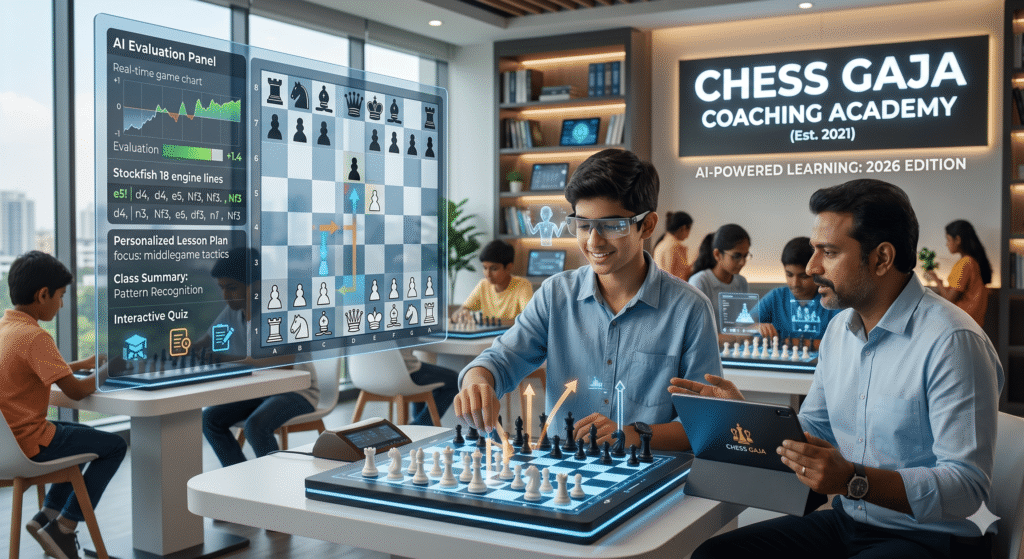
How Chess Gaja Uses AI to Improve Chess Coaching
At Chess Gaja, we believe AI should enhance the learning experience without removing the human element that makes chess special.
That is why we have integrated AI-powered systems into our coaching process to help students learn more effectively while still receiving personalized guidance from experienced coaches.
Our AI-driven chess learning features include:
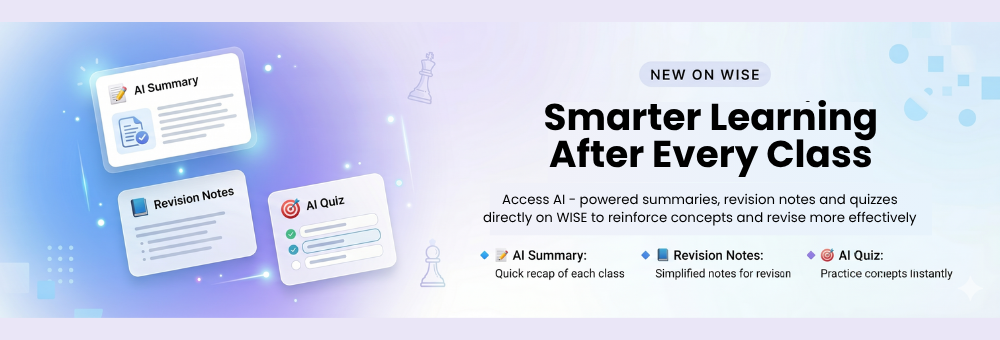
- Class summaries for quick revision
- AI-generated quizzes to reinforce concepts
- AI-generated revision notes for easier understanding
- Smarter learning workflows for faster retention
- Structured chess improvement systems
By combining expert coaching with intelligent technology, Chess Gaja creates a modern chess learning experience that is structured, engaging, and highly effective.
Artificial intelligence is not replacing chess coaches. Instead, it is empowering coaches and students with better tools, deeper insights, and smarter learning systems.
Frequently Asked Questions About AI in Chess
How does AI help chess players improve?
AI helps players analyze games, identify mistakes, practice tactics, improve openings, and receive personalized training recommendations.
What are the best AI chess engines?
Some of the most popular chess engines include Stockfish, Leela Chess Zero, and neural-network systems inspired by AlphaZero.
Can beginners use AI for chess training?
Yes. Modern AI-powered chess platforms make learning easier for beginners through adaptive lessons, automated analysis, and personalized recommendations.
Will AI replace chess coaches?
AI can support coaching, but experienced human coaches remain essential for strategic understanding, motivation, and practical improvement.
Final Thoughts
The role of AI in chess has evolved dramatically over the past few decades. What began as an experiment in computer science has now become one of the most powerful educational tools in the chess world.
From the days of Kasparov versus Deep Blue to today’s AI-powered coaching systems, technology has reshaped how players learn, prepare, and improve.