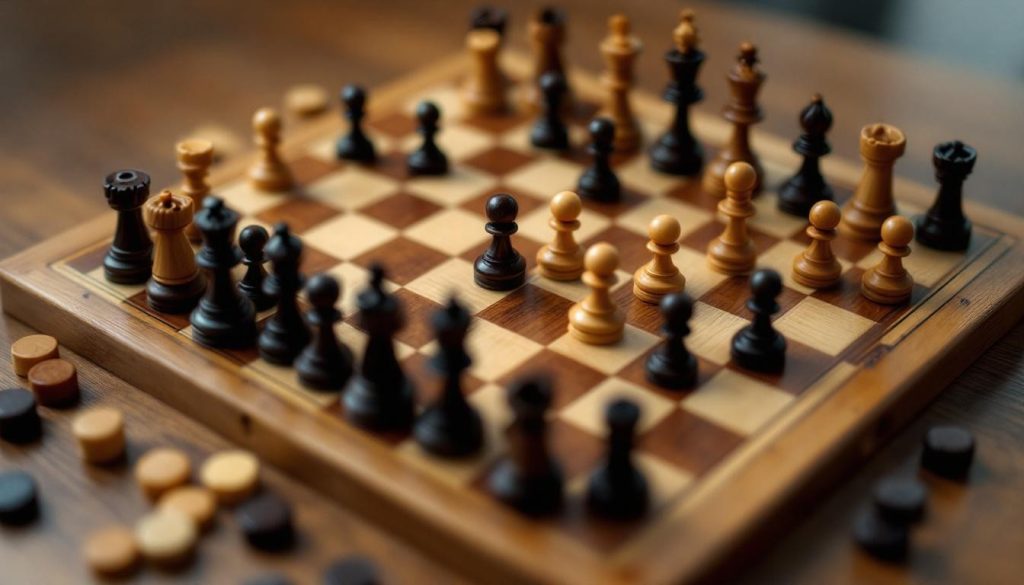
Last week, a 12-year-old student at Chess Gaja demonstrated the perfect balance of chess strategy and tactics when she sacrificed her queen—and won. Her opponent panicked, focusing entirely on the sudden material shift on the board, and completely missed the calculated forced checkmate three moves later.
That moment captures the essence of chess. You need both the big picture and a sharp eye. A strategic approach and tactics are two sides of the same coin. Mastering both separates winners from the rest.
At Chess Gaja Academy, I’ve observed that the most successful players aren’t just good at one thing; they know exactly how to blend long-term planning with short-term strikes. I’m Grandmaster Priyadharshan Kannappan, and I believe that strategy sets the stage, but tactics deliver the final blow.
In this article, I’ll show you how to identify strategic weaknesses in your opponent’s position. Then, we will look at precise tactical patterns to exploit them, giving you a complete blueprint for consistent wins.
The Essential Difference Between Chess Strategy and Tactics
Strategy is your long-term roadmap. It answers the question: Where do I want my pieces to be in ten moves, and what structural weaknesses can I create? Tactics are the sharp, immediate moves that cash in on those weaknesses right now.
A 1500-rated player who understands this distinction wins far more games. Strategy without tactics leaves you with a beautiful plan that never materializes. Conversely, pure tactics without a plan turn you into a gambler. You hunt for quick tricks while leaving your overall position structurally broken.
Our student who sacrificed her queen used both. She had the strategic vision to build a dominant position, and the sharp tactical precision to execute a forced mate.
Master Chess Strategy to Build Your Position
Your strategic goal in the opening is to control central squares. In addition, you must develop your pieces efficiently and ensure king safety. Therefore, if you play without a plan, you hand your opponent a free advantage.
By move 12, you should evaluate the board. Look for your opponent’s structural flaws. At the 1500 level, common strategic errors include neglecting development or making random pawn moves that weaken key squares.
A solid strategic approach means building a position where tactics can naturally flourish. Your opponent’s isolated pawn on d5, a passively placed knight on the rim, or weak light squares around their king are not accidents. They are the direct reward of your superior strategic choices.
Use Chess Tactics to Capitalize on Weaknesses
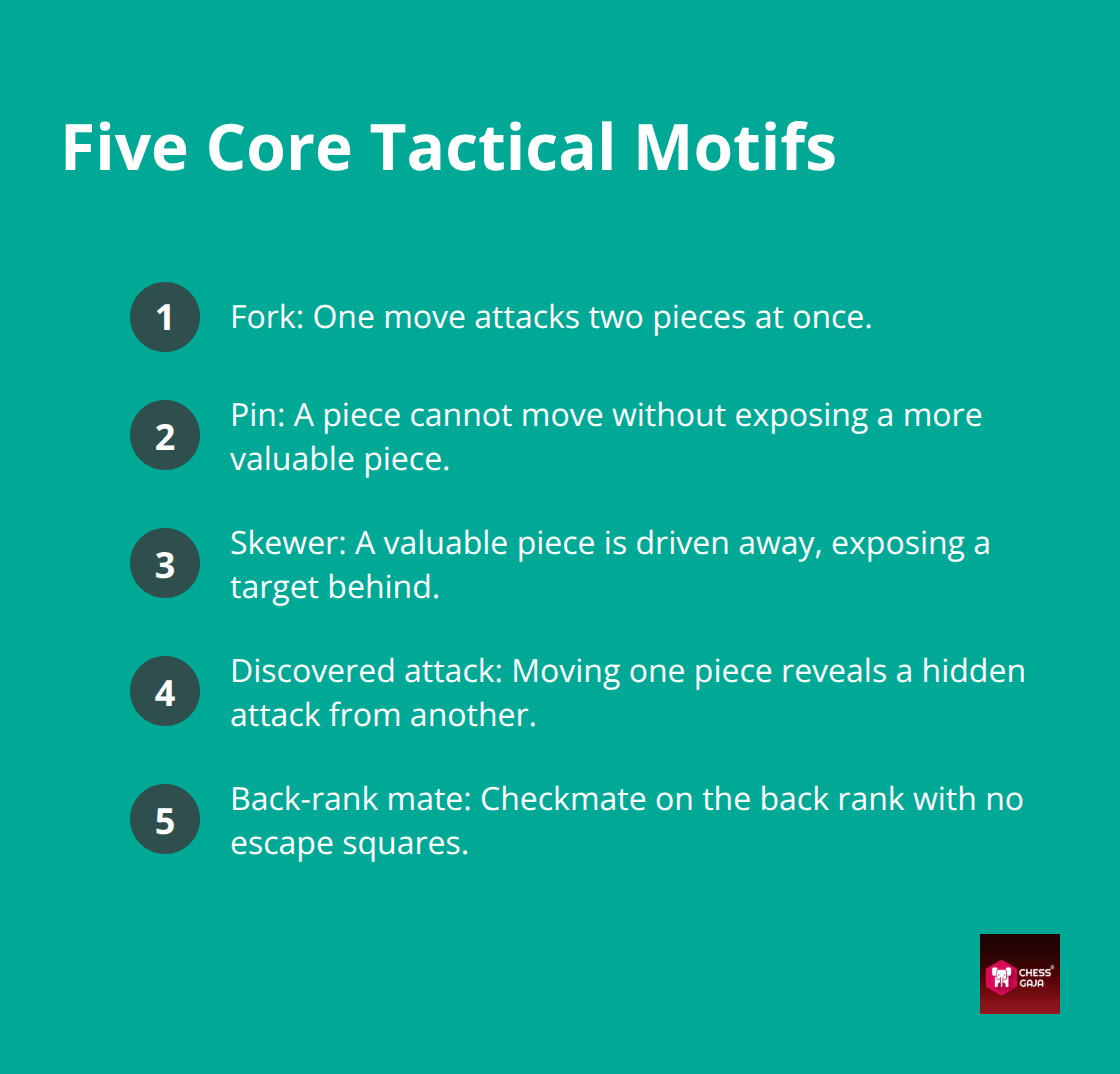
Once your strategic position is sound, tactical motifs emerge to win material or deliver mate. You must master the five core patterns that appear in nearly every decisive game:
- Forks: Attacking two targets simultaneously so the opponent cannot defend both.
- Pins: Restricting a piece because moving it exposes a more valuable target.
- Skewers: Forcing a high-value piece to move, revealing a target behind it.
- Discovered Attacks: Moving one piece to unleash a hidden threat from another.
- Back-Rank Mates: Trapping the enemy king on the edge of the board behind its own pawns.
The rating gap between a 1500 player and an 1800 player often comes down to pure pattern recognition. Higher-rated players spot a tactical combination three moves deep because they have solved thousands of positions. Tactics are the result of deliberate practice.
Activity Beats Aggression
Many intermediate players confuse activity with aggression. They push pawns forward blindly and launch wild attacks. They ultimately lose material because they never secured their foundation. Real activity means your pieces control key squares and exert genuine pressure.
- Centralize Your Pieces: A knight on a central outpost like d5 is infinitely stronger than a passive knight on the rim like h3.
- Develop Intentionally: A bishop developed to an open diagonal where it targets enemy weaknesses controls far more critical space than one restricted behind its own pawns.
- Claim Open Files: Place your rooks on open files where they can penetrate to the seventh rank to paralyze your opponent’s setup.
How to Train Both Effectively
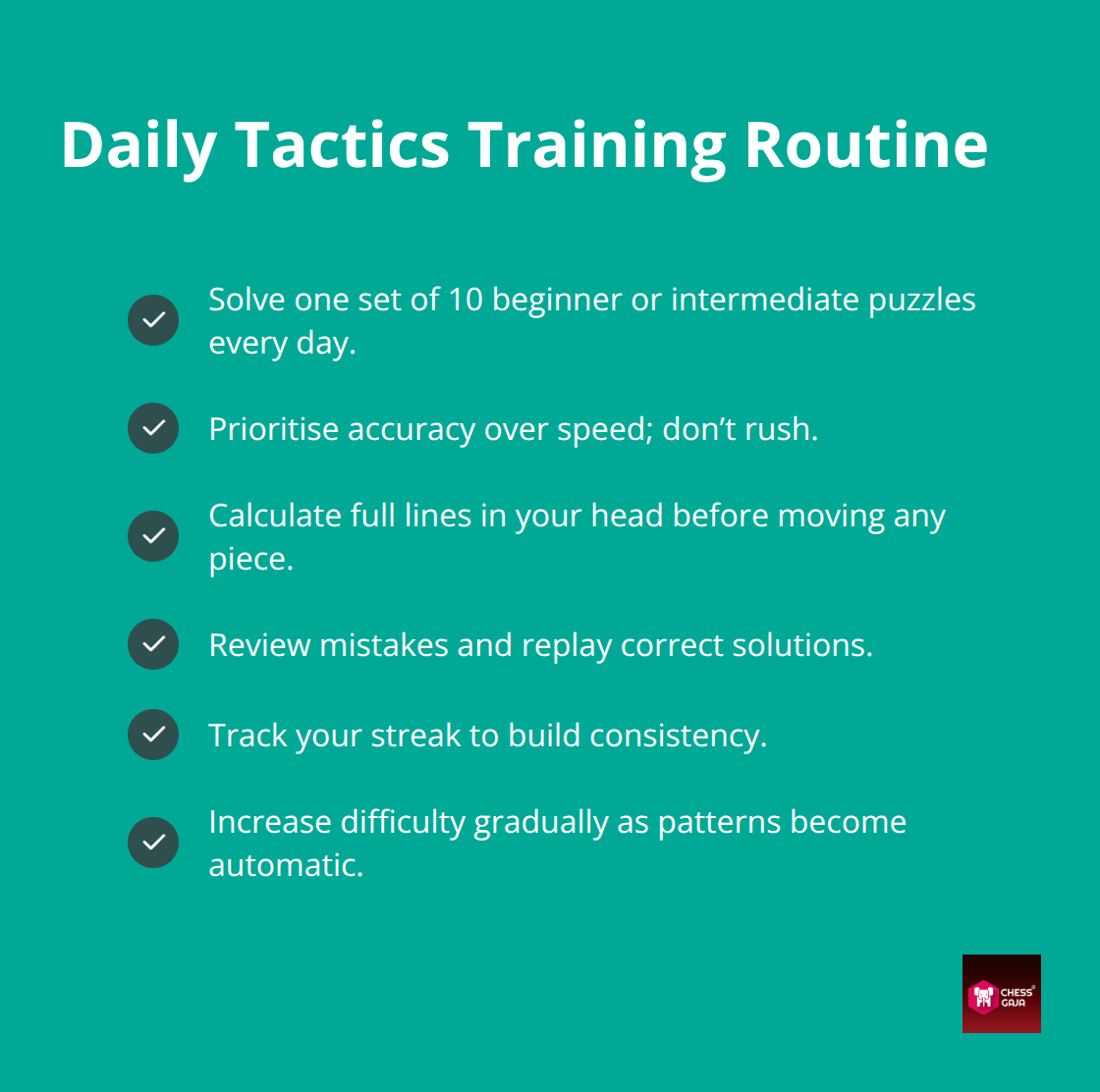
To cross the plateau to 1700 and beyond, you must train chess strategy and tactics simultaneously using a consistent daily routine.
- Solve Daily Tactics: Solve at least 10 intermediate puzzles every single day. Crucially, calculate the entire sequence in your head first. Avoid moving a single piece on the screen until you see the end. This disciplined habit builds your deep working memory.
- Study Master Games: Analyze how Grandmasters build their positions methodically. Notice how they rarely sacrifice material randomly. They only strike when their strategic foundation is completely secure.
Within a few weeks of consistent training, you will notice a massive shift. Hidden tactical shots will jump out at you instantly. Instead of hunting for desperate tricks on move five, you will build positions that make winning tactics inevitable by move 15.
Grow Faster with Expert Guidance
If you want structured, personalized guidance to accelerate your progress, Chess Gaja
offers personalized coaching with FIDE-rated coaches. We analyze your specific games to master chess strategy and tactics, quickly fixing your flaws and elevating your calculation vision.