
Mastering beginner chess tactics is the absolute fastest way to stop hanging your pieces and start winning more games. Last week, a Chess Gaja student showed me a game where they missed three clear tactical wins in just ten moves. They knew something was wrong with their play, but they simply could not spot the hidden patterns.
This problem does not happen because you lack chess skill. It happens because you have not trained your eyes to automatically recognize tactical patterns. Once you learn to spot these visual triggers, winning material becomes straightforward.
At Chess Gaja Academy, I see many players get overwhelmed by complex opening variations. Instead, they should focus on the simple patterns that decide 90% of amateur games. I’m Grandmaster Priyadharshan Kannappan. I believe that mastering essential chess tactics like forks, pins, and skewers is the ultimate shortcut to chess improvement. In this guide, I strip away the complexity. I want to turn your tactical vision into a natural, automatic instinct.
The Fork: Crucial Beginner Chess Tactics for Winning Material
A fork occurs when one piece attacks two or more opponent targets simultaneously. Because your opponent can only save one piece per move, a well-executed fork guarantees a material advantage. The knight is the ultimate fork weapon; its unique L-shaped movement easily catches beginners off guard.
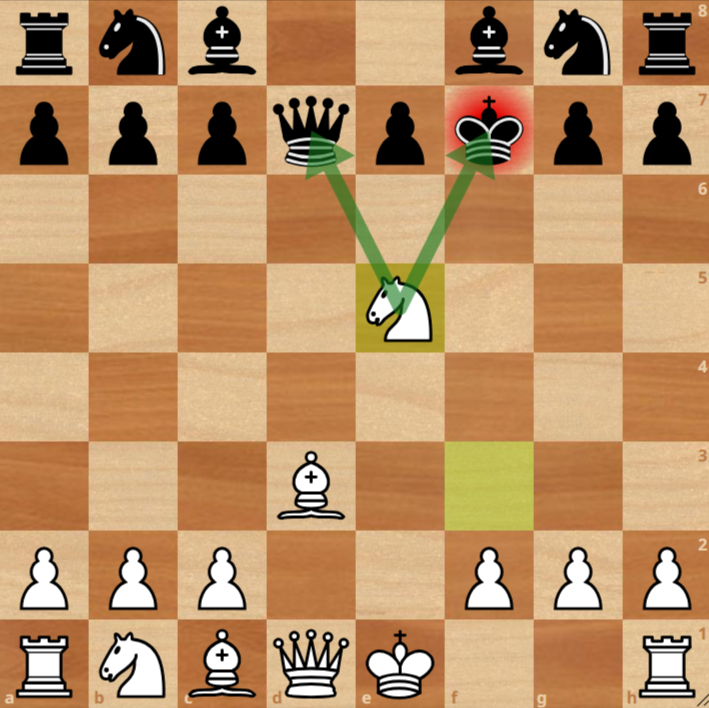
The c2 square is particularly dangerous for White. A Black knight jumping to c2 attacks both the king on e1 and the rook on a1 simultaneously. This creates a devastating, game-ending fork. It appears constantly when White fails to protect the c2-pawn early on.
Coach’s Tip: To spot forks instantly, make it a habit to ask yourself after every opponent move: Which two pieces are completely unprotected or clustered close together?
When practicing, focus on knight forks first because they are the hardest to visualize. Once you master knight fork patterns, discovering bishop and rook forks becomes almost automatic. After you complete a puzzle, pause for five seconds and visualize where else that same fork pattern could appear on the board to train your mind to recognize variations.
The Pin: Defensive Beginner Chess Tactics to Freeze Opponents
A pin occurs when an attacked piece cannot move because doing so would expose a more valuable piece—like the king or queen—behind it. While a fork forces an immediate choice between two targets, a pin completely paralyzes a piece, rendering it useless.
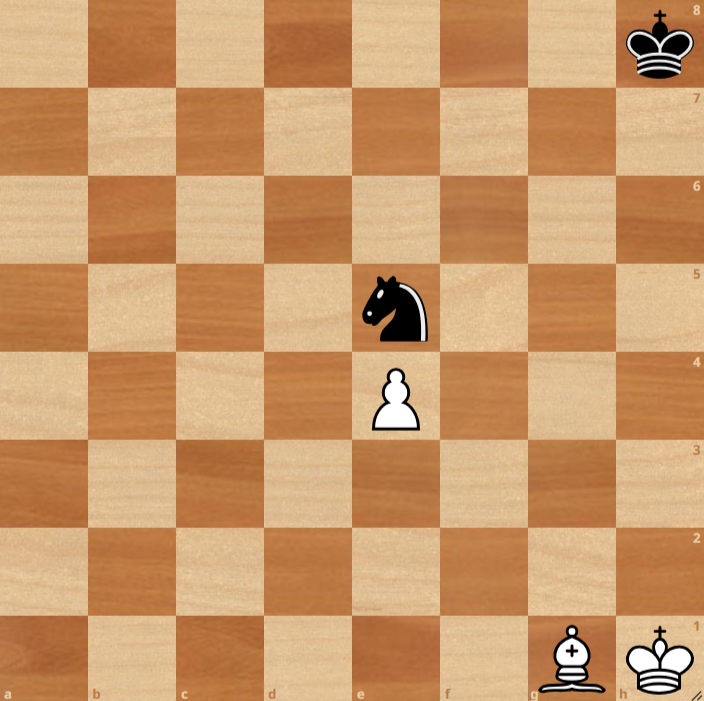
In the position above, if White plays Bd4, you pin the e5-knight because it cannot move without putting the h8-king under direct check.
Another classic beginner blunder occurs directly on the e-file: a White rook on e1 pinning Black’s queen or bishop on e7 straight to the uncastled king on e8.
The real advantage of a pin isn’t just winning material; it’s that your opponent’s best-placed piece becomes frozen. This gives you the tactical freedom to improve your own position, launch an attack elsewhere, or pile more pressure onto the pinned piece until it breaks.
How to Train Your Pin Vision
Most beginners miss pins because they focus only on immediate threats rather than scanning for pieces that sit on the same line. Train yourself to identify pins by working backward:
- Locate the enemy targets first by finding your opponent’s king, queen, and rooks.
- Tracing open lines comes next, scanning every diagonal, file, and rank extending from those pieces.
- You must then find the shield, identifying any minor piece stuck in the middle that you can exploit.
Skewers and Discovered Attacks: Forcing Wins
A skewer is simply a pin in reverse: a high-value piece stands in front of a weaker piece. The valuable piece is forced to move out of check or attack, exposing the defenseless target behind it.
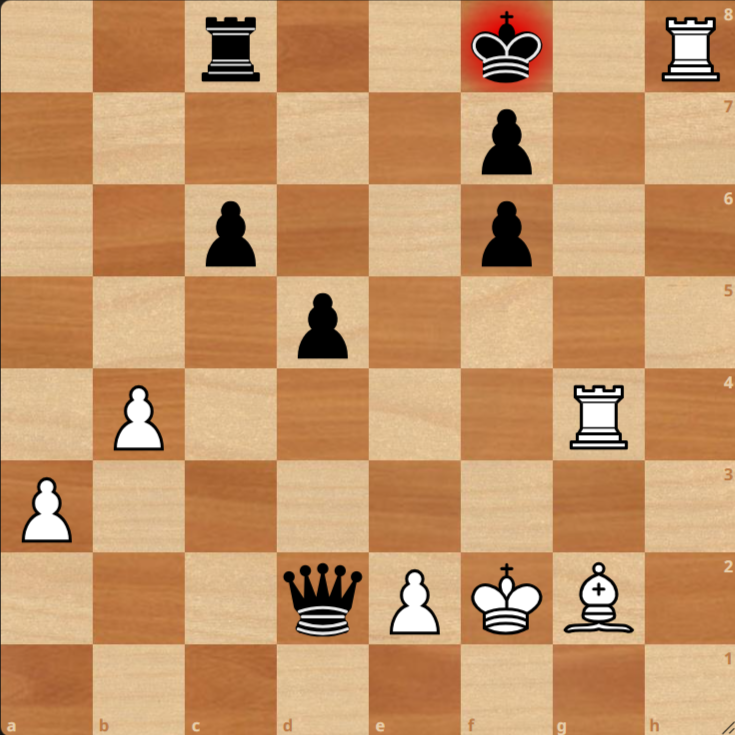
For example, when White’s Rook delivers a check from h8 to Black’s king on f8, the king must step aside, leaving a black rook unprotected on c8 to be captured on the next move. Skewers devastate beginners because the forcing nature of the check leaves absolutely no room for escape.
How Discovered Attacks Create Double Threats
Discovered attacks rely on tactical camouflage. By moving one of your active pieces, you clear the pathway for a hidden long-range piece (a rook, bishop, or queen) behind it to launch an attack.
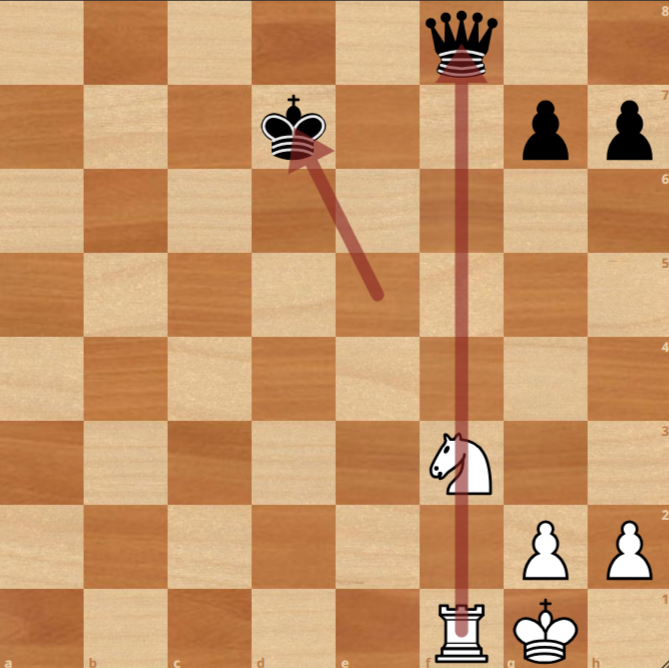
A rook on f1 is blocked by your knight on f3. Moving that knight to e5 creates a threat of its own. It also suddenly unleashes the rook to attack the opponent’s queen on f8.
The unique power of a discovered attack lies in its surprise element. Your opponent focuses entirely on the piece that just moved. They completely fail to notice that an entirely different, stationary piece now threatens their most valuable asset.
Your 4-Week Tactical Training Plan
Real games never announce which tactic is coming. To turn these patterns into pure visual instinct, you must practice them systematically.
- Week 1: Master forks. Focus heavily on tricky knight movements.
- Week 2: Study pins. Practice locking down open files and diagonals.
- Week 3: Learn skewers. Combine these with discovered check setups.
- Week 4: Solve mixed puzzles. Simulate real tournament game conditions.
Consistency beats duration every single time. Spending just 20 minutes a day on mixed puzzle solving builds the automatic pattern recognition you need under tournament time pressure.
Final Thoughts
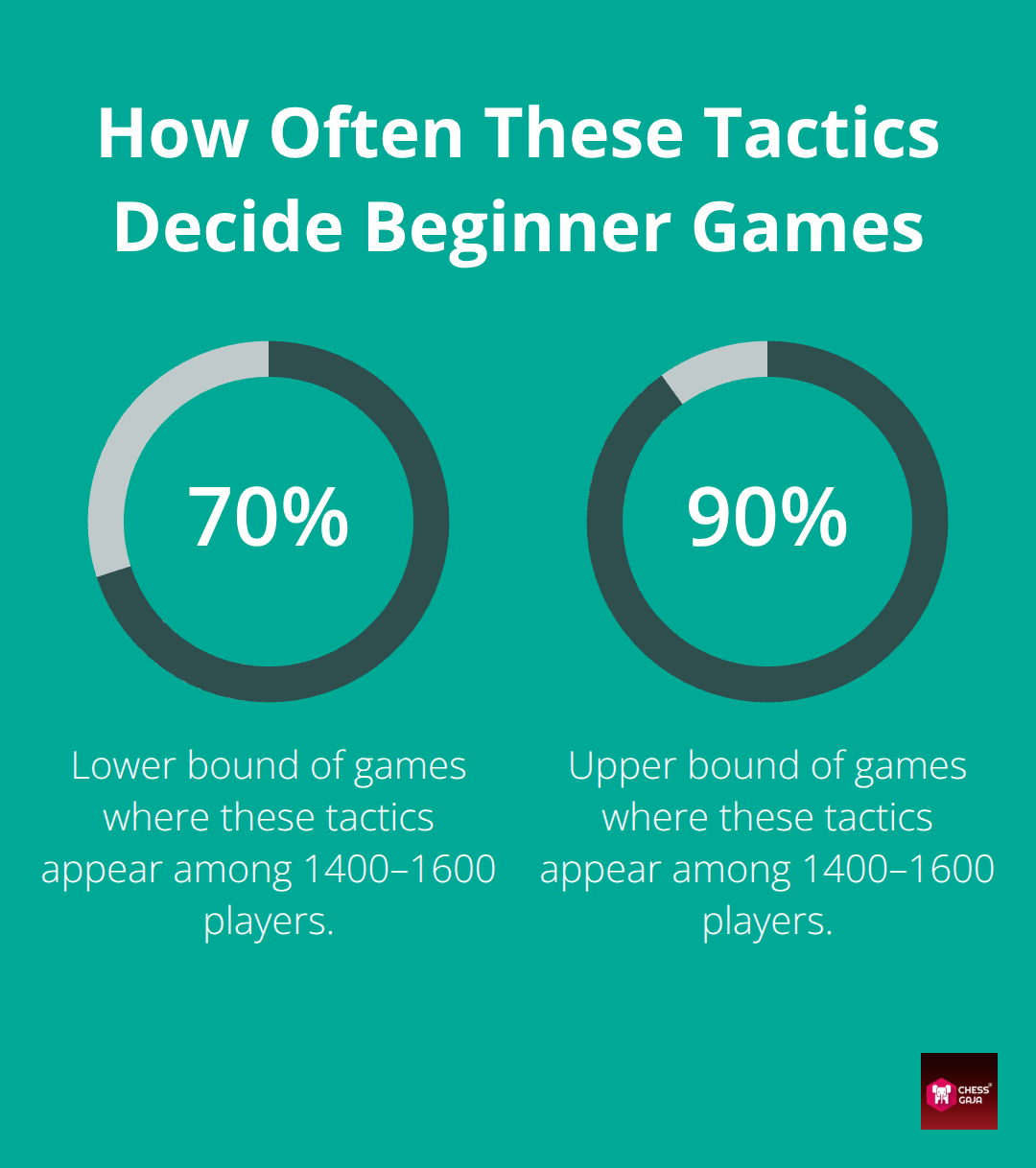
You now understand the three key chess strategies that decide most beginner chess games: forks win material through simultaneous attacks, pins paralyze pieces by threatening more valuable targets, and skewers force high-value pieces to move and expose weaker ones behind them. These three patterns appear in roughly 70 to 90 percent of games between 1400 and 1600 rated players, which means mastering them transforms your results faster than studying openings or endgames.
Your next step is to commit to one week of focused practice on forks alone. Follow this with a week on pins, and then a week on skewers. If you want personalized guidance on which specific patterns to prioritize, you can explore our 1-on-1 chess training programs directly. We offer customized coaching from FIDE-rated instructors who analyze your games. They create specialized plans to accelerate your improvement. The combination of daily puzzle practice and expert feedback builds a flawless foundation for advanced play.