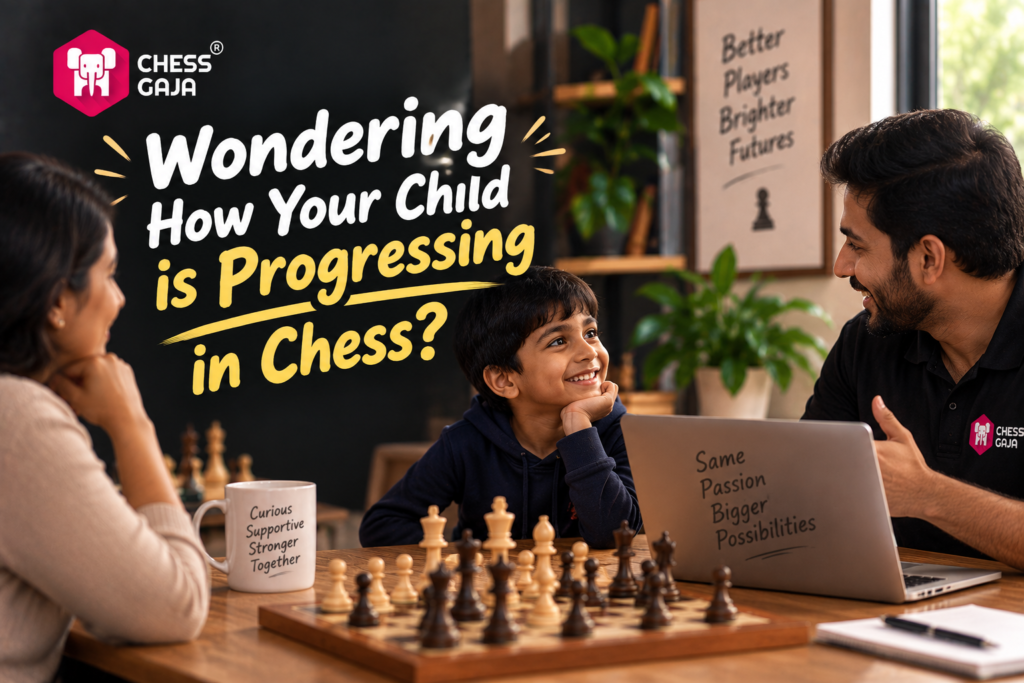
Your child’s chess rating plateaus. You wonder what’s happening in lessons. You’re unsure how to support practice at home.
Monthly parent meetings in chess bridge this gap. At Chess Gaja, we’ve found that parents who meet regularly with coaches see their students improve significantly faster than those who don’t. These structured check-ins transform you from a bystander into an active partner in your child’s development.
How Accountability Transforms Chess Progress
Concrete Numbers Drive Real Progress
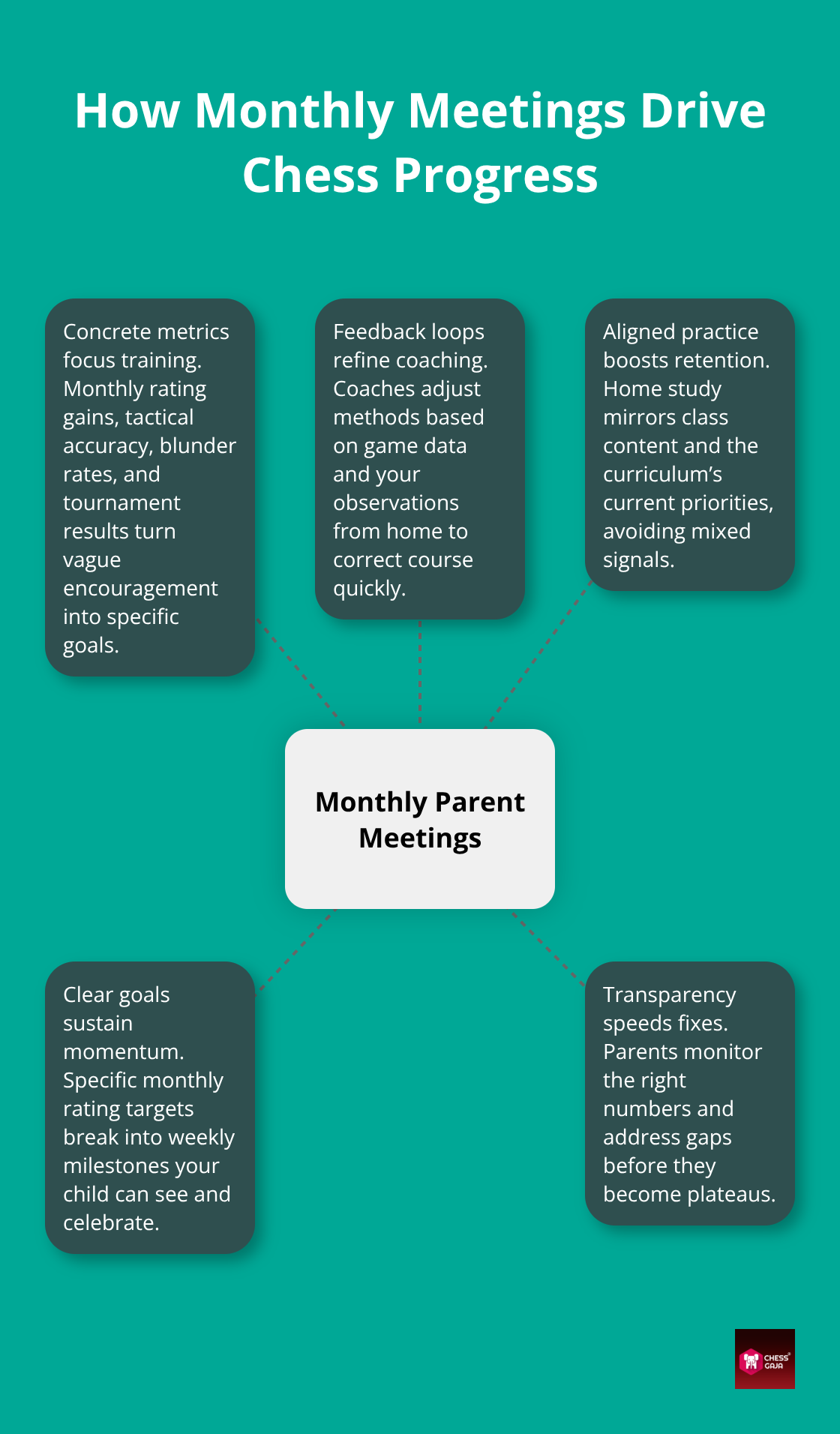
Accountability works when parents see concrete numbers. Coaches track student progress against specific benchmarks: rating gains, tournament placements, tactical accuracy percentages, and blunder frequency in rated games. Monthly meetings let you examine Lichess standings, and past performance metrics. Together, you identify exactly where your student succeeded or struggled. This specificity matters because it shifts the conversation from general encouragement to actionable insight. A parent seeing an 850-to-920 rating jump over three months understands their child’s pace. They can then set realistic expectations for the next quarter. Without monthly check-ins, parents often misjudge their child’s advancement, either underestimating steady growth or overestimating isolated wins.
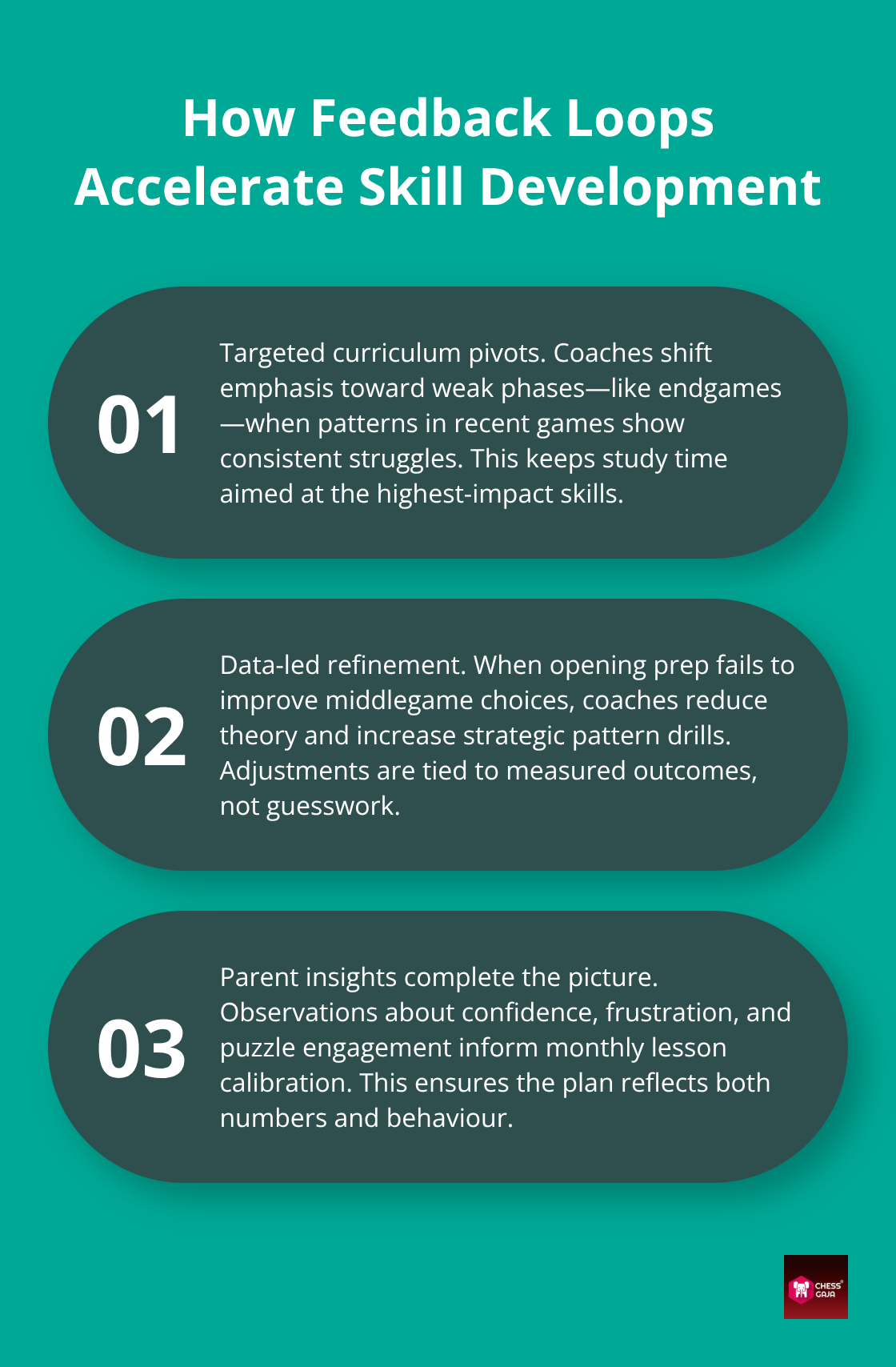
Feedback Loops Accelerate Skill Development
Regular feedback cycles create a mechanism that accelerates skill development because coaches adjust teaching methods based on what’s working. If your child consistently wins tactical positions but loses endgames, the coach pivots the curriculum emphasis during the next cycle. If opening preparation fails to improve middlegame decisions, the coach pivots. They reduce opening theory and increase strategic pattern recognition drills. These adjustments happen fastest with structured parental feedback. Your observations about home practice, frustration points, and puzzle engagement help the coach calibrate upcoming lessons.
Alignment Eliminates Wasted Effort
Structured communication prevents knowledge gaps that derail progress. Many chess students plateau because parents and coaches unknowingly work at cross-purposes: the coach teaches rook endgames while the parent assigns random tactical puzzles from an app, or the coach emphasizes opening preparation while the parent pushes tournament play without adequate preparation. Monthly meetings align these efforts. You learn the exact curriculum your child is progressing through, which tactical themes they’re studying this month, and what home practice strengthens their learning most. The coach explains why your child needs specific endgame knowledge before advancing. Understanding this reasoning brings clarity to the overall pacing. This alignment eliminates wasted effort and compounds improvement over months and years.
What parents actually learn in these monthly meetings-and how that knowledge translates into measurable progress-reveals why structured check-ins matter so much more than occasional conversations.
What Parents Learn in Monthly Meetings
Concrete Data Reveals Exactly What Drives Progress
During a monthly parent meeting, your coach walks through three concrete pieces of data: your child’s current Lichess rating, their performance in the academy’s monthly tournaments, and their accuracy metrics from recent rated games.
A parent from Dubai might learn that their child’s rating climbed steadily from 950 toward their 1000-point milestone over the quarter, while their tactical accuracy in the last ten games showed a consistent increase. The coach then explains what produced this improvement: focused daily puzzle solving (averaging 20–25 minutes per day) combined with work on knight-fork patterns, which appeared in three of their recent wins.
This specificity matters because you’re not hearing vague praise; you’re seeing the exact mechanisms that created measurable growth. The coach also identifies problem areas with equal clarity. If your student struggles in rook endgames despite tactical strength, the coach shows specific positions from their recent tournament games where they misplayed a rook-and-pawn endgame, costing a draw or win.
Personalized Study Plans Target Specific Weaknesses
The personalized study plan that emerges from these meetings is where check-ins prove their worth. Rather than assigning generic puzzles, the coach recommends training tailored to your child’s rating and weaknesses. For an 1100-rated student struggling with back-rank defense, the coach might suggest 15 minutes on back-rank patterns using Lichess or Chessable, followed by 15 minutes on mixed tactical themes.
You receive a written summary specifying books, puzzle volume, and tournament timelines. The coach explains why mastering these concepts comes first. You then understand this is a sequenced foundation that prevents future plateaus, not arbitrary pacing.
Tracking Progress Between Meetings Keeps Momentum Strong
Between monthly meetings, you track progress against these specific recommendations, and when you return the following month, the data shows whether the plan worked or needs adjustment. A parent in Singapore or New York receives the same level of detail, tailored to their child’s specific performance data. This cycle-measure, adjust, execute, measure again-compounds improvement over months and years because each month builds on concrete evidence of what works. The coach doesn’t guess at what your child needs; the numbers tell the story. Your role shifts from wondering if your child is improving to actively monitoring the exact metrics that matter. This transparency transforms how you support practice at home, because you know precisely which skills need attention and why those skills matter for your child’s next rating milestone.
How to Structure Your Home Chess Practice Between Coaching Sessions
Create a Fixed Practice Schedule That Fits Your Week
The monthly meeting provides the data. Now you need a system that converts that data into consistent home practice. Most parents fail here. They receive a personalized study plan from their coach, feel motivated for two weeks, then drift back to random puzzle apps or no practice at all. The problem isn’t motivation-it’s the absence of a specific structure that fits your family’s actual schedule.
Your coach recommends 20 to 25 minutes of targeted daily tactical practice and 10 minutes of pattern review, but you need to know exactly when those sessions happen in your week, what tools you use, and how you measure whether your child actually completed the work.
Start by blocking practice time into your family calendar the same way you block chess classes. If your child takes a class on Tuesday at 4 PM, schedule 25-minute tactical blocks on non-class days (Monday, Wednesday, Thursday, Friday, and Saturday) at 3:30 PM.
Assign specific puzzle platforms to specific days: Lichess puzzles on Monday and Wednesday, Chessable or Chess.com on Friday. This removes the decision-making burden-your child knows exactly which tool and which time slot applies each day. Parents in Dubai, Singapore, and New York using this calendar report near-perfect assignment completion. In contrast, families with flexible schedules show far lower completion rates. The difference isn’t willpower; it’s systems.
Align Home Study With Class Content
Your coach delivers AI-powered class summaries after every session, and these summaries should become your roadmap for home study between monthly meetings. The summary specifies which tactical themes your child studied, which endgame concepts appeared, and what opening lines were reviewed. Use this summary to guide which puzzles your child solves at home. If the class covered back-rank defense, assign back-rank puzzle sets that week rather than random mixed puzzles. If the class introduced rook-and-pawn endgames, your child practices those specific positions during their endgame study block. Aligning class content with home practice compounds learning. Your child reinforces the exact concepts taught by their coach, rather than jumping between random topics.
Track Weekly Progress Toward Your Monthly Goal
Set one specific goal for the next month during your monthly meeting—not vague improvement, but a concrete milestone. If your child is currently 950 rated, the goal might focus on mastering key tactical themes and hitting target accuracy metrics on puzzle sets to build a solid foundation for their next rating bracket.
Write this target down and track performance weekly using chess engines or Lichess standings or official performance metrics. Celebrate when they reach intermediate milestones—like hitting a 5-game streak without single-move blunders or achieving 80%+ accuracy rate on puzzle sets. This creates momentum because your child sees tangible skill progression in real time rather than fixating solely on rating fluctuations.
Measure Results and Adjust the Plan
Your next check-in brings concrete performance data. This data proves if home practice produced rating gains, showing whether to adjust the plan or alter practice volume. This cycle—structure, execute, measure, adjust—separates students who show consistent, long-term skill progression from those who remain stuck on rating plateaus. The coach examines which practice blocks your child completed, which puzzle types strengthened their performance most, and where gaps still exist. If your child hit the rating target but struggled in endgames, the coach increases endgame study for the next month. If your child missed the target despite completing all practice, the coach might recommend longer daily sessions or different puzzle platforms that better match their learning style.
Final Thoughts
Monthly parent meetings in chess transform you from a supportive observer into an informed partner who understands exactly which skills need attention and how to measure progress week by week. Without this structure, coaching remains isolated-your child improves during lessons but stalls between sessions because home practice lacks direction. With monthly check-ins, you track concrete metrics like rating gains, tactical accuracy, and tournament results, spot what’s working, and adjust what isn’t.
This accountability-driven approach produces measurable results. Parents who attend monthly parent meetings chess see their students gain much faster than those who skip them. When your child’s coach explains why mastering basic endgame patterns matters before advancing to the next curriculum level, you stop wondering if the pacing is right and start understanding the reasoning behind it. When you structure home practice around specific recommendations rather than random apps, your child completes assignments consistently and builds momentum.
We at Chess Gaja have built this accountability-driven model into our coaching approach. Our coaches hold monthly meetings with every family and deliver post-session AI summaries. We also provide personalized study plans tailored to your child’s rating and core weaknesses. If you’re ready to see what structured, accountability-driven chess coaching produces, book a Paid Starter Class with Chess Gaja and let your coach evaluate your child’s current level and show you exactly how we measure progress.