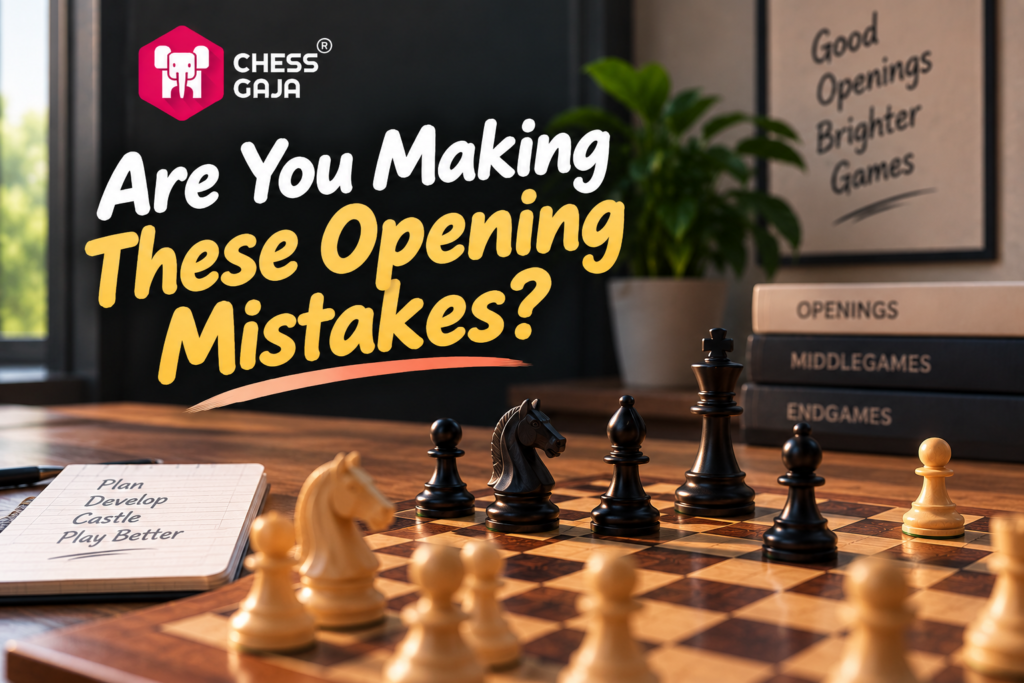
Your opening moves set the tone for everything that follows. Most beginner players make the same opening phase mistakes repeatedly-moving pieces without purpose, ignoring king safety, and falling behind in development.
At Chess Gaja, we’ve seen these patterns hold back thousands of young players. The good news is that fixing these early planning slips doesn’t require memorizing complex theory. It requires understanding three core principles and practicing them consistently.
The Three Mistakes That Cost Beginners Games
Moving the Same Piece Repeatedly Wastes Your Tempo Advantage
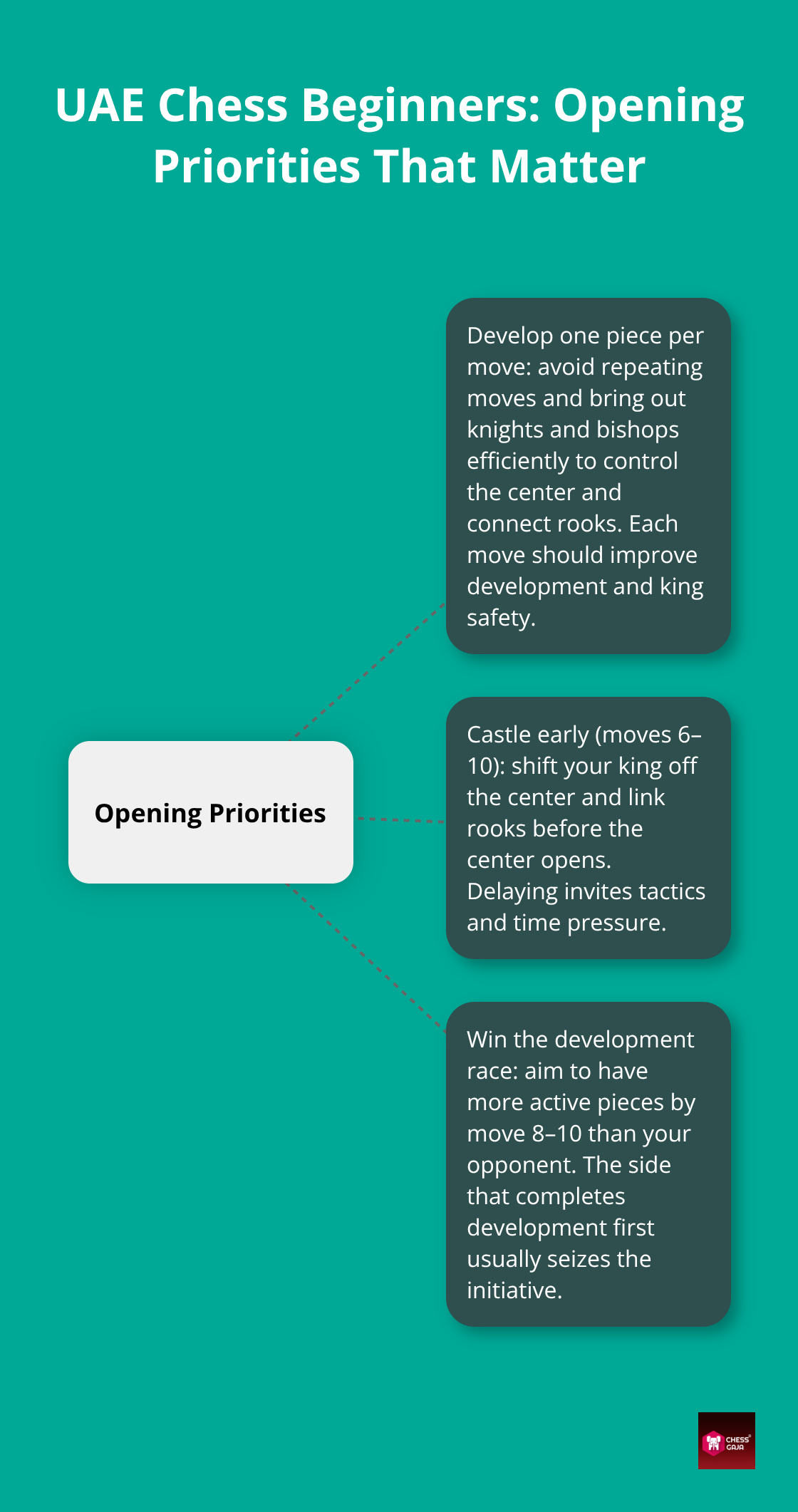
Moving the same piece multiple times in your opening is one of the fastest ways to fall behind. When you move a knight from b1 to c3, back to b1, and then to c3 again, you waste three tempo while your opponent develops two or three pieces. Each move in the opening should advance your position toward control of the center and safety for your king. If you find yourself moving the same piece twice before developing your other pieces, stop and ask why.
Usually, there’s no good reason.
The solution is straightforward: develop one piece per move until your king is safe and your pieces occupy strong squares. This means prioritizing your knights and bishops onto active squares, controlling key central open diagonals, and connecting your rooks by bringing your queen to a safe, supportive square. Don’t chase your opponent’s pieces around the board or try to win material in the first ten moves. That reactive approach guarantees you’ll move pieces multiple times without purpose.
King Safety and Castling Cannot Wait
Neglecting king safety is even more dangerous than falling behind in development. Many young players castle late or skip castling altogether because they focus on attacking. Castling moves your king away from the center and connects your rooks—two critical defensive tasks that must happen early. Make King Safety and Castling your priority early on by aiming to castle by roughly moves 6–10, before the center opens up and tactical threats appear.
You don’t need a perfect position to castle; you need a safe king. The same applies to pawn structure around your king. Avoid pushing the f-pawn or h-pawn in front of a castled king unless you have a concrete reason. These pawn moves create weaknesses that strong opponents exploit relentlessly. A single careless pawn push can transform a safe position into a vulnerable one within two or three moves.
Development Is a Race, Not a Slow Process
Falling behind in development means your opponent controls more squares and has more pieces ready for the middlegame. Count your developed pieces after move 8 and compare them to your opponent’s. If your opponent has four pieces developed and you have two, you’re already in trouble. Remember that opening development is a race, where rapidly getting your pieces into active positions is essential.
Get your knights and bishops out, castle your king, and only then worry about executing your middlegame plan. The player who completes development first gains the initiative and forces their opponent to respond rather than attack. This shift in control-from reactive to strategic-happens only when you prioritize development over everything else in the opening. Analyzing your own games reveals the mistakes that actually cost you rating points, which is where the real improvement begins.
How To Spot Your Mistakes During the Game
Play Strategically, Not Reactively
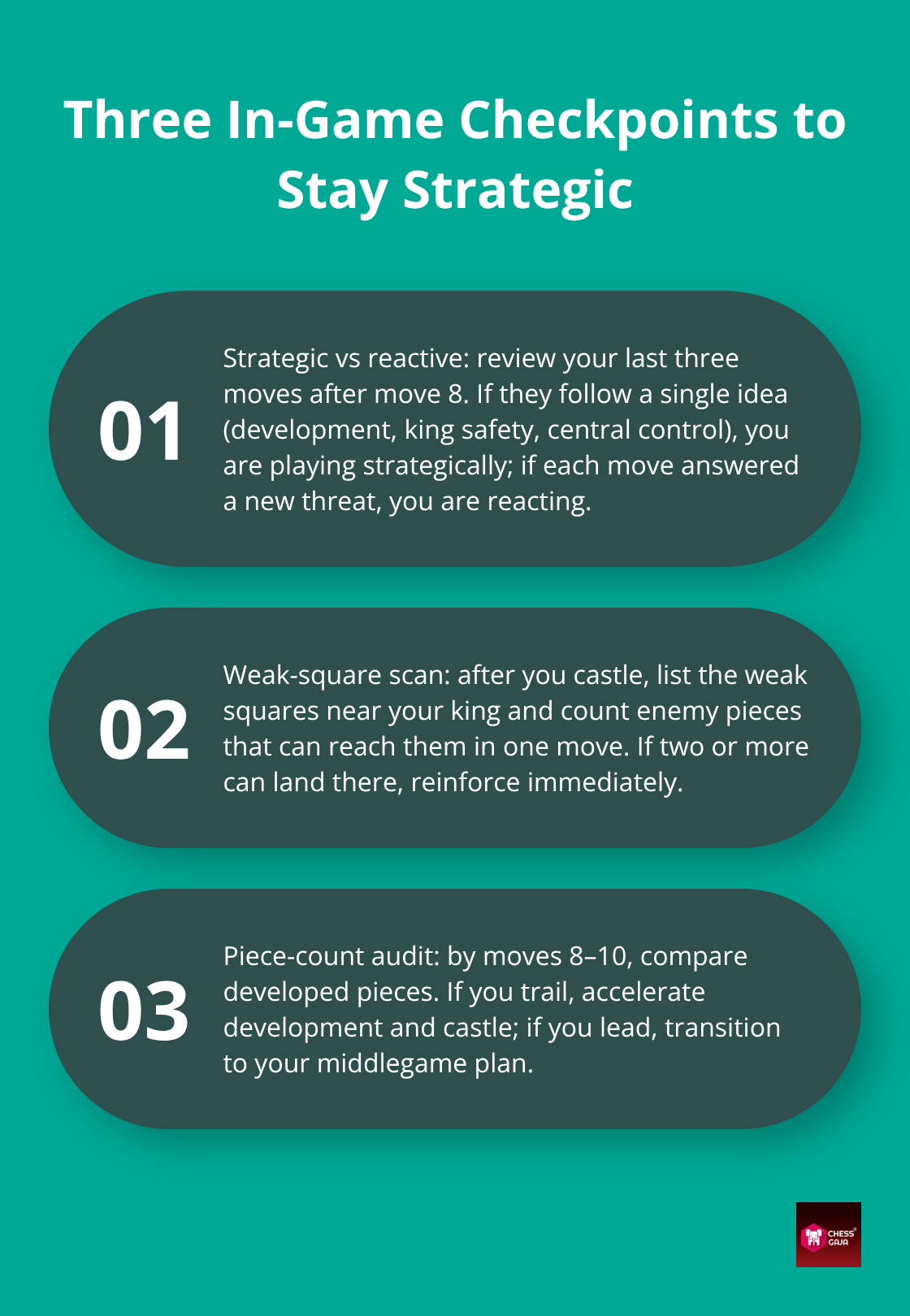
During your game, you need a quick way to tell whether you’re reacting to your opponent or executing your own plan. The difference shows up clearly in how you spend your first fifteen moves. Moving pieces merely to respond to immediate threats means playing reactively. In contrast, developing your pieces toward the center, securing your king, and building a coordinated position means playing strategically.
A concrete test: after move 8, ask yourself whether your last three moves followed a consistent idea or addressed separate threats. Many of our scholastic students across the US, UAE, and Singapore use this exact checkpoint during training games. If your moves lack a connecting thread, you’ve drifted into reactive mode. Return to your opening plan immediately by advancing piece development or securing key central control.
Identify Weak Squares Around Your King
Weak squares around your king become visible the moment you castle. When castling kingside as White, the f3, g3, and h3 squares (or f6, g6, and h6 for Black) become your key defensive responsibility. Similarly, when castling queenside, watch a3, b3, and c3 (or a6, b6, and c6 for Black). These squares matter because opponent pieces landing on them create direct tactical threats. Count how many of your opponent’s pieces can reach these weak squares in one move. If the answer is two or more, you have a problem that demands immediate attention.
Defend these squares with your pieces or pawns, or move your king to a safer location. You’ll also notice weak squares when your opponent pushes pawns aggressively. If they push their f-pawn, g-pawn, or h-pawn, the squares adjacent to those pawns (which are no longer defended by them) become permanently weak. Outposting a bishop or knight on those undefended squares often decides the game in the middlegame. During your next practice game, once your king is castled, spend ten seconds identifying which squares around your king are most vulnerable. This simple habit prevents the tactical blows that destroy beginner positions.
Count Your Developed Pieces Against Your Opponent’s
Finally, count your developed minor pieces and rooks against your opponent’s at move 10. Developed means a piece has moved from its starting square to an active square where it controls the center or supports your king’s safety. While central pawn pushes (like e4 or d4) control key space, pawns themselves don’t count as piece developments. A knight on c3 or f3 counts. A bishop on active squares like c4, d3, or f4 counts. Your queen counts as developed only if it sits on a safe, supportive square like e2, d2, or c2 that connects your rooks—not if it remains unmoved or gets caught pawn-hunting on a5 or b6.
If you have three developed pieces and your opponent has four, you’re behind. If you have four and they have three, you’re ahead. This simple count reveals whether you need to accelerate development or whether you can afford to start executing a plan. Most beginner losses happen because a player reaches move 12 with only two minor pieces active while their opponent has developed all four minor pieces and castled their king. Although material remains equal, the lead in development and positional initiative is overwhelming. Once you master these three checkpoints-reactive versus strategic play, weak squares, and piece count-you’re ready to move beyond spotting mistakes and start analyzing your games through structured practice.
Building Your Opening Skills Through Structured Practice
Train Pattern Recognition With Opening-Focused Puzzles
Spotting mistakes during a game is only half the battle; training your brain to avoid those mistakes before they happen completes the equation. You can achieve this most effectively through three interconnected practice methods that reinforce each other. Puzzle training teaches you to recognize opening patterns in isolated positions, timed practice games force you to make decisions under realistic pressure, and game review shows you the patterns you actually struggle with across multiple games.
Start with puzzles focused on opening principles rather than tactical fireworks. A puzzle that asks you to find the best developing move teaches more than a puzzle that asks you to find a checkmate in three. Sites like Chess.com and Lichess offer opening-specific puzzle sets that drill principles like piece development, king safety, and central control. Spend 10 to 15 minutes daily on these puzzles before moving to full games. Most beginners skip this step and jump straight to playing, which means they repeat the same mistakes over and over. The puzzle phase trains your pattern recognition so that when you sit down to play, your brain recognizes safe moves and dangerous moves faster.
Play Rapid Games and Review Immediately
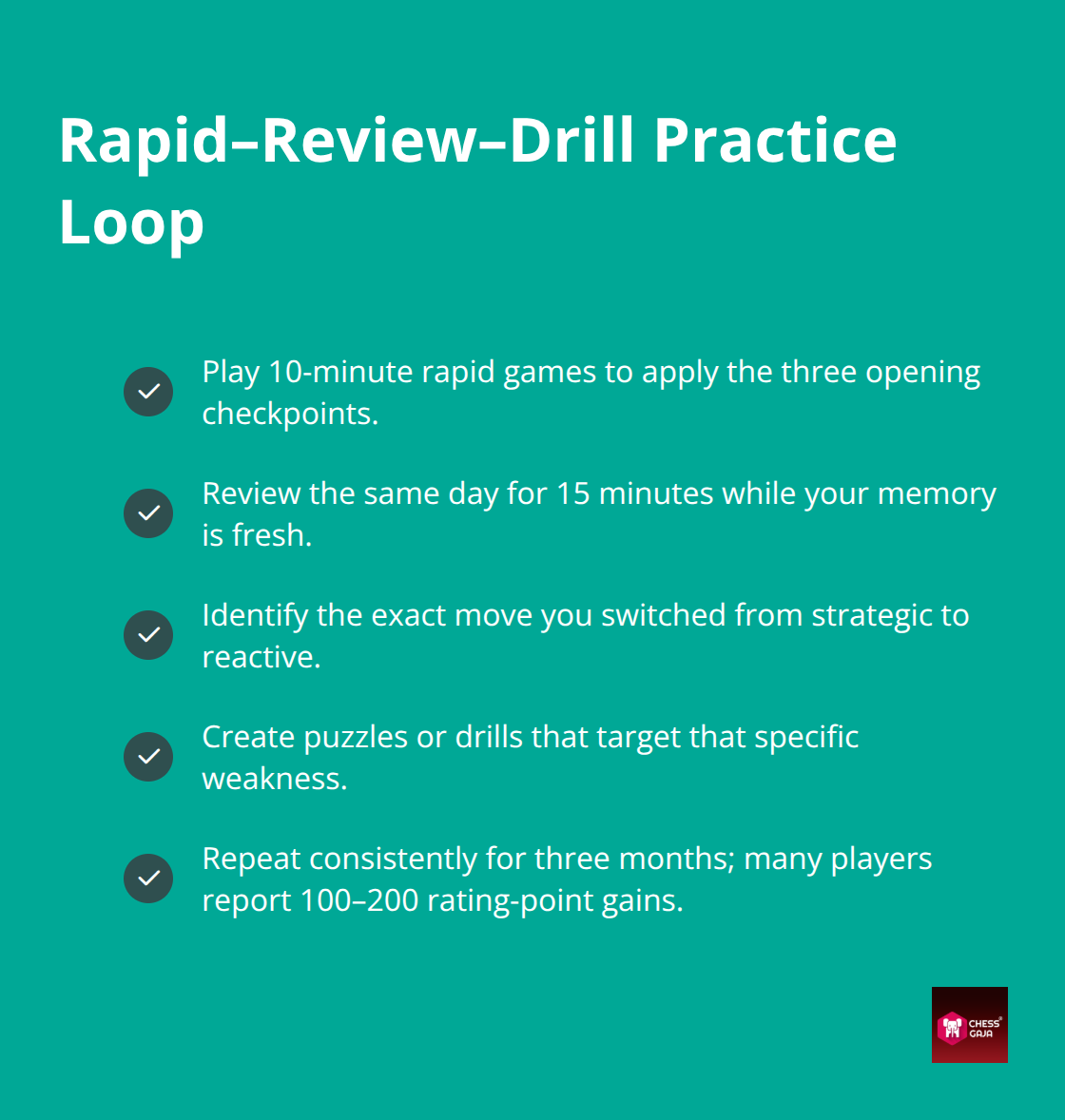
Next, play practice games with time controls that force better planning. Blitz chess below 3 minutes per side teaches bad habits because you have no time to count developed pieces or check for weak squares. Rapid chess at 10 minutes per side gives you enough time to apply the three checkpoints from the previous section without playing so slowly that you never finish a game.
After every rapid game, spend 15 minutes reviewing your moves while the memory of the game is still fresh. Look for the exact moment where you stopped playing strategically and started reacting to your opponent’s threats. Mark that moment in your analysis. Over five to ten games, recurring patterns will emerge. For instance, you might notice you start reacting around move 12, or maybe you tend to castle too late. In other cases, you might find yourself repeatedly moving the same piece twice without a clear purpose.
Target Your Weaknesses With Deliberate Practice
Once you spot your personal pattern, you can address it in your next puzzle session (by drilling positions that match that specific weakness). This cycle of rapid practice, immediate review, and targeted puzzle training accelerates improvement far faster than playing casually without analysis.
Players in Singapore and the USA who follow this method report rating improvements of 100 to 200 points within three months. Consistency is the key here—one week of deliberate practice beats eight weeks of random playing. This structured approach works because it connects three separate activities into a single feedback loop: you play, you analyze, you drill, and you play again with sharper pattern recognition.
Final Thoughts
Solid opening play transforms how you approach the middlegame because you enter with developed pieces, a safe king, and control of the center. Players in the USA, UAE, and Singapore who master opening phase mistakes report that their middlegame decisions become sharper and faster because they stop scrambling to catch up on development or fix king safety problems. Gaining such clarity gives you the confidence to execute plans instead of second-guessing every move.
Consistent practice prevents costly early errors because repetition trains your brain to recognize danger before it strikes. The three checkpoints from this article—counting developed pieces, identifying weak squares, and distinguishing strategic from reactive play—become automatic after you apply them across ten to fifteen games. As your pattern recognition improves, mistakes that once cost you games become easy to avoid.
Our coaching team at Chess Gaja has guided thousands of young players through our structured GM-led curriculum across 40+ countries. If you’re ready to eliminate opening phase mistakes and build the foundation for serious improvement, book a Paid Starter Class with one of our FIDE-rated coaches for a professional skill evaluation and customized roadmap for your chess development.