

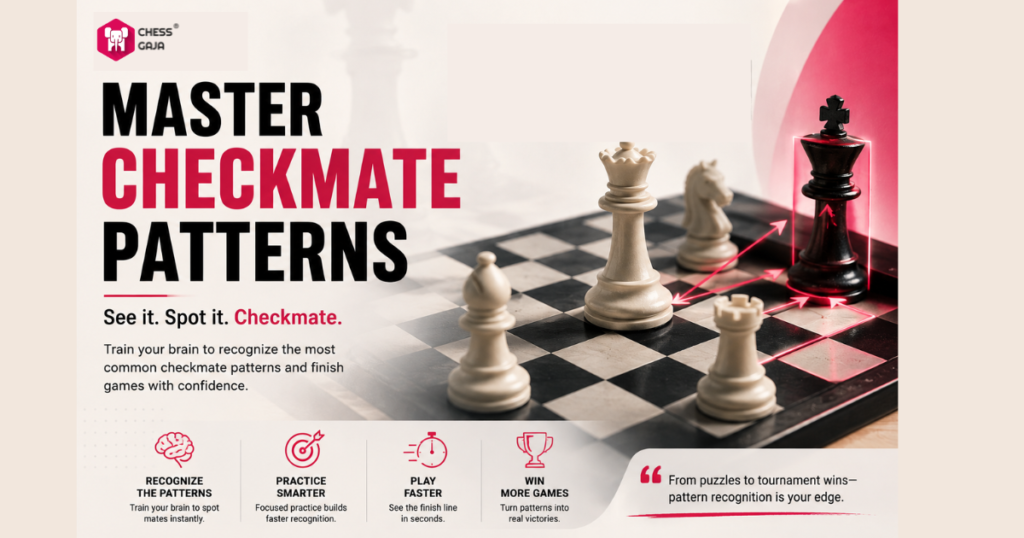
You’ve seen it happen in tournaments: a player spots a winning move in seconds while their opponent misses it entirely. The difference isn’t talent-it’s checkmate pattern practice.
At Chess Gaja, we’ve coached thousands of students across 40+ countries, and we’ve found that recognizing checkmate patterns is the fastest way to improve your tactical vision. When you train your brain to spot these patterns, you stop calculating every move and start seeing the finish line.
What Makes a Checkmate Pattern Stick
Patterns become clear when you look at board shapes rather than single moves. In club and beginner games, decisive moments stem from structural vulnerabilities and tactical oversights. The player who spots the tactical motif first claims the point.
In fact, solving speed comes from exposure rather than intelligence. Regular practice on basic mates builds a strong mental image. Therefore, when you spot a back-rank threat, you instantly know where the rook goes.
This recognition speed leads directly to faster decisions during actual games. Players facing clock pressure cannot calculate every line. They need automatic pattern recognition to win in seconds.
Pattern Recognition Changes How Fast You Play
Tournament players at all levels rely on pattern recognition rather than deep calculation. Systematic training teaches your brain to see positions as familiar templates.
Motif patterns like back-rank or smothered mates recur constantly across different games. Using features like Lichess Puzzle Themes lets you isolate these specific themes.
Solving 20 back-rank puzzles builds recognition faster than solving 20 random puzzles. This focused training cuts decision time in games from minutes down to seconds.
The Patterns That Appear Most Often
Certain mate patterns show up most in real games. Back-rank weakness is the top danger for players under 2000 rating. It comes from overloaded defenders, not just blunders.
Smothered mates appear often in sharp openings where kings lack escape squares. Meanwhile, two-rooks mates (lawnmower mates) are essential endgames to master.
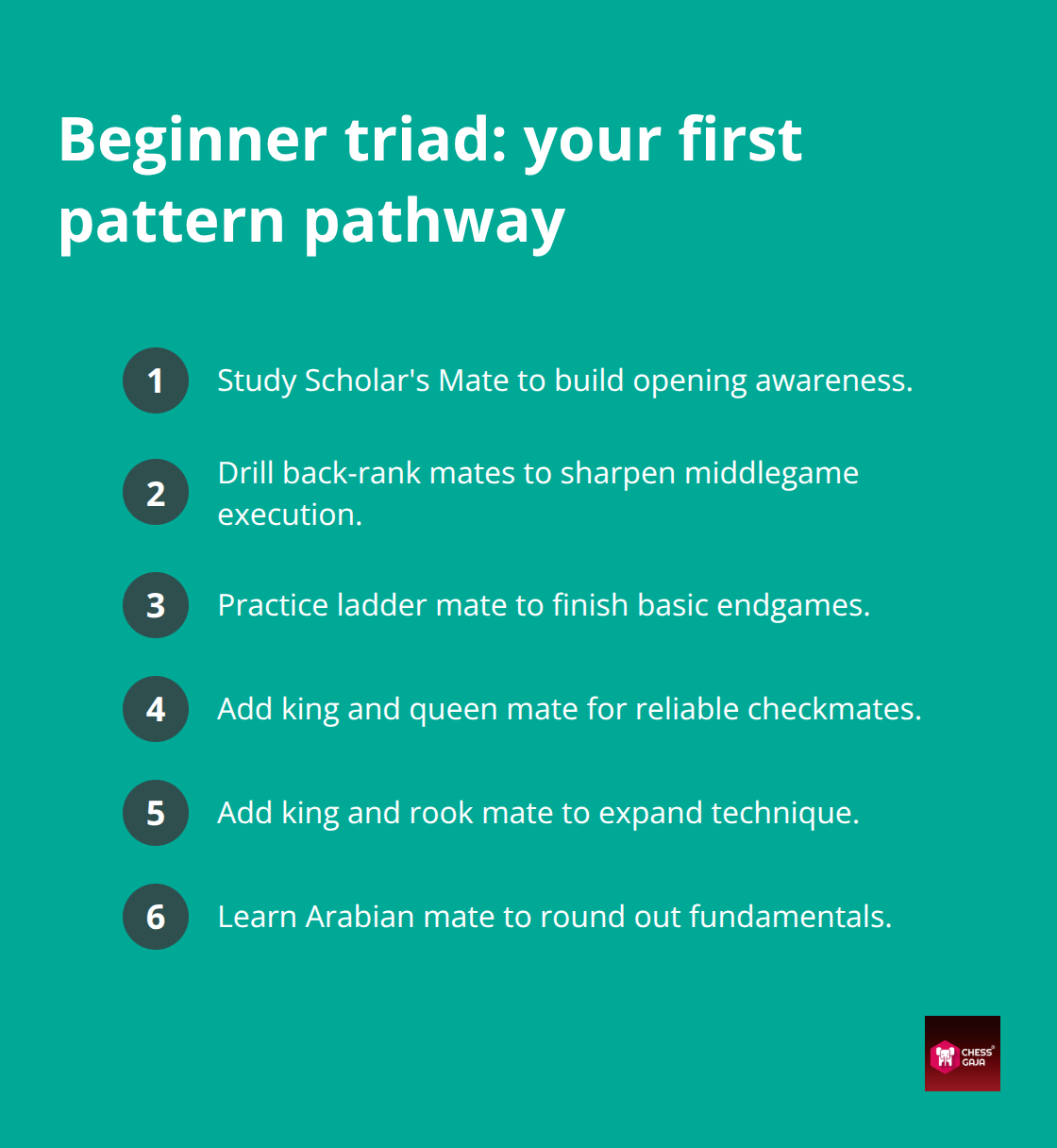
Start your training with the fundamental triad: ladder, back-rank, and smothered mates. Once these basic patterns become automatic, you can progress to advanced motifs like Anastasia’s mate.
How to Build Your Pattern Library Faster
In fact, structured practice determines how fast you absorb patterns. However, random puzzles teach very little because your brain treats each position as a separate problem.
Instead, isolate one pattern and solve 15 to 20 puzzles on that exact motif. Your brain quickly learns key visual markers, like a trapped king or a knight preparing a smothered finish.
Master one theme before starting the next. This step-by-step method speeds up your learning. Most students master the top three mates in 2 to 4 weeks.
Moving From Pattern Recognition to Tournament Execution
Recognizing patterns in puzzles is different from spotting them in live games. First, build fast recognition through repetition. Next, test your skills under real clock pressure against active opponents.
The Foundation: Focused Repetition Over Random Puzzles
Structure determines whether you master patterns in three months or struggle for a year. Random puzzles fail because your brain treats each layout as a unique problem. Isolating one pattern and solving 15 to 20 targeted puzzles builds automatic recognition. Your eyes learn to spot visual cues instantly.
For example, a student in Singapore using this method can spot a back-rank mate in under 10 seconds during tournament games.
Tools That Accelerate Pattern Mastery
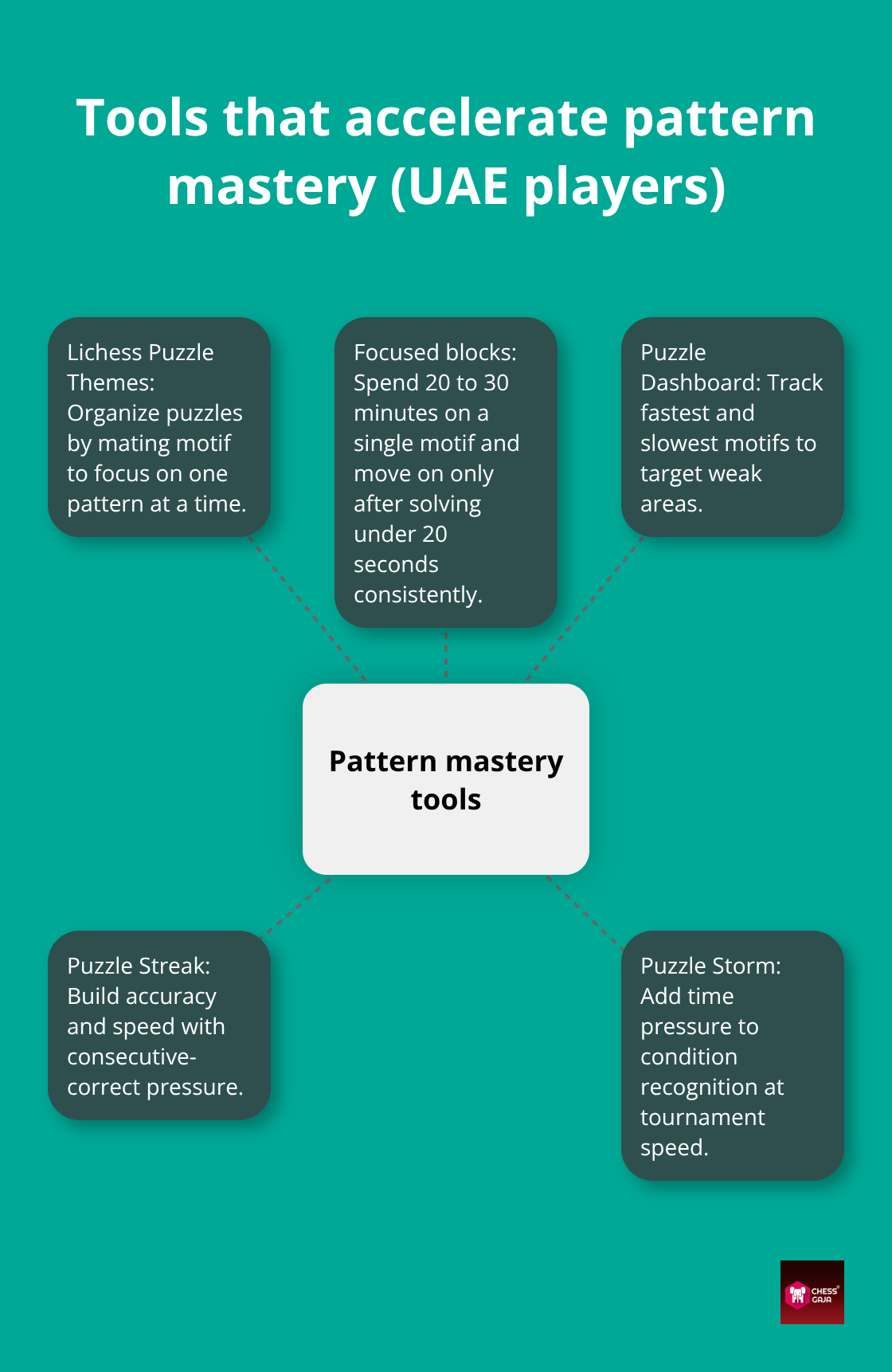
Lichess Puzzle Themes organize mates by type. Spend 20 minutes daily on one pattern. Switch themes once you solve simple mates quickly.
Next, check the Puzzle Dashboard to highlight your weakest motifs. In addition, using Puzzle Streak builds consistency through consecutive correct answers. As a result, this routine trains accuracy and speed at the same time.
Once you reach intermediate skill, use Puzzle Storm. It forces you to solve tactical puzzles under tight time limits. This conditions your brain to perform under real tournament pressure.
From Isolated Patterns to Tournament Application
After mastering the beginner triad, transition to studying standard opening lines. Next, analyze grandmaster games to see how professionals apply patterns under real pressure.
This routine keeps you from missing tactics in real games. You shift focus from quiet puzzles to fast decisions while the clock ticks.
The Pattern Recognition Advantage in Tournament Play
Strong players scan for patterns before calculating deep lines. Untrained players often miss quick wins because they calculate instead of looking at board shapes.
Trained players spot wins in 5 seconds. Untrained players take minutes or miss wins completely.
Training on specific patterns daily trains your eyes automatically. You quickly spot when a king lacks escape squares. This detection happens before conscious calculation starts.
During a recent tournament in Dubai, a Chess Gaja student spotted a smothered mate in 8 seconds. The opponent had no time to defend because the attack was so fast.
Speed provides an enormous practical edge. You save time on your clock while putting heavy pressure on your opponent.
Forcing Your Opponent Into the Mating Net
Turning pattern sight into win execution needs forcing moves. Checks, captures, and threats push the enemy king straight into your net.
Puzzle modes present ready-made positions without real opposition. In real games, opponents defend stubbornly and create tactical complications.
Therefore, you must learn to force opponents toward your patterns, rather than waiting for them to make mistakes.
A queen sacrifice works by pulling away defenders. Master games show how top players beat tough defense.
FIDE databases contain thousands of examples. Reviewing how masters eliminate defenders teaches you how to finish real games.
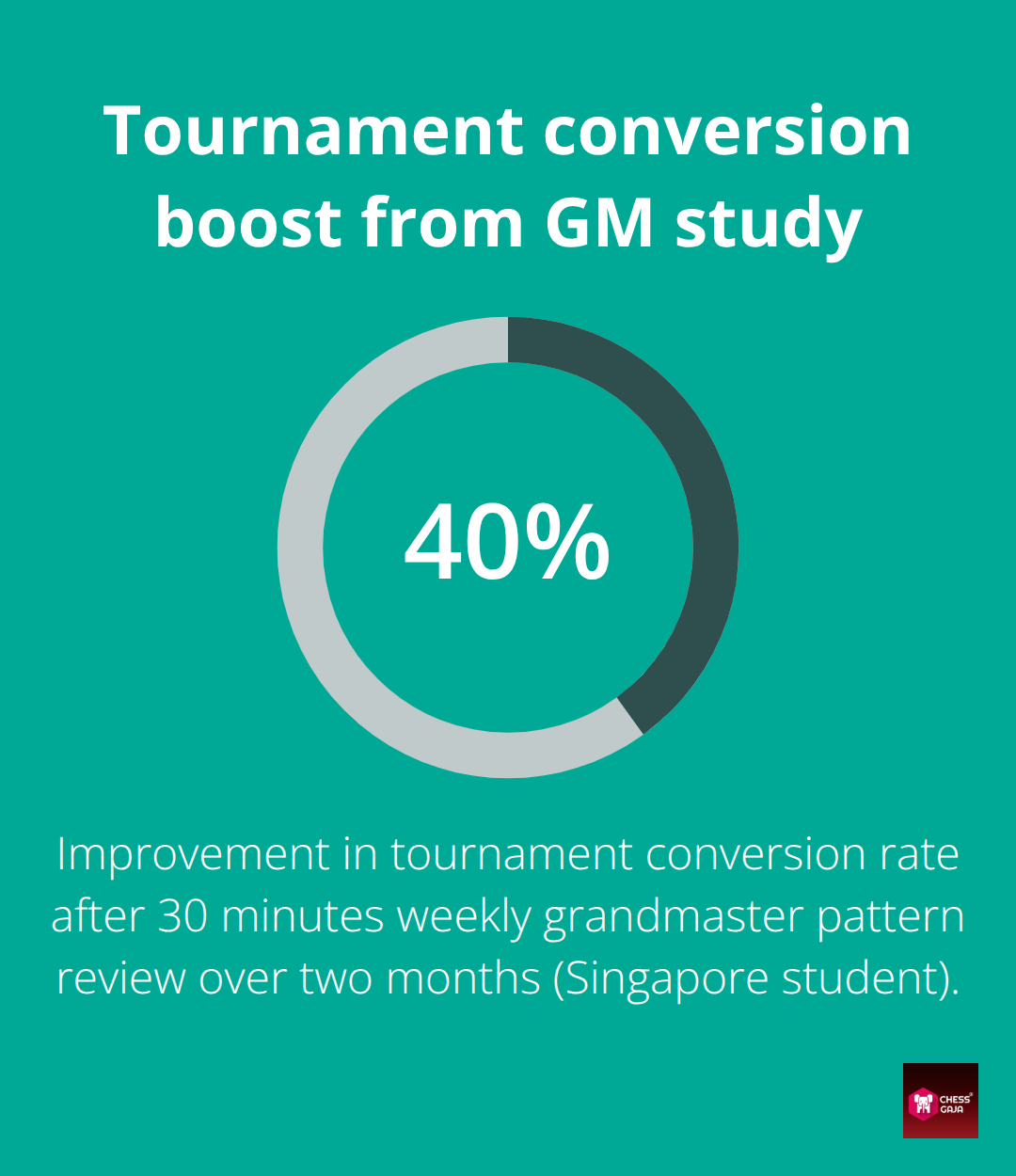
Spending 30 minutes weekly on master game study boosts your win rate.
Learning From Your Own Tournament Failures
Always analyze games where you held a winning advantage but failed to finish. Ask yourself three simple questions: Did you miss the pattern? Did you fail to force it? Did you allow counterplay?
Each mistake needs a distinct fix. Missing mates means doing basic puzzle sets. Failing to force mates means studying master games. Giving up counterplay means playing with faster clocks.
Focus on games you should win. These games show where your tactics need work.
Final Thoughts
Daily practice builds fast pattern vision. After 2 to 4 weeks of training on the fundamental triad, you will solve basic positions in seconds. Harder mates become easy within 3 to 6 months.
Use your puzzle dashboard to track progress. If a specific motif takes over 20 seconds, spend one extra week focusing on that pattern before moving forward.
Three steps build tactical skill: pattern drills, game study, and tournament play. Puzzle drills alone leave you unready. Game study without speed work leaves you slow. Combine all three to win more games.
As a Grandmaster and Founder of Chess Gaja, I guide students in 50+ countries through this plan. My team of coaches gives targeted tips to fix your weaknesses.
I also meet with students monthly to personally guide their progress. Book a Paid Starter Class today for a full check of your tactical skills.