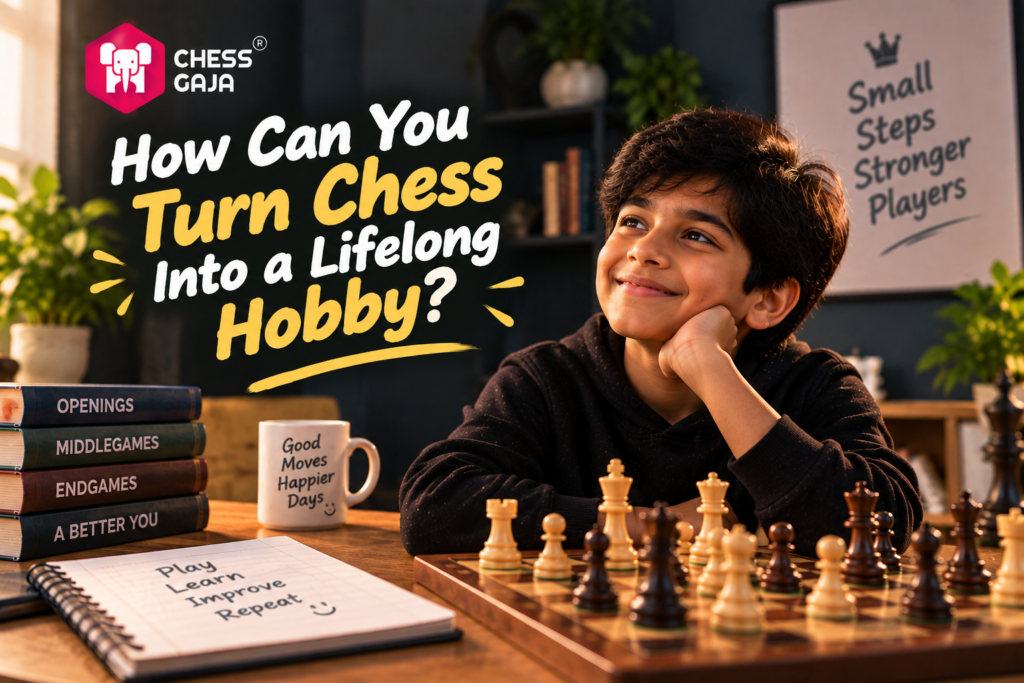
Most casual chess players never move beyond occasional games with friends. At Chess Gaja, we’ve seen that turning chess into a genuine hobby requires more than just enjoying the game-it demands a shift in how you approach learning and practice.
The difference between someone who plays chess and someone who lives chess comes down to consistency. It also requires the right guidance and clear goals. This blog post shows you exactly how to make that transition.
Why Chess Becomes a Lifelong Hobby
Chess rewards consistency in ways few games do. When you play casually, you might win or lose based on tactics you half-remember or luck in the opening. When you practice regularly with a clear structure, you notice something different. Your decisions improve, your pattern recognition sharpens, and you start winning because you understand the game better. This shift from random play to deliberate improvement transforms chess from a weekend distraction into a genuine hobby that sustains itself.
Strategic thinking that actually matters
The real value of chess extends far beyond winning games. Students who train with structured guidance develop decision-making skills that transfer directly to school, work, and life. You learn to evaluate multiple options before moving, to consider your opponent’s perspective, and to recover from mistakes instead of repeating them. These habits become automatic.
A student in Singapore working through a chess curriculum doesn’t just improve their rating. They also develop the mental discipline to approach complex problems methodically. This is why chess appeals to parents in the UAE and USA who see it as genuine intellectual development, not just entertainment.
Community transforms isolated practice into shared growth
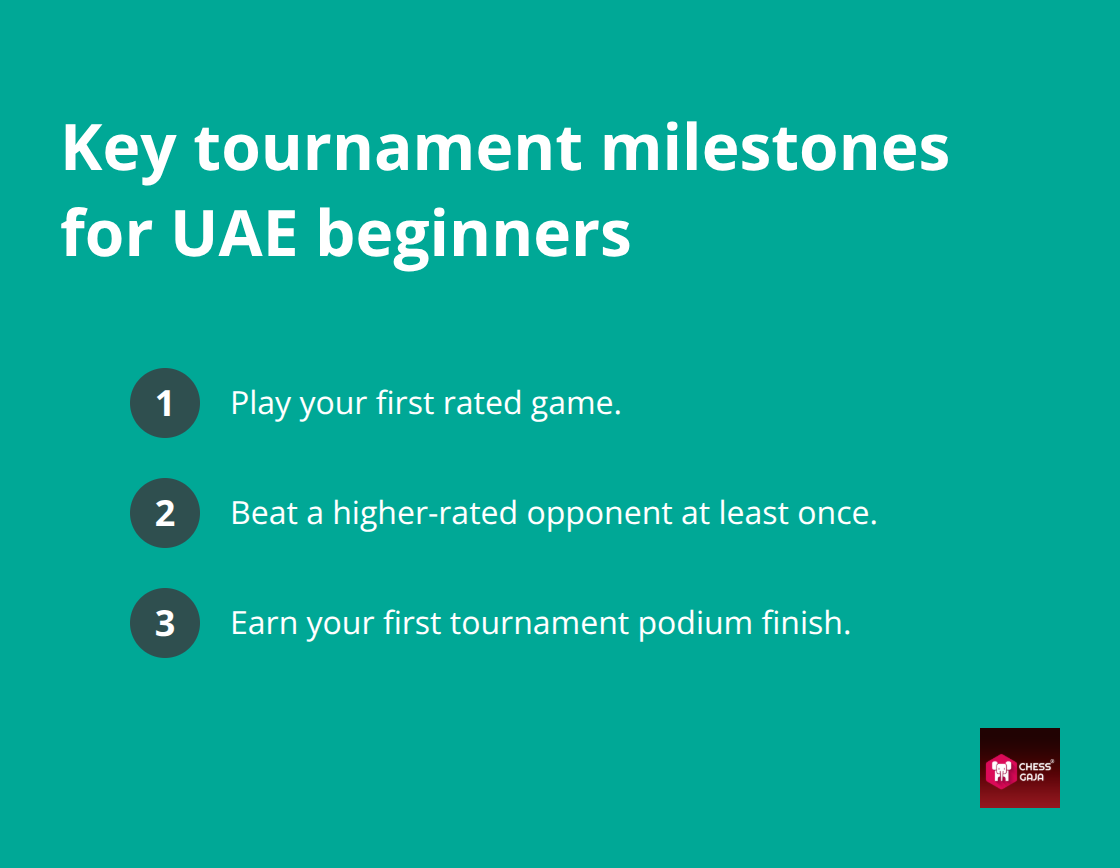
Playing online through platforms like Chess.com or Lichess connects you to millions of players, but joining a structured academy or chess club adds something different: accountability and human connection. Regular tournaments give your practice a purpose. You’re not studying openings in a vacuum; you’re preparing for actual games against real players you know. Tournaments also create natural milestones-your first rated game, your first win against a higher-rated opponent, your first tournament podium.
These moments, shared with coaches and peers who understand what they mean, anchor chess as a lifelong practice rather than a temporary hobby.
Measurable progress keeps motivation alive
Chess provides something rare: objective measurement. Your rating is a number that moves predictably based on your performance. Students working with FIDE-rated coaches typically see rating gains under structured guidance. This isn’t abstract improvement; it’s concrete proof that your study time produces results. Tracking progress through a platform’s analytics or your coach’s feedback creates a feedback loop that sustains motivation through plateaus. When your rating climbs from 800 to 1200 to 1600, you’re not chasing a vague goal-you’re watching yourself become demonstrably better at something you care about.
The role of professional guidance in sustaining momentum
What separates players who maintain chess as a lifelong hobby from those who quit after a few months often comes down to one factor: access to quality instruction. A coach who understands your current level and designs a personalized path forward accelerates your progress dramatically. This structured approach prevents you from wasting months on ineffective study methods.
The right coach also keeps you accountable and adjusts your training as you improve. Furthermore, they help you navigate the frustration that inevitably arrives when progress slows.
This professional relationship transforms chess from something you do alone into something you do with expert support. That difference matters enormously for long-term commitment. When you’re ready to move beyond self-directed practice, structured coaching becomes the bridge between casual play and competitive participation.
Building Your Chess Practice Into Daily Habit
The shift from casual play to genuine hobby happens when practice stops feeling optional. Most players fail at this transition not because they lack talent, but because they never establish a sustainable routine. We work with students across the USA, UAE, and Singapore who face the same obstacle: how do you actually practice chess consistently when life gets busy?
The answer is simpler than most players think. You need three things working together: a fixed time slot, specific resources matched to your current level, and a way to measure whether your time investment actually produces results. Without all three, your chess practice becomes sporadic and your motivation evaporates within weeks.
Schedule chess like you schedule work or school
The most successful students treat chess study as a non-negotiable appointment. This doesn’t mean four hours daily; it means consistency over volume. Research shows that students who practice regularly improve faster than those who cram infrequently. The reason is simple: building a sustainable chess practice routine through distributed practice enhances how your brain retains patterns. A student in Dubai who plays 30 minutes every evening before dinner develops stronger pattern recognition than someone who studies two hours on Saturday.
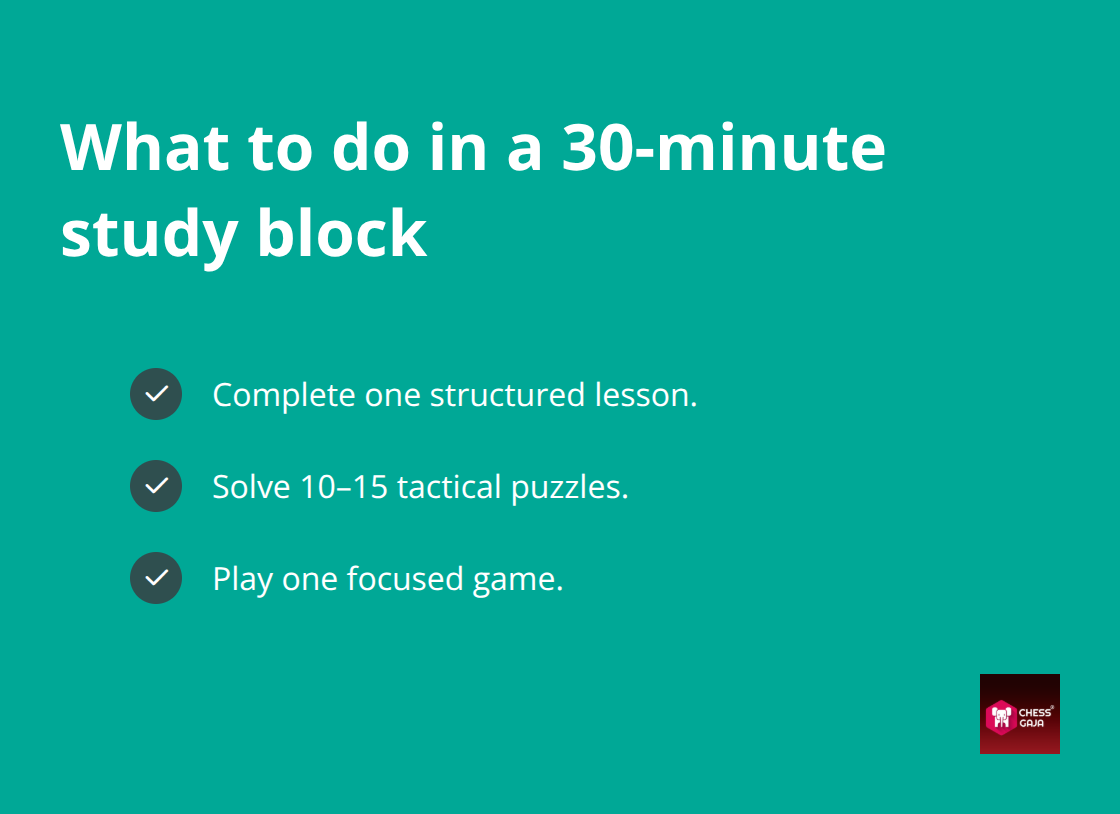
Start with whatever schedule you can genuinely maintain. Thirty minutes is enough to solve 5–10 focused tactical puzzles and review a past game, or play a 15-minute rapid game followed immediately by a 10-minute self-analysis of your critical decisions. If you can only manage three days weekly, that’s infinitely better than planning five days and quitting after two weeks. The goal isn’t perfection; it’s building a habit you don’t have to think about.
Once the routine sticks for four weeks, expanding to additional days becomes natural. Your chess improves because you show up, not because you show up perfectly.
Choose resources that match where you actually are right now
Most beginners waste months on material designed for intermediate players, then switch to material that’s too easy once they improve. This constant friction kills consistency. Your resources should feel slightly challenging but not frustrating.
If you’re rated under 1000, ignore deep opening memorization entirely. Focus on basic tactical patterns, fundamental opening principles, and avoiding one-move blunders. Chess.com puzzle rush or Lichess puzzles are free and calibrated to your rating. If you’re rated 1200–1600, transition to a structured opening repertoire, fundamental endgames like Rook and Pawn endings, and concrete middlegame plans based on pawn structures.
A structured curriculum from a coach beats random videos because a coach sequences material correctly. Professional guidance accelerates progress by eliminating wasted study time. Furthermore, the time saved compounds into measurable rating gains within weeks.
Vary your daily study with tactical puzzles, opening work, and game analysis to prevent burnout. Keeping your routine varied prevents the monotony that often kills long-term practice.
Track the metrics that actually matter
A student in Singapore working toward their first 1400 rating tracks several key metrics. They know their current rating, how many points they’ve gained in the last month, and which specific tactical patterns they still miss frequently. This data transforms abstract goals into concrete feedback.
Most chess platforms provide rating history and performance analytics automatically. Use them. Note your rating at the start of each month. Track which types of puzzles you’re getting wrong most often. Count how many games you’re winning at your current time control. Numbers create accountability in a way vague goals never do. When you see your rating climb from 900 to 950 after two months of consistent practice, this proof sustains your motivation. It carries you through the inevitable plateaus that come later.
Students also benefit from coach feedback on specific areas. A coach might identify that you’re losing material due to passive piece placement, or that your endgame technique needs refinement. This specificity matters enormously. Vague feedback like you need to study more tells you nothing. Specific feedback gives you something concrete to work on. For instance, a coach might note that your king safety in the opening is weak, and suggest focusing on when to castle and how to manage pawn weaknesses.
The combination of self-tracked metrics and professional feedback creates a learning loop that sustains improvement month after month.
Why professional guidance accelerates your progress
What separates players who maintain chess as a lifelong hobby from those who quit after a few months often comes down to one factor: access to quality instruction. The right coach also keeps you accountable, adjusts your training as you improve, and helps you navigate the frustration that inevitably arrives when progress slows. This professional relationship transforms chess from something you do alone into something you do with expert support. That difference matters enormously for long-term commitment. When you’re ready to move beyond self-directed practice, structured coaching becomes the bridge between casual play and competitive participation.
When to Bring in a Coach and Start Competing
The wall that stops self-taught players
Reaching the point where casual practice becomes structured development is when a coach transforms your chess entirely. At Chess Gaja, we’ve worked with students across the USA, UAE, and Singapore who hit a wall around the 900-1100 rating range. They understand basic rules and common tactics, but they frequently blunder pieces under pressure, lack positional planning, and struggle with consistency. The reason is simple: without external guidance, you optimize for what feels comfortable rather than what produces results. A coach identifies the specific gaps holding you back-maybe your opening principles are weak, or you’re miscalculating positions in the middlegame, or your endgame technique needs work-and builds a targeted plan to fix them.
Students working with FIDE-rated coaches typically see significant rating gains within months because they stop wasting time on material that doesn’t address their actual weaknesses. The structured curriculum matters enormously. Rather than studying random openings or endgame positions that may never appear in your games, a coach sequences your learning so foundational skills build first. A student in Abu Dhabi working on king safety before studying complex tactical sacrifices progresses faster than someone trying to learn everything at once.
How tournaments accelerate your development
Tournaments provide the testing ground where your practice becomes real. Most students avoid tournaments because they feel intimidating, but this is precisely backward. Tournaments force you to apply what you’ve learned under pressure, which accelerates development dramatically. Your first rated tournament game is uncomfortable, but it produces more learning than ten casual games because the stakes matter.
After your tournament, analyzing your games with a coach reveals patterns you missed during solo study. Maybe you played too fast in critical positions, or you made the same tactical mistake twice, or you panicked when your opponent played something unexpected. This feedback loop-study, compete, analyze, adjust-is what separates players who improve steadily from those who plateau. Monthly academy tournaments create natural milestones and build tournament habits in a supportive environment where you’re playing peers at your level rather than anonymous opponents online.
Technology extends learning beyond the classroom
Technology amplifies coaching by extending learning beyond the classroom. An AI-powered learning management system delivers post-session summaries within minutes of your class ending, so you review the exact concepts your coach taught while they’re still fresh. Rather than relying on notes you scribbled during the lesson, you get structured recaps with key positions highlighted and tactical themes explained. The platform also tracks your puzzle performance, your game results, and your progress toward specific rating milestones, creating accountability that sustains motivation.
Between coaching sessions, you’re not left guessing what to study. Personalized study schedules recommend specific chess books, software tools, and puzzle sets matched to your current rating and goals. A student rated 1200 receives different recommendations than one rated 1600 because their developmental needs are completely different.
Building momentum through consistent support
The combination of structured coaching, targeted tournament play, and AI-powered learning tools creates momentum that transforms chess from a hobby you maintain into a practice you’re genuinely excited about. Rather than wasting months on ineffective study methods, you move directly toward skills that matter. The right coach also keeps you accountable, adjusts your training as you improve, and helps you navigate the frustration that inevitably arrives when progress slows. This professional relationship transforms chess from something you do alone into something you do with expert support-and that difference matters enormously for long-term commitment.
Final Thoughts
Mental fitness through chess works because the game demands your full attention. You must analyze positions, calculate variations, and recover from losses. This exercise in decision-making under pressure transfers directly to how you handle stress in school, work, and life.
Analyzing painful losses requires deep discipline. Mastering complex endgame techniques builds mental resilience that extends far beyond the board.
Concrete milestones anchor your practice far more effectively than vague desires to improve. Reach a 1200 rating, win your first official tournament game, or score your first win against a higher-rated opponent, then celebrate each one genuinely.
When you’re ready to accelerate your development and transform casual play into competitive practice, Chess Gaja’s GM-led coaching provides the structured guidance that turns chess into a hobby you genuinely care about. Our international team of coaches works with students worldwide at every level—from absolute beginners to tournament competitors—using personalized instruction, AI-powered learning tools, and monthly academy tournaments. Start where you are, practice consistently, and bring in professional guidance when you’re ready to accelerate.