Most adult chess players hit a wall between 1400 and 1600 rating. You’ve learned the basics, but progress feels stuck.
We at Chess Gaja have worked with thousands of adult players who faced this exact problem. An adult chess improvement plan isn’t about playing more games-it’s about practicing smarter.
This roadmap shows you how to break through 1800 and keep climbing.
Why Adult Players Get Stuck
A majority of adult chess players stall between 1400 and 1600 rating. You know basic tactics and development. But playing the same pool of opponents month after month stops your rating growth.
However, hard work alone will not solve this stagnate. Adults face three key barriers. Therefore, you need targeted solutions instead of extra hours at the board.
The Time Trap and Consistency Problem
Adult players face one big limit: time. You cannot train eight hours a day like a teen prodigy. Luckily, consistency beats raw volume.
For instance, practicing 30 minutes daily outperforms a single three-hour weekend marathon.
Also, many adults fail by studying openings one week, skipping chess the next, and jumping into tactics. Thus, this random schedule stops rating growth and prevents brain pattern building.
The Mindset That Kills Progress
Many adults at 1400 to 1600 fear tournament play because they only play online blitz. A real clock and physical board feel different. Because of this, some players convince themselves they aren’t ready. However, tournament play is purely feedback.
Losing a rated game gives you a clear record of your moves. You can easily analyze your exact tactical mistakes. Online blitz teaches speed over clarity.
For example, a 1500 rapid player often plays like a 1300 when rushing. Serious events force you to slow down and calculate well. Successful players treat losses as feedback rather than failure. Playing monthly helps you fix study plans fast.
What Separates Stalled Players from Breakthroughs
The difference between staying stuck at 1500 and climbing to 1800 is structure rather than talent. Stalled players study randomly and hope for progress.
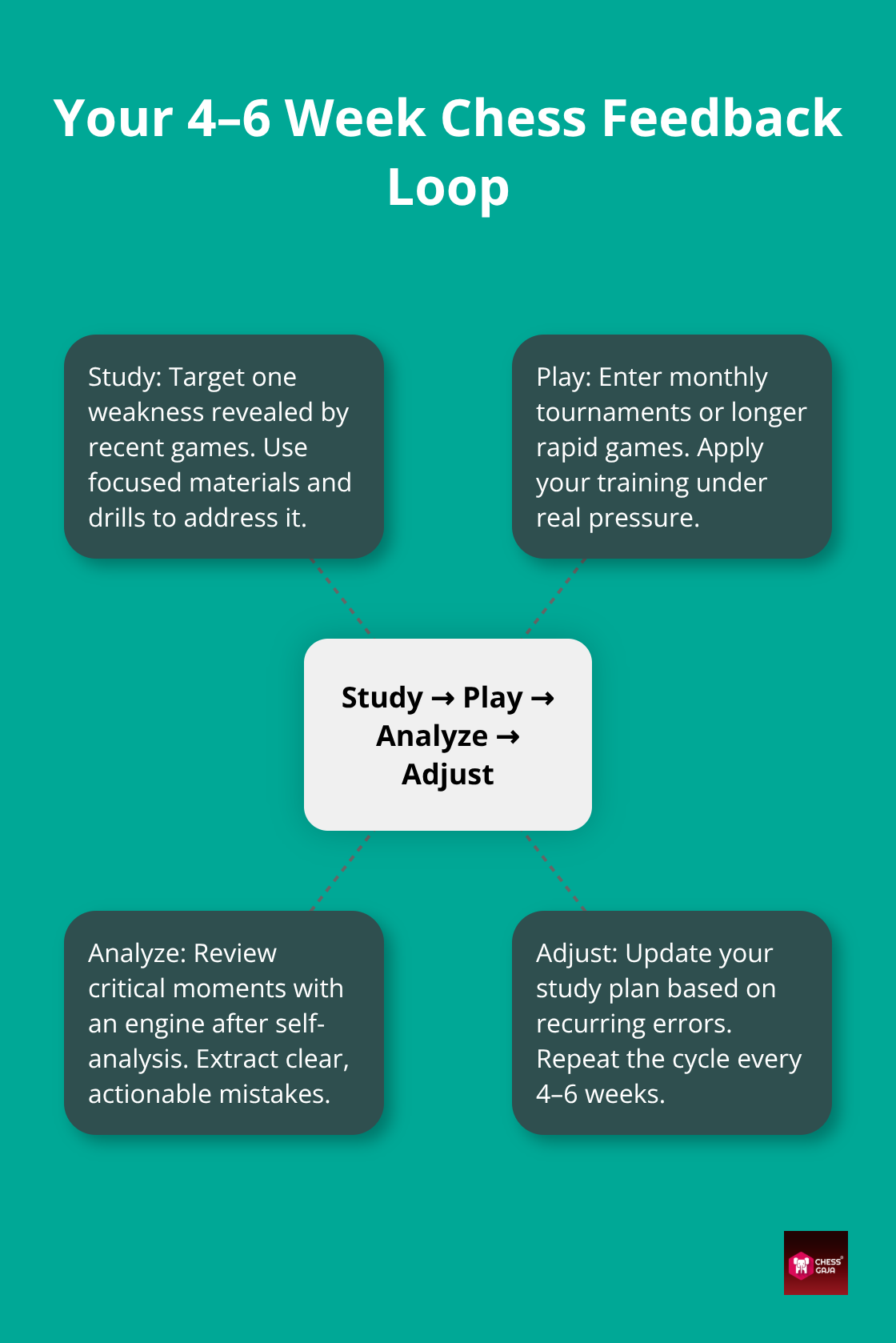
In contrast, successful players follow a deliberate system. First, identify weaknesses from recent tournament losses. Next, fix those flaws through targeted study before playing your next event.
This feedback loop repeats every four weeks. Without it, you repeat the same mistakes again and again.
The next section shows you exactly how to build this system and allocate your limited time to maximum effect.
How the Best Players Actually Prepare for 1800
Breaking through 1800 requires a shift in approach. Stop treating chess like three separate games and start treating it as one integrated system. The 1500-rated player studies openings obsessively, ignores endgames entirely, and hopes tactics will save them in the middlegame. In contrast, the 1800-rated player works backwards from tournament losses. They see which phase costs them points and fix that weak spot directly.
Why Your Endgame Foundation Matters Most
Endgame mistakes are irreversible. A middlegame blunder loses material, but an endgame mistake loses the game on the spot.
Unfortunately, most adults between 1400 and 1600 skip endgame training. They find endgames boring compared to openings, so their ratings stop growing.
Start with endgame fundamentals. Spend 15 minutes daily on four core areas:
- Master King and Pawn endgames. Learn key squares, opposition, and king triangulation.
- Study Rook and Pawn setups. Learn the Lucena Position and the Philidor Position.
- Practice minor piece endgames. Study Knight vs. Bishop, Same-Color Bishops, and Opposite-Colored Bishops.
- Analyze your endgame mistakes. Review score sheets from your recent over-the-board games.
So, study these positions deeply instead of memorizing lines. In just two weeks, you will convert small leads much easier.
Also, check your win rate in your next five games to track your progress.
Building Middlegame Strength Through Pattern Recognition
Middlegame strength decides if you reach 1800 or stop at 1700. True progress relies on candidate move selection. You must calculate variations deeply and evaluate the final positions accurately.
Adults often confuse pattern recognition with intuition. But pattern recognition is a learnable skill. You can master it by studying 100 classic games. Focus on pawn structures, active pieces, and board control.
For instance, spend one week studying 20 positions with weak squares. After that, review 20 games focused on pawn structure. Also, test your skill in slow rapid or classical games.
Avoid bullet and fast blitz games (3+0 or 5+0). Instead, play slower rapid or classical time controls. Slower games give you time to calculate and stop impulse blunders.
Choosing and Mastering Your Opening Repertoire
Keep your repertoire simple. Choose one main system for White. Pick one solid defense against 1. e4 and 1. d4 for Black.
Focus on key pawn structures and plans. For instance, study the Italian Game (1. e4 e5 2. Nf3 Nc6 3. Bc4).
However, avoid memorizing 20 engine moves in the Sicilian Dragon. Engine theory without strategic understanding will not raise your rating.
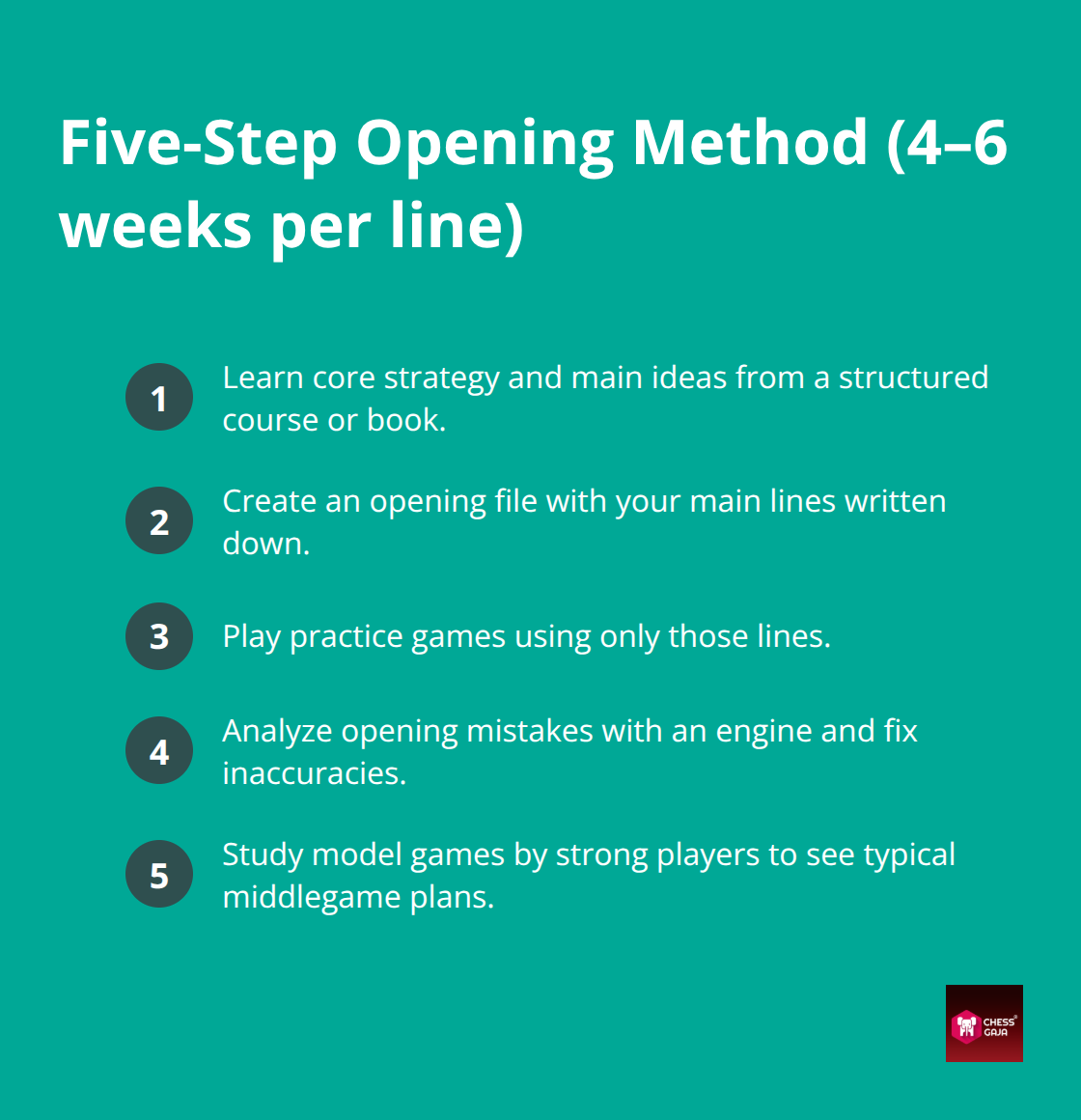
So, learn your chosen openings using a five-step process:
- First, learn key concepts using a dedicated course or book.
- Next, create a personal file with your main variation lines.
- Then, test your setups in online practice games.
- After that, review every game with an engine to catch errors.
Finally, study grandmaster model games in your chosen systems to master typical plans and pawn structures. Completing this routine takes four to six weeks.
Mastering these steps lets you play opening moves with total confidence. You will transition smoothly into the middlegame with a deep understanding of key pawn structures.
Most adult players spend hours memorizing lines without understanding the ideas behind them. Reverse this habit, and your rating will rise quickly.
How to Structure Your Weekly Chess Practice
Reaching 1800 depends on how you study, not how long. Daily 45-minute sessions build skill faster than a weekend marathon. Consistency beats volume every time.
Time strategy is key. Spending 30 minutes on openings and five on endgames stops your progress.
Instead, split your 45 minutes into three equal parts:
- Spend 15 minutes on tactical puzzles.
- Allocate 15 minutes to game analysis.
- Dedicate 15 minutes to endgame fundamentals.
This simple split yields measurable rating gains within six weeks.
Daily Puzzle Training Builds Pattern Recognition
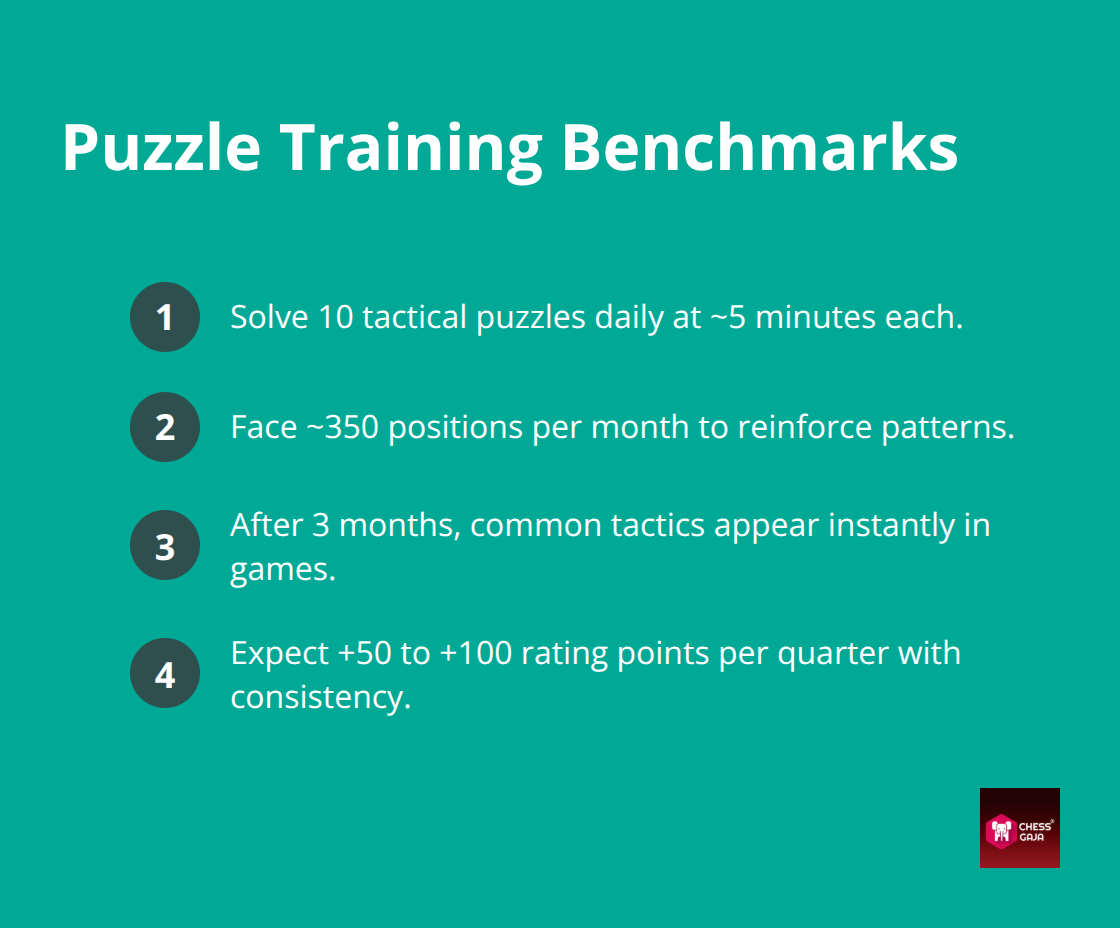
The math is simple. Solve 5 to 10 puzzles daily. Consequently, this habit exposes you to 150 to 300 patterns every month.
Furthermore, each puzzle reinforces a distinct tactical pattern. Therefore, train daily for three months. Soon, key tactical motifs will become second nature in live games. Focus on forks, pins, skewers, discovered attacks, deflections, and overload setups.
Data shows that players who train daily gain 50 to 100 rating points every three months.
Start each session with 15 minutes of puzzles on Lichess or ChessTempo. Pick puzzles at your current level and focus on accuracy.
When you miss a puzzle, take two minutes to check your mistake. This habit builds real pattern skill.
Game Analysis Identifies Your Specific Weaknesses
After solving puzzles, spend 10 to 15 minutes on game analysis. Select your latest tournament or rapid game.
However, do not turn on the engine right away. First, analyze the game manually. Note key turning points, critical move choices, and missed tactics. Next, run engine verification. Consequently, you will check your calculation accuracy and spot evaluation swings.
Record key takeaways in a simple file. Document the opening played, the decision point, and your lesson learned.
Logging each game takes only 10 minutes. Doing this for 30 games over six weeks shows you exactly what to fix. Focused review beats random study every time.
Endgame Training Prevents Irreversible Losses
Allocate 15 minutes to endgame study. Pick one core topic each week:
- First, spend Week 1 mastering King and Pawn fundamentals (key squares, opposition, pawn breakthroughs, and triangulation).
- Next, use Week 2 to practice Rook and Pawn endgames (Lucena and Philidor positions).
- Then, shift Week 3 to studying Minor piece endgames (Knight vs. Bishop, opposite-colored Bishops).
- Finally, dedicate Week 4 to reviewing specific endgame positions drawn directly from your recent tournament losses.
Study concrete positions rather than abstract theory. Also, practice converting winning positions against the engine. So, this targeted approach builds endgame strength fast.
Monthly Tournament Play Creates Feedback Loops
Play tournaments monthly rather than quarterly. Regular play builds a solid feedback loop.
Analyze your losses right after each event. Check if you lost in the opening, middlegame, or endgame.
For instance, if three losses stem from endgame blunders, focus your next month on endgame study. Similarly, if two losses come from opening gaps, fix those specific lines.
This approach fixes what costs you points. Dedicated adults who play monthly gain 100 to 200 rating points a year.
Final Thoughts
You now have a practical adult chess plan that gets results. The daily routine is simple: 15 minutes of puzzles, 15 minutes of game review, and 15 minutes of endgame study.
Also, play in monthly tournaments to see where you drop games. So, this simple routine builds steady skill growth within six weeks and prepares you for real breakthroughs.
In the end, reaching 1800 takes clear structure rather than natural talent. Thus, dedicated adults who follow this roadmap gain 100 to 200 rating points each year.
To support your journey, Chess Gaja helps over 5,000 students in 40+ countries. Grandmaster Priyadharshan Kannappan founded our team to offer custom coaching and AI progress tracking.
Book a Starter Class with Chess Gaja today. Your coach will find your rating leaks and build a clear plan. Reaching 1800 comes down to taking action today.