

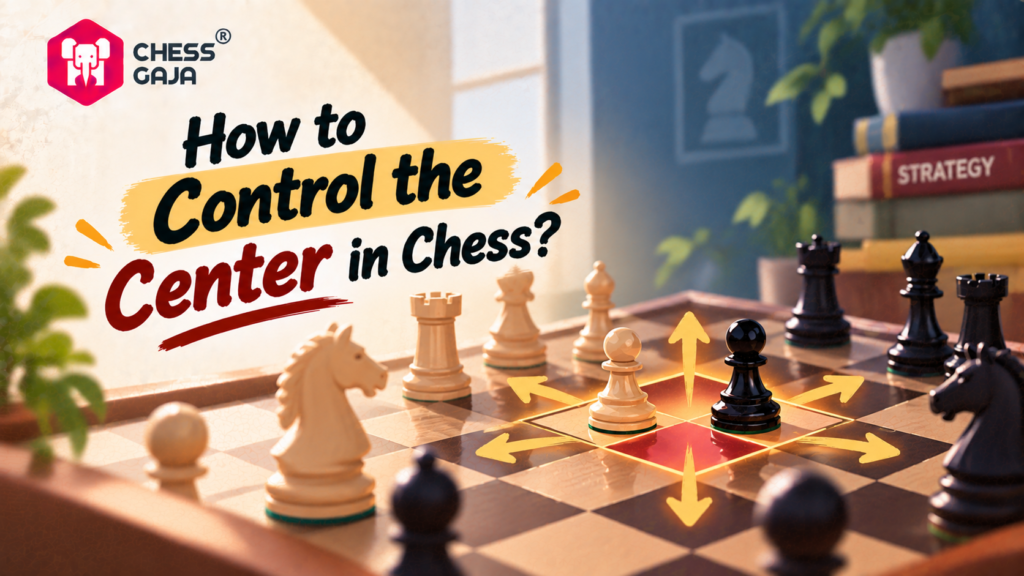
You’ve probably noticed that some chess players seem to control the board effortlessly while others struggle to gain any advantage. The difference comes down to one thing: understanding central control principles and how to apply them.
At Chess Gaja, we’ve taught thousands of students across 40+ countries that mastering the center transforms your entire game. This blueprint shows you exactly how.
Why Central Control Wins Games
The four central squares-d4, e4, d5, and e5-are the most fought-over real estate on the chessboard, and for one reason: they determine who controls the game. Occupying or controlling these squares opens key diagonals and files for your pieces. At the same time, it restricts your opponent’s options and creates continuous attacking opportunities.
Dominating the center gives you extra space and superior piece mobility. Because of this structural advantage, you do not need to play perfectly everywhere on the board. Successful tournament players across the USA, UAE, and Singapore share one key trait: they prioritize central control above all else in the opening.
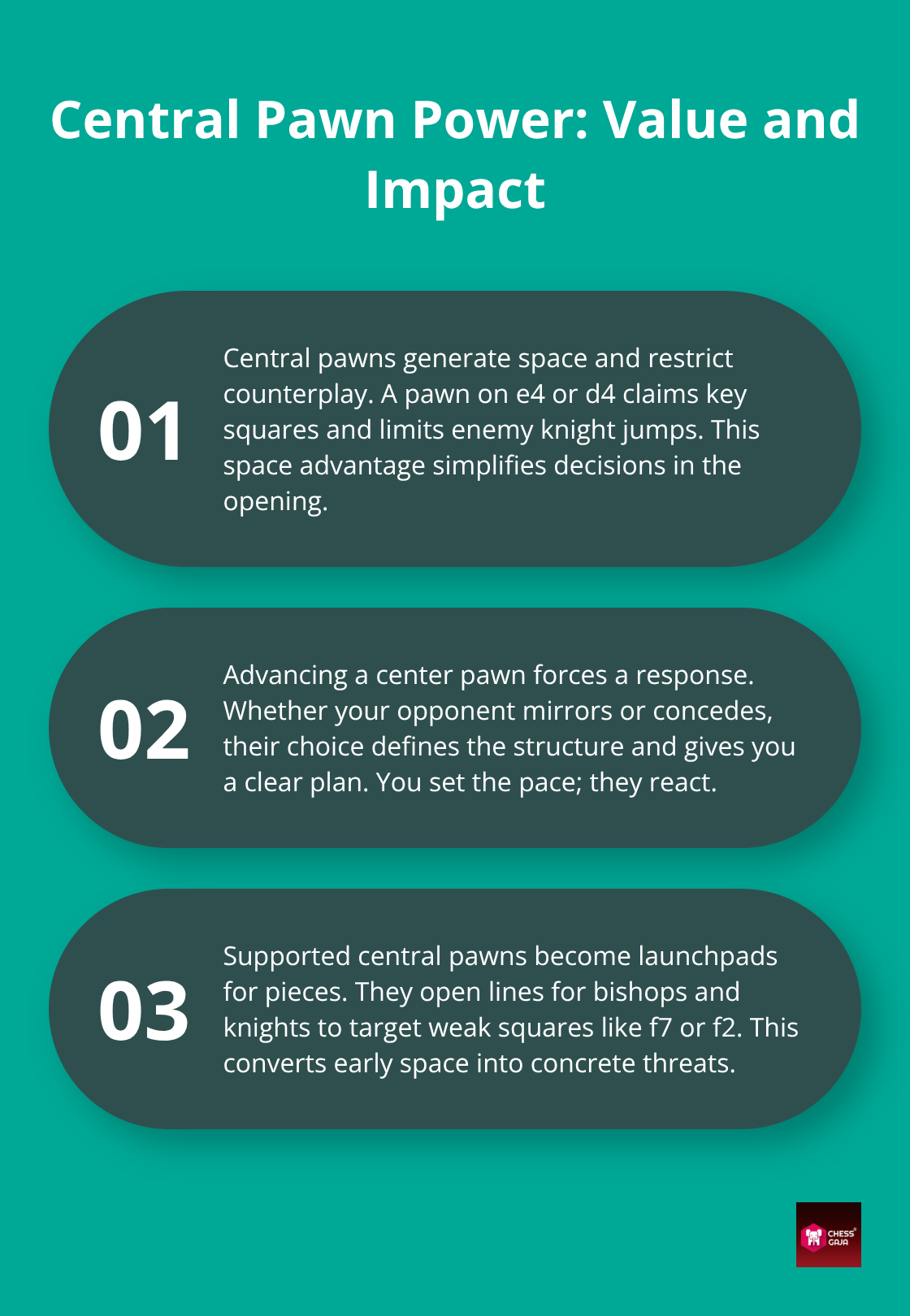
How Pawn Control Creates Winning Positions
A pawn occupying a central square claims vital space directly, while a pawn controlling a central square from a distance provides key structural support. This distinction matters because central pawns act as force multipliers—increasing your overall spatial dominance and unlocking maximum piece mobility from move one.
Young tournament players in Dubai and Abu Dhabi often jump two rating categories after mastering this concept. They stop reacting to opponents and focus entirely on executing their own plans. The central pawn advance also forces your opponent to respond, and their response dictates the opening structure. If your opponent matches your central pawn, mutual central tension results. The very next moves determine who claims the ultimate advantage. If they don’t challenge your center, you’ve already won space-a tangible, measurable benefit that translates into piece activity within the first 10 moves.
Piece Placement That Controls Without Occupying
Knights belong on c3 and f3 in the early game because these squares allow them to influence the center while supporting development of other pieces. Bishops placed on active diagonals—such as a bishop on c4 or f4—exert dynamic pressure on central and advanced squares without occupying them directly. This approach separates strong players from weak ones. A beginner places a bishop on c4 only to attack f7. In contrast, a tournament player recognizes how that bishop controls key central approaches like d5, restricts enemy placement, and supports a future d4 advance. Scholastic players in Singapore who master this layered approach consistently outplay their opponents. They treat piece placement as a coordinated central system rather than isolated moves.
The Coordination That Separates Winners From Learners
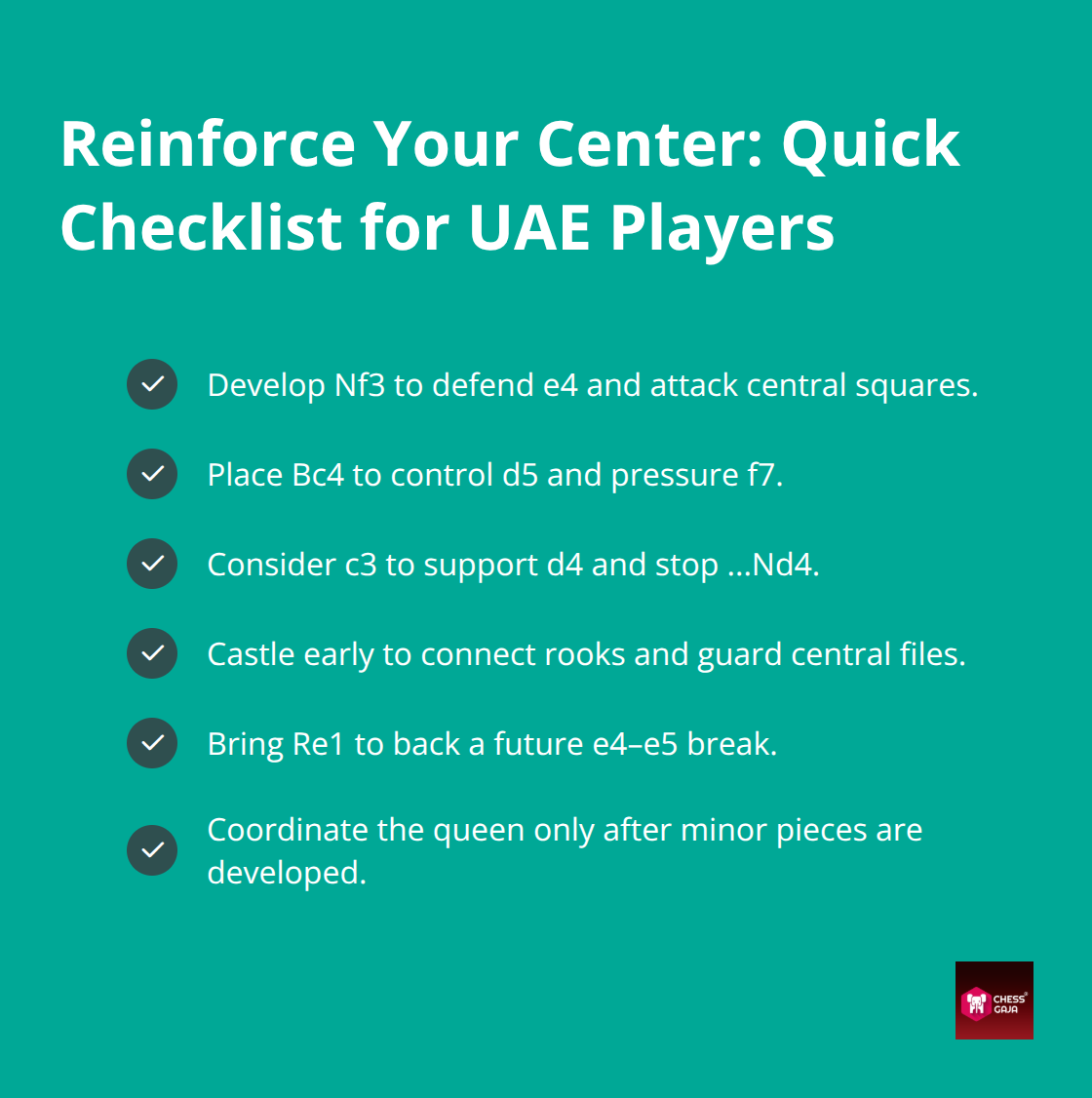
Strong central control requires your pieces to work together rather than operate in isolation. Your knight on f3 supports your e4 pawn, while the bishop on c4 reinforces control of d5. Meanwhile, a rook on e1 (after castling) stands ready to support a central breakthrough. Beginners often fail to see these connections and move pieces without considering how they reinforce the center. Rapidly advancing tournament players in the UAE and USA share a common insight. They know every single piece move either strengthens or weakens their central grip. Central dominance flows directly from coordinated piece placement. Once you recognize this pattern, you stop making random moves and start executing plans opponents cannot easily stop.
Building Your Central Control Strategy
Claim the Center First
The moment you push e4 or d4 on move one, you establish direct classical control over the center. While hypermodern openings like 1.Nf3 aim to influence central squares from afar, directly advancing your central pawns on move one remains the most straightforward way for improving players to seize space, restrict enemy pieces, and dictate the tempo. When you push e4 on move one, you control d5 and f5 instantly, restrict your opponent’s pieces, and announce that you intend to dominate. The pawn accomplishes this work for you with zero additional moves required.
Reinforce Your Center with Coordinated Pieces
Your second priority is supporting your center with coordinated pieces and structural pawns. In 1.e4 setups, a knight on f3 guards your e4-pawn while a bishop on c4 influences d5. In 1.d4 structures, advancing your c-pawn to c3 solidifies your central d4-anchor and denies enemy knights active outposts. This layered reinforcement separates 1200-rated players from 1600-rated players. Lower-rated players assign independent jobs to each piece. In contrast, higher-rated players unify their pieces into a central control system. In Singapore’s scholastic tournaments, top-performing players treat central piece coordination as non-negotiable. Never occupy d4 with a pawn without proper defense. Likewise, placing a bishop on c4 requires support from another piece when your opponent challenges it. Relying solely on single-piece attacks will quickly stall your position.
Eliminate Moves That Destroy Your Center
The third step is recognizing which positional mistakes undermine your control before you even get started. Prematurely pushing f3 or f4 without adequate development weakens your king safety along critical diagonals (like e1–h4) and creates pawn holes your opponent can exploit. Moving the same piece twice when you could develop a new piece instead means you waste tempo while your opponent catches up in development and challenges your center. Bringing your queen out too early turns her into a target for your opponent’s minor pieces, forcing her to retreat and lose time. The cost of these mistakes is real: you lose the initiative, your center becomes unstable, and your opponent seizes control. Players in the UAE who advance from club level to regional champion level do so by eliminating these mistakes first, not by learning fancy tactics.
Execute Your Strategy Across Multiple Games
The central control strategy that works is brutally simple: claim space with pawns, reinforce with pieces, and avoid moves that weaken your position. Apply these central control principles consistently across your games, and you will see a measurable improvement in your piece activity, tactical opportunities, and overall rating. The foundation is now in place. What separates good central control from great central control is knowing exactly when and how to convert your space advantage into concrete attacking chances-a skill we explore in the next section.
Converting Space Into Winning Attacks
How Central Dominance Creates Tactical Opportunities
Central dominance without conversion is wasted energy. You can control d4 and e4 perfectly, but if you cannot translate that space advantage into concrete threats against your opponent’s king or material, you have accomplished nothing. A 1400-rated player and an 1800-rated player both understand basic central principles. However, the stronger player immediately spots when central dominance creates a tactical strike, executing it before the opponent can escape. Fast-improving players in USA and UAE tournaments share a key skill. They quickly spot the connection between central piece coordination and attacking chances on either flank.
In classical 1.e4 setups where you establish central presence and deploy your knight to f3 and bishop to c4, you do more than control central squares. Your bishop on c4 applies direct pressure to Black’s vulnerable f7 square, while your central dominance provides your knight the outpost it needs to leap forward when tactics dictate. Against an opponent who fails to challenge the center, this setup pays off immediately. Your pieces coordinate naturally into a overwhelming kingside attack. The opponent’s pieces, scattered and uncoordinated, cannot defend. This is not luck-it is the logical consequence of maintaining central superiority.
The Reactive Position as a Losing Position
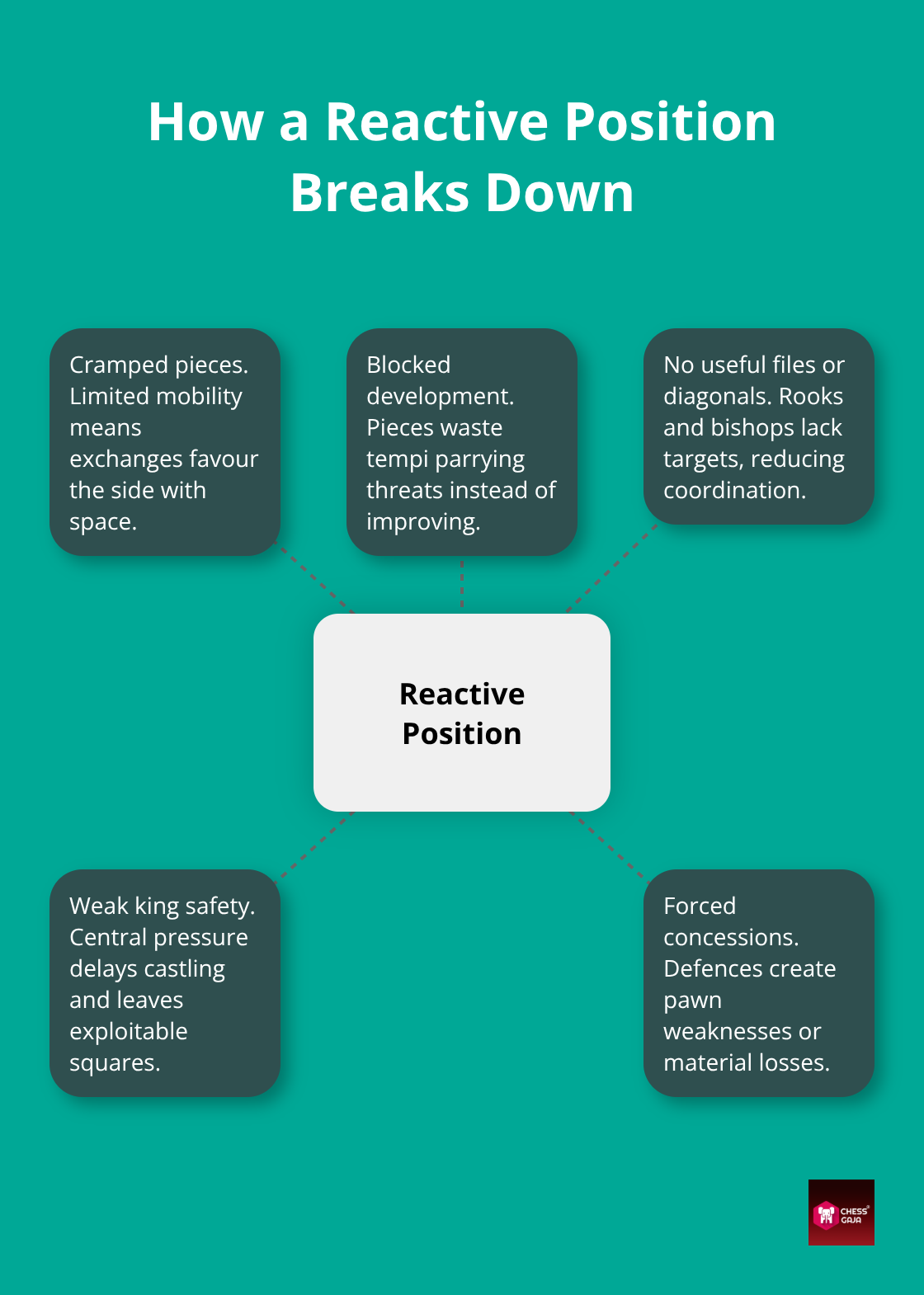
Central control forces your opponent into a reactive position, and reactive positions are losing positions. When your opponent must respond to your central pressure, executing their own plans becomes impossible. Launching counterattacks is out of the question. Furthermore, developing pieces according to a coherent strategy falls completely by the wayside. Instead, your opponent must move pieces purely to block your threats, defend weak squares, and reduce your spatial advantage. This defensive pressure accumulates. After five or six moves of responding to your central control, your opponent’s position becomes cramped and their pieces inefficient. Enemy rooks lack open files to generate counterplay. Meanwhile, opponent bishops remain blocked behind passive pawn chains while their knights are denied central outposts. Meanwhile, your pieces operate with full mobility because you control the key central break points.
In games from regional tournaments in Dubai, the winners are almost always the players who maintained central tension and forced their opponent to react rather than initiate. Your central pawns and pieces do not exist in isolation; they create the conditions for your pieces to launch attacks that your opponent cannot defend. This is why central dominance translates into winning games-not because you are brilliant tactically, but because your opponent is forced into positions where brilliant tactics are impossible.
Converting Advantage Into Concrete Gains
After establishing central control in the opening, focus on identifying where your spatial advantage creates concrete threats. If your opponent leaves f7 vulnerable against your c4-bishop, calculated knight advances or pawn breaks can become powerful targets to disrupt their position. If your opponent’s king remains stuck in the center due to delayed castling, central pawn breaks (e5 or d5) open the main files, allowing your rooks and queen to launch direct, decisive attacks. Conversely, if your opponent shifts their forces to one flank, controlling the open central files lets your heavy pieces penetrate deep into their territory.
The threat does not need to be devastating immediately-it needs to be real enough that your opponent must make a concession. That concession, whether it is giving up material or worsening their pawn structure, compounds your advantage. A player rated 1600 recognizes this pattern after seeing it in five games. A player rated 1200 might see it once and forget it. Here is the pattern: controlling the center grants your pieces aggressive outposts. Meanwhile, your opponent’s pieces remain passive and confined. You attack; they defend. You win. What began as superior central control transforms into a winning position because you converted space advantage into concrete tactical threats against your opponent’s king.
Final Thoughts
The central control principles you’ve learned in this guide separate players who climb ratings steadily from those who plateau. Grandmasters at every level build their game around one core strategy. They claim the center, reinforce it with coordinated pieces, and convert their space advantage into winning attacks. You do not need to memorize 50 opening lines or study obscure tactical patterns to apply these principles in your own games.
At Chess Gaja, we’ve built our curriculum around central control principles as the core foundation for opening development, middlegame planning, and transition into favorable endgames. Trained by GM Priyadharshan Kannappan, our FIDE-rated coaches guide students across 40+ countries. We help players recognize the exact moment central dominance turns into a winning opportunity. This is why Chess Gaja students consistently achieve rating breakthroughs and tournament success.
Want personalized guidance on applying these principles to your rating level? Chess Gaja offers a Paid Starter Class with a FIDE-rated coach. We will evaluate your current strengths, identify your weaknesses, and build a customized study plan to accelerate your improvement. Your starter class coach guides you throughout your entire chess journey. This ensures consistent, personalized learning tailored specifically to your goals. Central control is not a shortcut to chess mastery-it is the proven path that every strong player takes.