

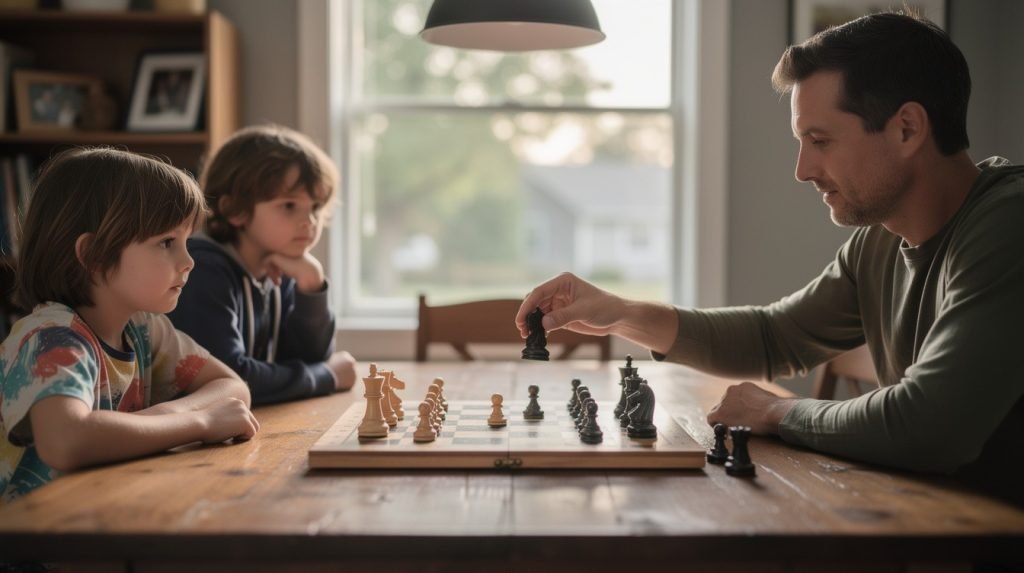
Most families struggle to balance chess learning with busy schedules. We at Chess Gaja know that family-friendly chess routines don’t require hours of study-they require consistency and the right approach.
When parents and kids practice together at home, something shifts. Progress accelerates, and the game becomes something you share rather than something one person pursues alone.
How to Start a Chess Routine That Actually Sticks
The Daily Practice Window That Works
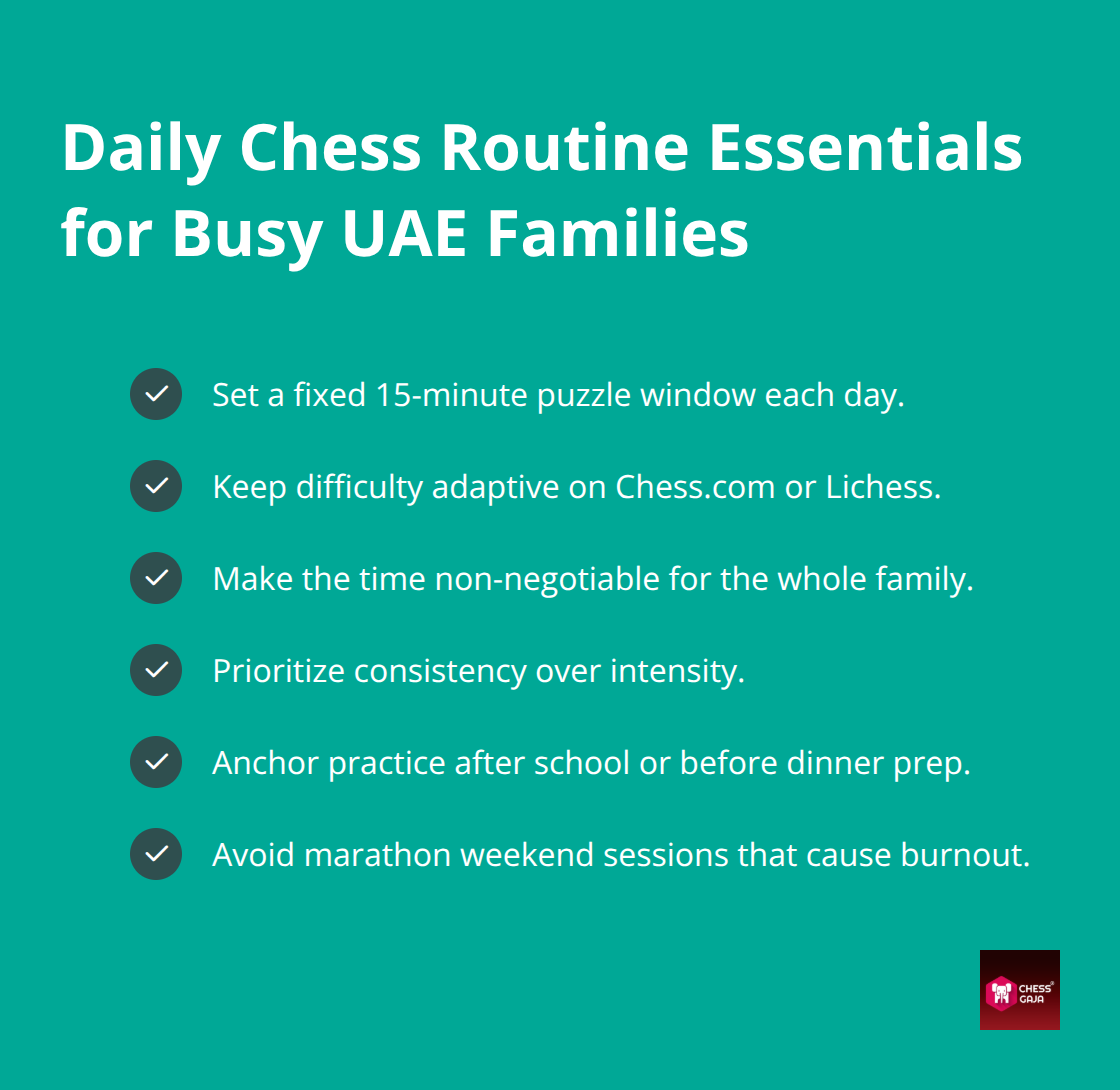
Most families treat chess like a chore instead of a natural part of home life. A 15-minute puzzle session after school works far better than a weekend marathon that leaves everyone frustrated. Start small and non-negotiable-the same way you’d brush teeth before bed. Pick one specific time: right after snack time, or during that 30-minute window before dinner prep.
Use Chess.com or Lichess, both free platforms with puzzle ratings that adapt to your child’s level. The key is consistency, not intensity. Standard puzzle practice works best when you solve puzzles for 15 minutes daily. Avoid marathon sessions once a month.
Creating Physical Space for Practice
Keep a permanent board setup on a table corner. This simple step removes the friction of finding pieces before every session. Kids practice far more often when the board is already waiting. This physical space becomes a visual reminder that chess is part of your family’s routine, not something you have to remember to organize.
Weekly Family Chess Nights Without Pressure
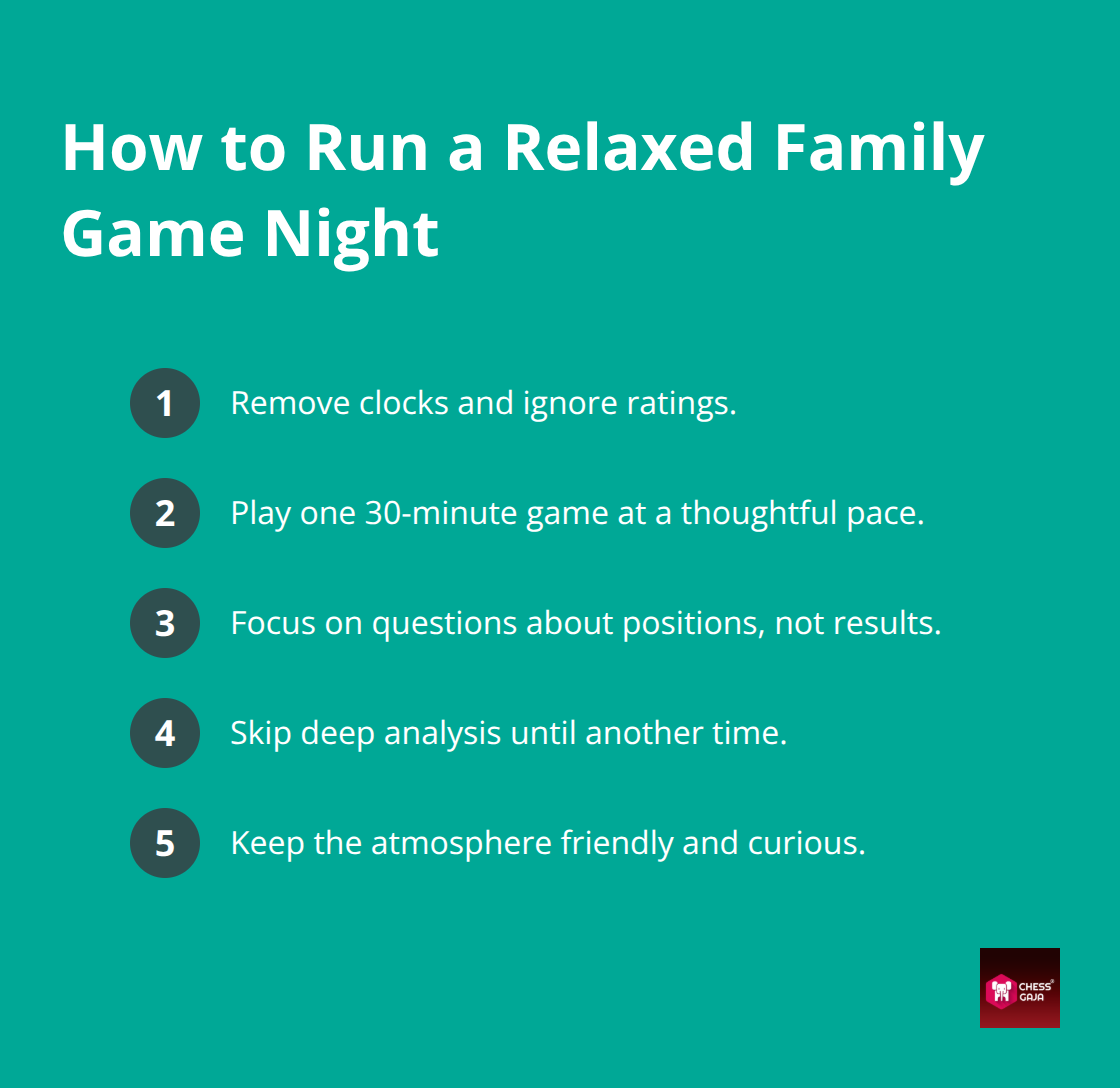
The weekly family chess night should feel different from daily practice. No clocks, no rating pressure, no analysis afterward. Play one casual game together where the goal is simply to enjoy each other’s company. You can also watch short 10-minute video lessons together. Channels like GothamChess or Chess.com offer great beginner content. Many families report that learning together creates moments of genuine connection because you’re both figuring things out, not one person teaching down to another.
Tracking Progress and Celebrating Effort
Track ratings month-to-month on Lichess or Chess.com. Celebrate whenever someone gains 100 points or hits a key milestone like 1000. Reward the effort and consistency-a special dessert after a month of regular practice-rather than only celebrating wins. This shift in focus teaches young players that progress compounds over time, which is the real lesson chess offers. Yet home practice alone has limits. Without structured feedback on daily tactical routines, even consistent players hit plateaus where they repeat the same mistakes.
Chess Games That Strengthen Family Bonds
Casual Games Without Time Pressure
Casual games without clocks transform chess from a performance test into genuine practice. When your family plays without time pressure, players think deeper about positions instead of rushing through moves. A 30-minute game where everyone has time to consider their options teaches far more than a 5-minute blitz match where panic drives decisions. Set up the board after dinner and play one game together without keeping score. Afterwards, skip analysis and just enjoy the experience. You’ll quickly notice a shift—kids start asking questions about positions instead of just moving pieces.
This relaxed environment is where real learning happens because there’s no fear of losing or embarrassment slowing down their thinking.
Weekly Family Chess Nights With Simple Formats
Weekly family chess nights work best with a simple rotating format: one week your child plays white against you, the next week they play black, and the third week you can introduce consultation games—where two family members team up against one to discuss moves together—or alternate turns to keep everyone involved. Watching online chess video lessons for kids together for 10-15 minutes before or after your game creates shared language about chess concepts. When parents and kids watch the same lesson, both understand terms like a pin or discovered attack. This shared language makes casual games much deeper and more connected.
Learn Together Through Online Video Lessons
Many families report that these moments-sitting together, laughing at blunders, celebrating good moves-build memories while strengthening chess understanding. The consistency matters more than complexity: three 30-minute casual games per month with real analysis afterward develops stronger pattern recognition than isolated tournament play. Home-based casual play removes pressure. Young players can experiment with new ideas without fear, which drives real improvement. Yet even with consistent family play, young players often hit a wall where they repeat the same tactical mistakes and miss obvious winning moves. This is where structured guidance from a trained coach makes the difference.
How to Track Progress Without Obsessing Over Ratings
Set Three-Month Rating Targets Instead of Weekly Checks
Families often make one critical mistake: they track chess progress the same way they track school grades, turning improvement into a source of anxiety rather than motivation. The families whose children improve fastest measure progress differently. Instead of checking ratings weekly, successful families set one target every three months. They then focus entirely on consistency during those 12 weeks. If your child is rated 800 on Lichess, try setting a realistic goal of 850 to 900 over a three-month block—this gives them an achievable milestone without creating rating anxiety. The difference between a child who improves 150 rating points in three months versus one who stagnates is almost never talent. It’s whether they practice with purpose or just move pieces.
Review One Game Per Week Together
Start documenting games immediately, even casual family games, because your family’s biggest learning tool sits in your game history. After each week of practice, spend 10 minutes together reviewing one game where someone made a significant mistake. Use Lichess’s analysis feature, which shows where the position turned, and ask simple questions: What was the plan in this position? What did we miss? This weekly review habit builds deeper decision-making skills and calculation far better than solving isolated puzzles, as you are reflecting on actual mistakes made in your own games. This review reveals recurring blunders, helping young players spot similar mistakes before they happen again.
Reward Consistency, Not Outcomes
Reward the consistency itself, not the outcome-a month of showing up to practice earns a special family outing, not a win. Families that tie rewards to effort rather than results see their children develop what researchers call growth mindset (meaning they believe improvement comes from work, not innate talent). This mindset shift is why some young players become tournament competitors while others quit after losing a few games. Celebrate after 12 weeks of consistent practice when ratings naturally climb. That milestone marks the real victory: a lifelong habit.
Why Consistency Beats Talent
Young players who practice three times per week for 12 weeks consistently outpace those who practice sporadically, regardless of starting rating. The compounding effect of regular practice means that a 700-rated player who practices consistently will surpass a 900-rated player who practices randomly within six months. This is not about chess talent-it’s about how the brain learns patterns. Consistent practice builds neural pathways that sporadic practice cannot match. Your family’s commitment to showing up matters far more than any individual game result.
Why Professional Coaching Accelerates Your Family’s Progress
Family-friendly chess routines build consistency, but they hit a ceiling without structured guidance. Home practice teaches your child to move pieces correctly, but it doesn’t teach them to think like a chess player. A trained coach identifies specific gaps that casual games miss. When your child repeatedly hangs pieces in similar positions, a coach spots the pattern. They then teach the defensive principle that prevents it.
We at Chess Gaja work with 5,000+ students across 40+ countries. The pattern is unmistakable. Students who combine family practice with structured coaching progress three to four times faster than those relying on home learning alone. Our coaches are fully FIDE-rated professionals who have trained seven national champions and understand not just chess theory, but how young players actually learn. Bad habits form quietly during home practice, and once they root, they’re harder to break than building correct habits from the start.
Your family’s commitment to family-friendly chess routines matters enormously, and professional guidance transforms that foundation into genuine skill development. A 1-on-1 beginner chess trial class with one of our coaches provides a professional skill evaluation tailored to your child’s level, identifies exactly where they should focus, and creates a personalized study plan that works alongside your home practice.