
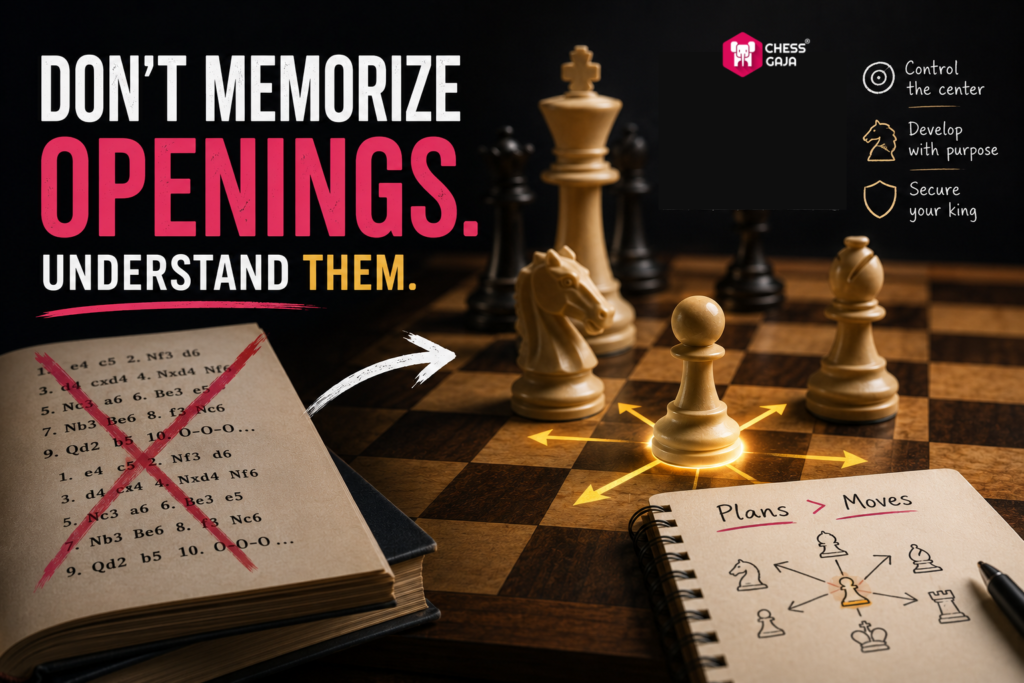
Most beginner chess players spend hours memorizing long opening lines, only to forget them during their first tournament. This approach wastes valuable study time and leaves you unprepared when an opponent plays an unexpected move.
At Chess Gaja, we have coached thousands of young players worldwide. They quickly learn that opening success comes from understanding principles, not memorizing long lines.
The difference between players who improve rapidly and those who plateau comes down to this single shift in approach.
Why Memorizing Opening Lines Fails You
The Collapse of Memorization in Real Games
Most beginners waste weeks memorizing 15 to 20 moves of the Sicilian Defense or Ruy Lopez. Then, their opponent plays an unexpected move on move 5. At that moment, memorization collapses completely.
Online chess data shows that 1400 to 1600 rated players deviate from theory before move 8. Because of this, memorizing 15-move sequences rarely helps in practical games.
The core issue is not a bad memory; it is learning chess like a parrot rather than a strategist.
Blind memorization fails as soon as an opponent plays a rare move. You waste time on the clock, panic, and struggle to evaluate the board.
How Grandmaster Coaching Teaches Opening Logic
Grandmaster coaching shifts your focus from rigid moves to underlying plans and strategic ideas.
Consider the Italian Game: White develops quickly to control the center while putting immediate pressure on Black’s vulnerable f7-pawn.
In the French Defense, Black allows White to claim central space initially, only to immediately undermine and counterattack White’s pawn chain with moves like …c5 and …f6.
Once you understand these core themes, you can handle unexpected moves with full confidence.
Three Principles That Replace Memorization
Control the center early with pawns and minor pieces. Whether you start with 1.e4 or 1.d4, your goal stays the same: place pieces where they fight for the center.
Focus on developing all your minor pieces (knights and bishops) smoothly rather than moving the same piece multiple times in the early opening. Avoid moving the same piece repeatedly unless you face a direct tactical threat or gain a clear tactical advantage.
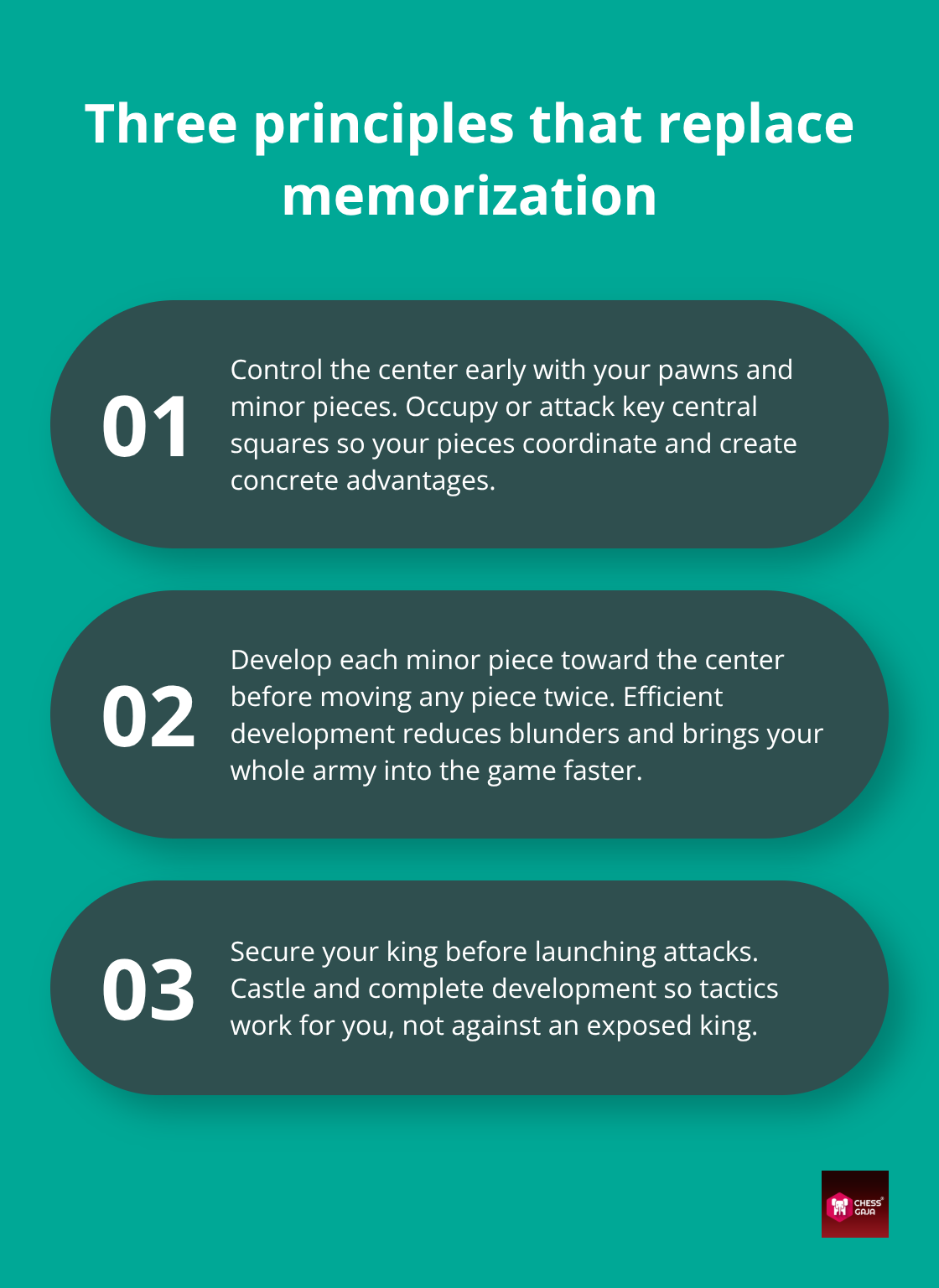
Secure your king before launching an attack. Players who memorize lines often skip this step. They end up with exposed kings while chasing tactics that do not exist.
Ignoring king safety in the opening is a major flaw. It costs games at every beginner level.
Why Titled Players Apply These Principles Consistently
These three principles work in every opening system. You can apply them in quiet positional games or aggressive tactical battles.
When you study games from titled players, you see how Grandmasters apply these rules. For instance, a Grandmaster playing the Caro-Kann or Sicilian Defense follows the same logic:
- Control key center squares
- Develop pieces with purpose
- Keep the king safe
This consistency separates strong players from those stuck memorizing endless lines. Ultimately, this simple framework transforms how you prepare for tournaments.
Building Your Opening Repertoire
Match Your Openings to Your Playing Style
Many beginners pick random setups from YouTube. This wastes months on openings that ignore your natural style.
- Tactical players: The Sicilian Defense offers sharp attacks and unbalanced play.
- Positional players: The London System or Caro-Kann provides solid pawn structures.
Choosing the right opening saves study time. Every setup will match how you think on the board.
Study Complete Games from Titled Players
Once you choose your openings, study complete games from titled players. Do not read theory books in isolation. Instead, watch how Grandmasters handle the middlegame and endgame positions.
Platforms like Chess.com and Lichess let you filter millions of master games. Search for top Grandmasters in your chosen lines:
- Caro-Kann Defense: Study Capablanca or Karpov for solid play.
- Sicilian Defense: Study Garry Kasparov for sharp lines.
Analyze 5 to 10 full games. You will see how top players turn early central control into clear wins. This teaches you real follow-up moves that books skip.
Create a Focused Study Schedule
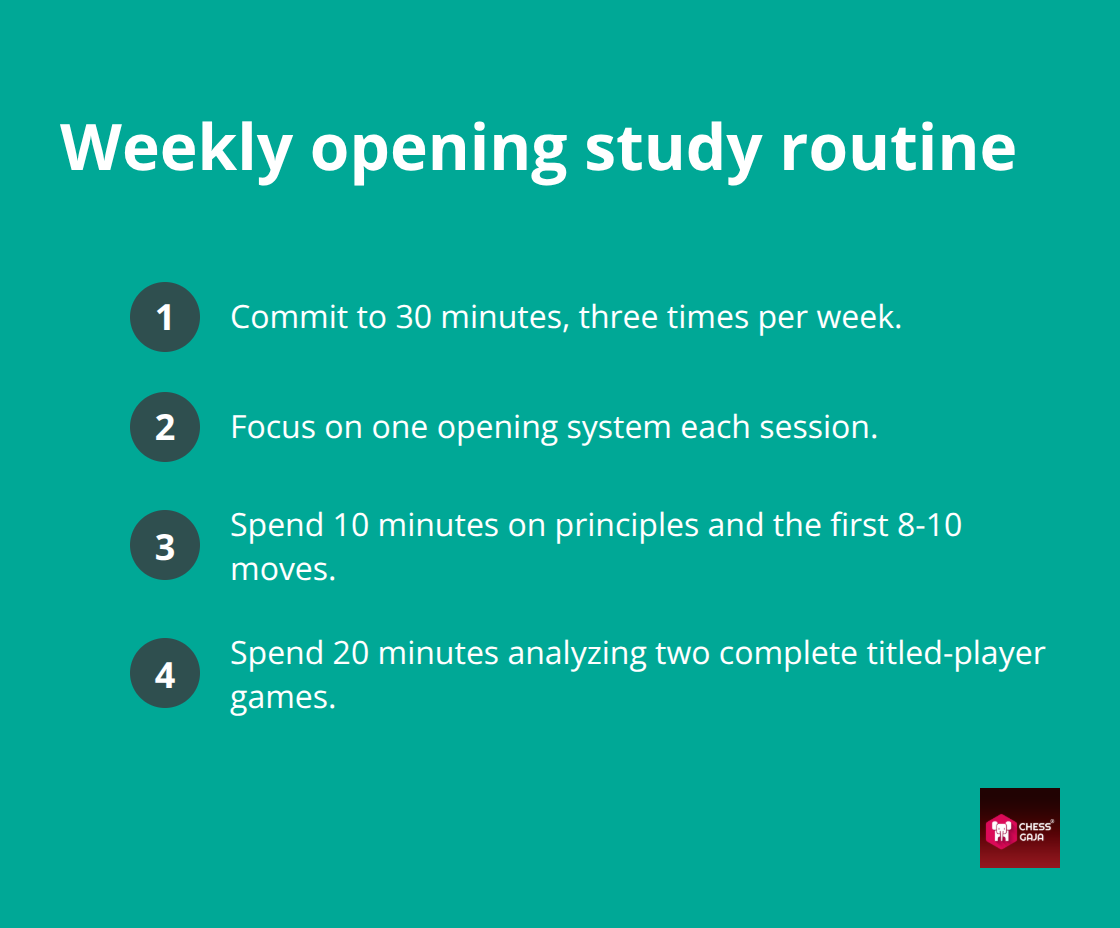
Study one opening system for 30 minutes, three times a week.
Split your practice into two simple steps:
- First 10 minutes: Review core rules and early moves.
- Next 20 minutes: Study two complete Grandmaster games.
Systematic practice on one setup beats trying to learn ten lines at once.
Recognize When Your Preparation Meets Real Opposition
Your study habits now align with your actual play. However, tournament pressure tests your real understanding. It shows whether you grasp principles or merely recognize familiar shapes.
The next section covers common mistakes that happen when beginners face rare moves in real games.
Common Opening Mistakes Beginners Make
Playing Passively Hands Away Your Advantage
Beginner players often play too passively. They wait for attacks instead of taking control.
This hesitation costs rating points. Openings exist to build piece activity and gain space. Passive play lets your opponent dictate the game from move one.
Instead, play actively. Advance central pawns, develop knights early, and castle quickly. Aim to castle in your first 8 to 10 moves. This single habit stops major losses.
Inefficient Development Hands Your Opponent the Initiative
The second mistake is slow development. Many beginners move the same knight twice to chase early threats. Meanwhile, their bishops stay trapped on home squares.
Moving the same piece twice breaks a core rule. Always bring all minor pieces into play before moving one piece again.
When you waste moves, your opponent gains time and space. They coordinate their army faster, leaving you struggling for piece activity.
Traps Expose Your Undefended King
The third big mistake is chasing cheap opening tricks while ignoring king safety.
Beginners often sacrifice pawns for early attacks. Yet when an opponent defends calmly, the trap fails. The attacker stays stranded with a weak king in the center.
Fix this with three rules:
- Complete piece development early.
- Castle your king to safety.
- Launch attacks only after your king is safe.
Putting king safety first separates growing players from those stuck at low ratings.
Final Thoughts
Central control, quick development, and king safety form your foundation. These rules apply to every opening, from the Sicilian Defense to the Ruy Lopez.
Here is your next step:
- Pick one opening that fits your style.
- Analyze five complete Grandmaster games in that line.
However, real growth happens in real matches. When opponents play rare moves, you must think through the board rather than recall lines. As a result, a strong coach speeds up this process by showing where your ideas broke down.
At Chess Gaja, our FIDE-rated coaches utilize FIDE coaching methods to teach opening logic instead of rote memory. For example, we help students in over 40 countries master this exact approach.
Consequently, if you want to improve your game, Book a Paid Starter Class with us today for a full skill review. We will find your exact weaknesses and build a plan to fix them.