

Most beginner players lose games in the middlegame because they don’t have a clear plan. They move pieces randomly, hoping something works out.
At Chess Gaja, we’ve seen this pattern thousands of times. The difference between players who improve and those who stall comes down to one skill: maneuvering in the middlegame with purpose.
This guide shows you exactly how strong players think during the middlegame. You’ll learn the techniques that separate players who drift through positions from those who build winning advantages step by step.
What Makes a Position Worth Playing
The middlegame separates players who understand chess from those who simply move pieces. Most beginners treat positions as equal until one side suddenly collapses. That’s backwards. Strong players see imbalances everywhere, and they know exactly which imbalances matter. A weak square on d5, a backward pawn on e6, or an exposed king on h7 aren’t just observations-they’re targets that guide every move for the next ten turns.
Spotting Targets Before Your Opponent Does
The first skill you need is spotting targets before your opponent does. Look at your pawn structure first. If you have pawns on d4 and e4, you control vital central space. If your opponent trades their d-pawn for your e-pawn and advances their c-pawn or e-pawn without support, the d5-square (or d6-square in Black’s camp) can become a permanent outpost for your knight because no enemy pawn can ever challenge it. This isn’t theory-this is concrete advantage you can use immediately.
Weak squares come from pawn moves your opponent already made and can’t undo. A pawn on f7 that moves to f6 creates permanent weaknesses on e6 and g6, while dangerously exposing the king along the a2–g8 and h5–e8 diagonals. Similarly, if your opponent plays e5 without pawn support on c6, they surrender control of the d5-square forever. Study one master game per week where the winner exploits a single weak square from move 15 to move 35. You’ll see the pattern: identify the weakness, place your piece there, and convert the advantage into material or checkmate.
When to Push and When to Wait
The biggest mistake beginner players make is attacking before they’re ready. They see a weak square and immediately push pawns forward, hoping to create threats. Instead, strong players improve their worst piece first. If your knight sits on a3 doing nothing while your opponent’s pieces are active, moving that knight to c4 or e4 matters more than any pawn push. This isn’t patience-it’s efficiency.
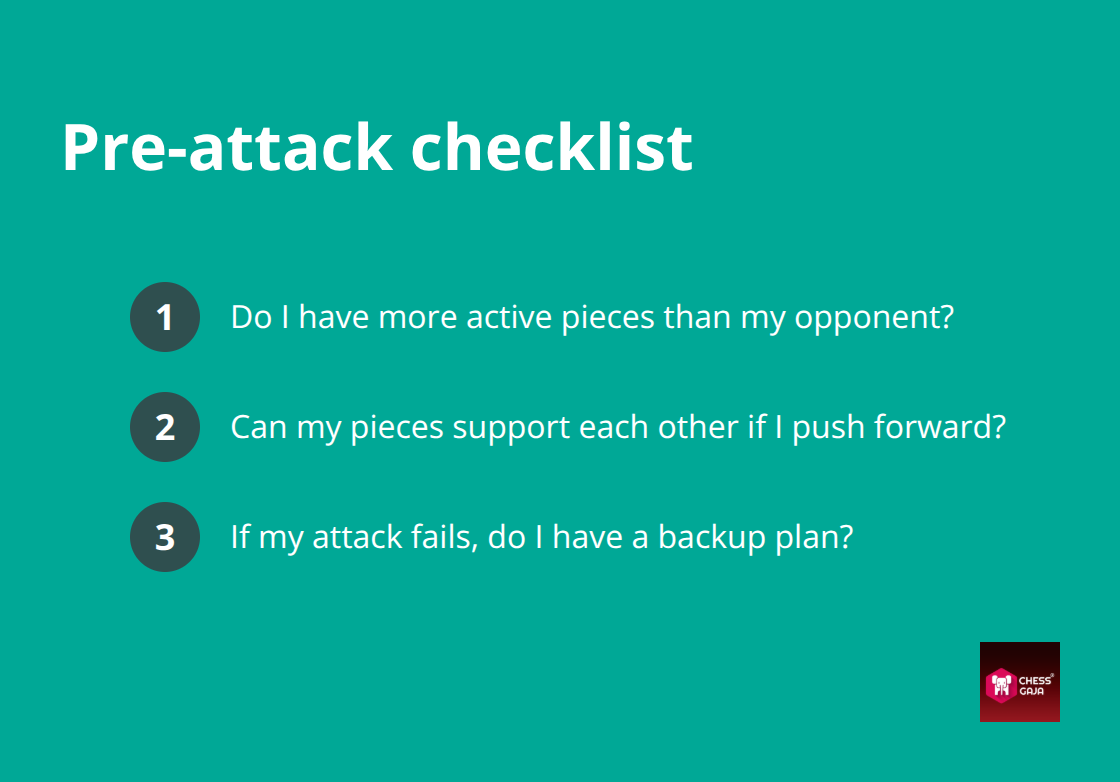
Before you attack, ask yourself three questions: Do I have more active pieces than my opponent? Can my pieces support each other if I push forward? If my attack fails, do I have a backup plan?
If you answer no to any of these, improve your position first. Move your rook to an open file, reposition your bishop to a better diagonal, centralize your queen. Take two or three moves to get your pieces working together. Then attack.
Players rated 1200–1300 often waste fifteen moves chasing random threats while their pieces stay uncoordinated. The result is a position where they have material but no way to convert it. Strong players spend five moves coordinating, then five moves attacking with overwhelming force.
Reading What Your Opponent Wants to Do
Your opponent has a plan too. Maybe they want to push pawns on the queenside to create a passed pawn. Alternatively, they might be building an attack against your king. In other cases, they aim to trade pieces and reach a favorable endgame. Prophylaxis means stopping their plan before they execute it. If your opponent wants to play d5 and break open your center, play d5 first or block it with a piece. If they’re building an attack with moves like Ng4 or preparing f5, trade their key attacking pieces or move your king to safety before their offensive gains momentum.
This requires you to think on your opponent’s turn, not just on your own. During their move, ask what they’re threatening and what they’re preparing. After three or four of their moves, a pattern emerges. They want something specific. Stop it. This is why analyzing master games works so well. When you watch how Kasparov or Caruana plays, you see them making moves that look quiet-moving a rook one square, a pawn one space-but each move answers what the opponent is trying to do. They’re not reacting to threats. They’re preventing plans before they start.
The techniques you’ve just learned form the foundation of middlegame maneuvering. But knowing these principles and applying them under tournament pressure are two different things. The next section shows you exactly how strong players combine these ideas into a coordinated system that builds pressure without forcing moves.
How to Build Piece Coordination That Actually Works
The gap between knowing a weak square exists and actually exploiting it comes down to one thing: piece coordination. Most beginners see the target but can’t get their pieces to attack it together.
A knight on a3, a rook on a1, and a bishop on c1 all point toward the same weak square on d5, but they don’t work as a unit. Strong players understand that every piece must back up every other piece. When you move your knight to d5, your rook controls d-file escape squares, your bishop covers retreat routes, and your queen supports from behind. This takes three to five moves to set up, but once in place, your opponent faces overwhelming pressure and runs out of defensive resources.
Ask What Backs Up Your Pieces
The technique is simple: before you move a piece, ask what piece backs it up. If nothing backs it up, don’t move it yet. Spend one move improving your worst piece instead. If your knight sits on the rim while your rooks control the center, move that knight to c4 or e4 first. If your light-squared bishop has no diagonal, reposition it to b3 or e2.
This sounds passive, but it’s the opposite. Players rated 1200–1300 who improve their worst piece before attacking win significantly more games than those who attack immediately. The positional math is straightforward: if you need three pieces to overwhelm a defender and only two are active, your attack will fizzle out. If you spend three moves activating that third piece first, you attack with maximum force.
Reposition Pieces to Stronger Squares
Piece placement matters more than material in the middlegame. A knight stuck on a3 acts like half a piece because its scope is severely limited. Conversely, a centralized knight on d5 or e5 can match the power of a rook—or even dominate a queen in restricted positions—because it controls key squares and paralyzes the opponent’s pieces.
Strong players constantly reposition pieces to better squares even without immediate threats. For instance, they route a knight from b1 to c3, then to d5. Or they double rooks along an open file, or execute a rook lift from a1 to c1 and c3 to transfer pressure across the third rank. Each move improves placement by just one square, but the cumulative effect is devastating. After ten moves, your pieces dominate while your opponent remains stuck on starting squares.
The key is identifying which pieces are poorly placed and which squares matter most. If the center is closed and pawns are locked, your knights belong on key squares like d5, e5, f5, or c4 where your opponent can’t easily remove them.
On open central files, your rooks belong where they pressure weak pawns. Likewise, if you have space on the kingside, place your bishop on a long diagonal attacking the enemy king. Spend one move per piece repositioning them to these optimal squares. This takes patience, but it separates improving players from those who stall.
Create Weaknesses That Demand Multiple Defenders
Weak squares only matter if your opponent can’t defend them easily. If your opponent can throw a defender on d5 in one move, attacking it wastes time. Strong players create weaknesses that require multiple defenders or force defenders into passive squares. A pawn push like f4 or g4 weakens your king but opens lines toward the opponent’s king simultaneously. A move like Ng5 attacks h7, forcing Black to defend with …g6 (or …h6). Pushing …g6 permanently weakens the dark squares (f6 and h6) around the king. Once those dark squares are exposed, you can target f6 with a knight or queen, forcing your opponent to dedicate pieces strictly to dark-square defense. By the time they defend h6, your coordinated pieces break through elsewhere.
Each weakness you create should demand more defenders than your opponent has available. If you attack one square and your opponent defends it easily with one piece, you’ve wasted time. If you attack three squares at once, your opponent gets overloaded trying to defend all three while building their own attack.
This is why strong players create multiple weaknesses simultaneously instead of pursuing just one forever. They push pawns on different flanks and reposition pieces to different diagonals, forcing their opponent to spread defenders thin.
Stop Your Opponent’s Plans Before They Materialize
Prophylaxis sounds complicated but it’s just reading your opponent’s chess. Watch what they want to accomplish in the next five moves. If they want to play d5 to break your center, occupy or block d5 immediately. Should they maneuver a knight toward f5, trade it off or step your king aside. When they try pushing a queenside passed pawn, blockade it before launching your own attack. Strong players constantly split their thinking time: identifying what the opponent wants to do, neutralized that threat, and then executing their own plan with maximum efficiency.
The fastest way to improve here is to analyze one master game per week and write down what the winner was stopping their opponent from doing. In most games, the winner makes moves that look quiet because they’re actually preventing the opponent’s plan.
Playing h3 stops …Ng4. Sliding Rc2 prepares second-rank defense or doubling rooks before an attack lands. Moving Kh1 steps the king off the g1–a7 diagonal to prevent tactical pins and counter-checks. These moves aren’t flashy, but they separate players who win tournaments from players who lose to tactics they didn’t see coming.
Building Pressure Step by Step
How Small Improvements Compound Into Winning Positions
The difference between strong players and beginners shows itself most clearly in how they accumulate advantage. Beginners attack once, fail, and lose patience. Strong players attack slowly and methodically, forcing their opponent into worse and worse positions until resistance becomes impossible. This approach works because it compounds. A small improvement in piece placement becomes a bigger advantage after three moves. A slight positional edge becomes material loss after five moves. After twenty moves, the opponent has no good moves left.
A player rated 1600 playing against a 1400-rated opponent does not win because of one brilliant move. They win because moves fifteen through twenty-five are all slightly better than the alternatives, and those small differences add up to a decisive advantage. This is why analyzing positions move by move matters more than studying opening theory or memorizing tactics.
When you watch a Grandmaster game where the winner gradually improves without forcing moves, write down what changed every two turns. On move thirteen, the rook goes to d1. By move fifteen, the knight reaches d5. Move seventeen brings the bishop to e3, and move nineteen walks the king to f2 to support the center. None of these moves create immediate threats, but together, they paralyze the opponent. This is systematic pressure.
The Ratio That Separates Winners From Losers
The fastest way to improve your rating is to stop looking for winning moves and start looking for improving moves that set up winning moves. In your next ten games, count how many moves you make that improve a piece’s placement versus how many moves create threats. Most beginners make twenty threat-creating moves and five improving moves. Strong players make the opposite ratio. They improve first and attack second. Having the initiative makes the game flow naturally. Spending three moves to activate your worst piece ensures your fourth move actually works. Conversely, creating hasty threats with uncoordinated pieces lets your opponent simplify and escape.
Adjusting Your Strategy to Your Opponent’s Strength
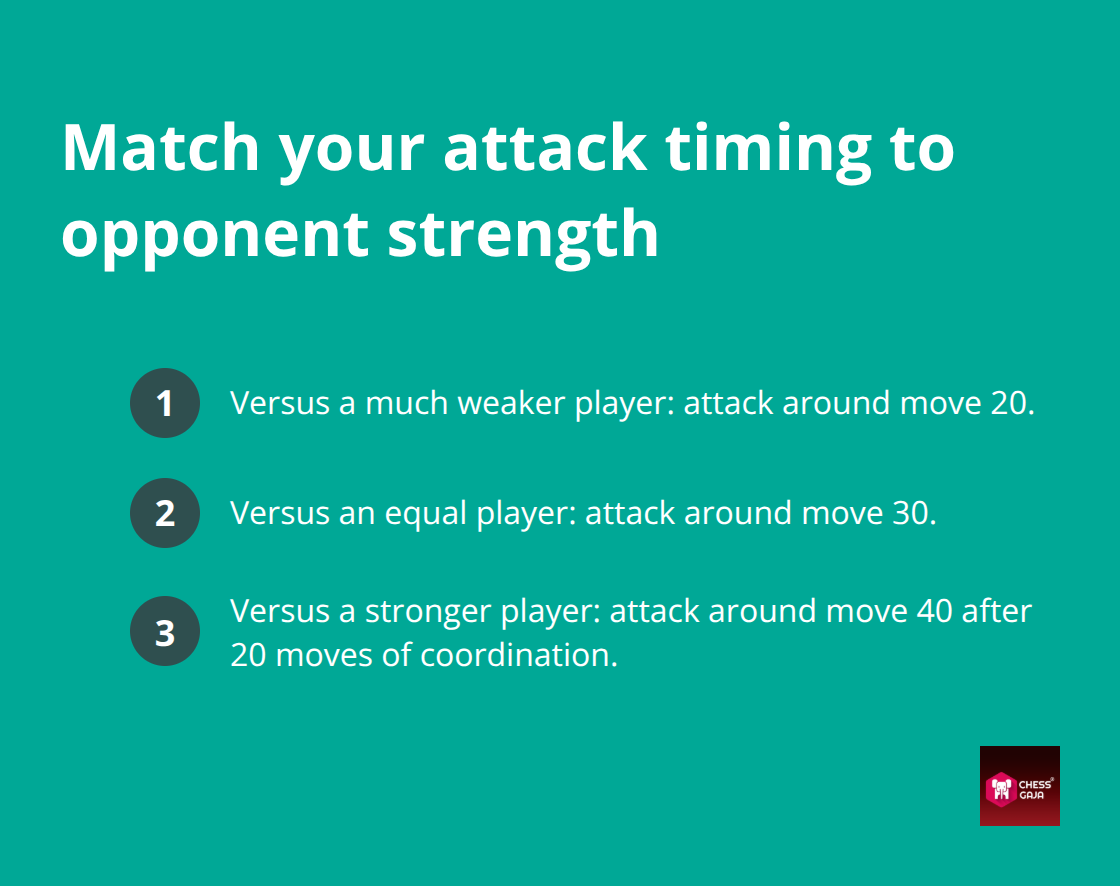
Converting a small advantage into a winning position requires adjusting your expectations based on rating differences and opponent tendencies. Against a lower-rated opponent, tactical mistakes often happen early, yielding quick material gains. Against an equal or higher-rated player (1300+), don’t expect immediate blunders. You must plan for a longer game where victory comes from methodically accumulating small positional advantages rather than forcing early, uncoordinated attacks. This is not pessimism. This is realism. A player who expects to win quickly against a stronger opponent makes impatient moves, gets counterattacked, and loses. A player who expects a long grinding game makes solid improving moves, waits for the opponent to crack under pressure, and wins.
Against a weaker opponent, you can attack more aggressively because they make defensive mistakes. Against an equal or stronger opponent, you must build pressure without forcing moves. Otherwise, they will find saving tactics and punish overextended pieces.
Review games where players at your rating lost to slightly higher-rated opponents. In most losses, the losing player made a forcing move too early. Conversely, when lower-rated players beat masters, they made quiet improving moves for twenty turns until the opponent cracked under pressure. This pattern repeats across thousands of master games.
Matching Your Move Intensity to Your Opponent’s Strength
Adjusting your strategy means matching your move intensity to your opponent’s strength. Against a lower-rated player, you may find tactical openings to launch a decisive attack earlier in the game. Against an equal or stronger player, expect to spend significantly more time building piece coordination and prophylactic control before launching a breakthrough.
This sounds slow, but it is the fastest way to win because it prevents tactical counterplay and forces your opponent to suffer a slow positional death instead of finding a saving tactic. The opponent who expects a quick attack will make defensive moves that weaken their position. The opponent who faces patient, methodical pressure eventually runs out of resources and makes the mistake that loses the game.
Final Thoughts
Honest analysis of your own games, structured training that builds pattern recognition, and consistent coaching feedback transform your maneuvering in the middlegame.
Start by reviewing your last five losses and write down the move where your position shifted from equal to losing. In most cases, that move happened because you attacked before your pieces coordinated, ignored your opponent’s plan, or failed to improve your worst piece first—this data tells you exactly what to fix.
Training methods matter far more than raw hours played. Playing fifty games without analysis teaches you almost nothing, but playing five games and analyzing each one for thirty minutes teaches you everything.
When you review a game, ask what your pieces lacked in coordination, what your opponent tried to accomplish that you missed, and which improving move would have changed the outcome. After ten games analyzed this way, patterns emerge and show whether you attack too early, ignore prophylactic defense, or leave your worst piece unimproved.
At Chess Gaja, our coaches identify your specific maneuvering weaknesses through game analysis and build a personalized study plan that targets those weaknesses. A Paid Starter Class with a Chess Gaja coach gives you a professional skill evaluation that shows exactly where your middlegame planning breaks down and what to fix first.