

Last month, a Chess Gaja student went from 1200 to 1450 rating in just three months. Surprisingly, the secret was not solving lots of random puzzles. Instead, it was structured chess tactics training.
Most chess tactics training fails because players practice with no goal or plan. We will show you proven ways to boost your tactical vision and rating.
Why Does Traditional Tactics Training Fail?
Many club players solve lots of puzzles daily on Lichess and Chess.com. Yet their tactical vision often stays flat in real games. The reason is simple: How you practice matters more than how many puzzles you solve. Random computer-made puzzles give a false sense of gain. You already know a tactic is there in every puzzle. Real games work differently. You must first spot the chance. Then you work out the right moves.
The Context Problem
Traditional puzzle practice skips game context. As a result, players can become pattern-matching machines instead of true tactical calculators. In fact, research from chess training studies shows something important. Players who solve themed puzzles alone often struggle to use these same patterns in real games. Why does this happen? The brain treats puzzle mode and game mode as two different tasks. So, players need real positions with many choices, not narrow puzzles built for one trick.
The Progressive Structure Gap
Most players jump between easy and hard puzzles with no clear progression. However, effective tactics training needs structured difficulty levels. These levels should build on earlier skills. Coaching experience shows something clear. Players improve faster when they first master basic forks and pins. Then they can try complex combinations. The Woodpecker method uses this idea well. Players repeat the same set of tactical exercises across several cycles. As a result, they solve them faster each time. They also keep high accuracy. This beats solving random puzzles. However, skipping this structure leaves gaps in a player’s tactical foundation. It also limits growth.
The Speed Versus Accuracy Trap
Players often rush through puzzles to hit high daily counts. They focus on speed, not calculation quality. This trains the wrong mental habits. Coaches often find something useful. Spending 30-40 minutes on one complex position builds stronger visualization. This beats rushing through many quick puzzles. Why? The brain needs time to process patterns deeply. It also needs time to build lasting neural pathways. Surface-level recognition is not enough. As a result, speed comes naturally once accuracy becomes automatic.
Now that we understand why traditional methods fail, let’s look at training approaches that produce measurable rating gains.
Effective Chess Tactics Training Methods That Show Results
Three proven chess tactics training methods fix the flaws in traditional puzzle practice. They consistently produce measurable rating gains when players apply them the right way.
Spaced Repetition with Pattern Mastery
The Woodpecker method offers a structured approach to solving chess puzzles for better pattern recognition. Start with basic fork and pin exercises from books like Chess Tactics for Champions. Spend 5-10 minutes per position at first. Then cut this time with each repeat cycle. By the final cycle, your total time for the set should drop a lot. Basic patterns will take mere seconds to spot. This method builds automatic pattern recognition that carries over to real games where you must spot tactics fast.
Master Game Position Analysis
Study key positions from grandmaster games. Good examples include games by Mikhail Tal or Garry Kasparov. Instead of starting right at the tactical explosion, start a few moves before the critical combination occurs. Spend 15-20 minutes per position. First, find the candidate moves. Then calculate forced lines, such as checks, captures, and threats. Next, test your work against GM analysis before revealing the answer. This builds your sense for when tactics become possible. It is not just your ability to calculate them after you spot them. ChessBase Magazine provides excellent examples of this type of material. It includes detailed annotations that explain the thought process behind each move.
Time-Pressure Tactical Drills
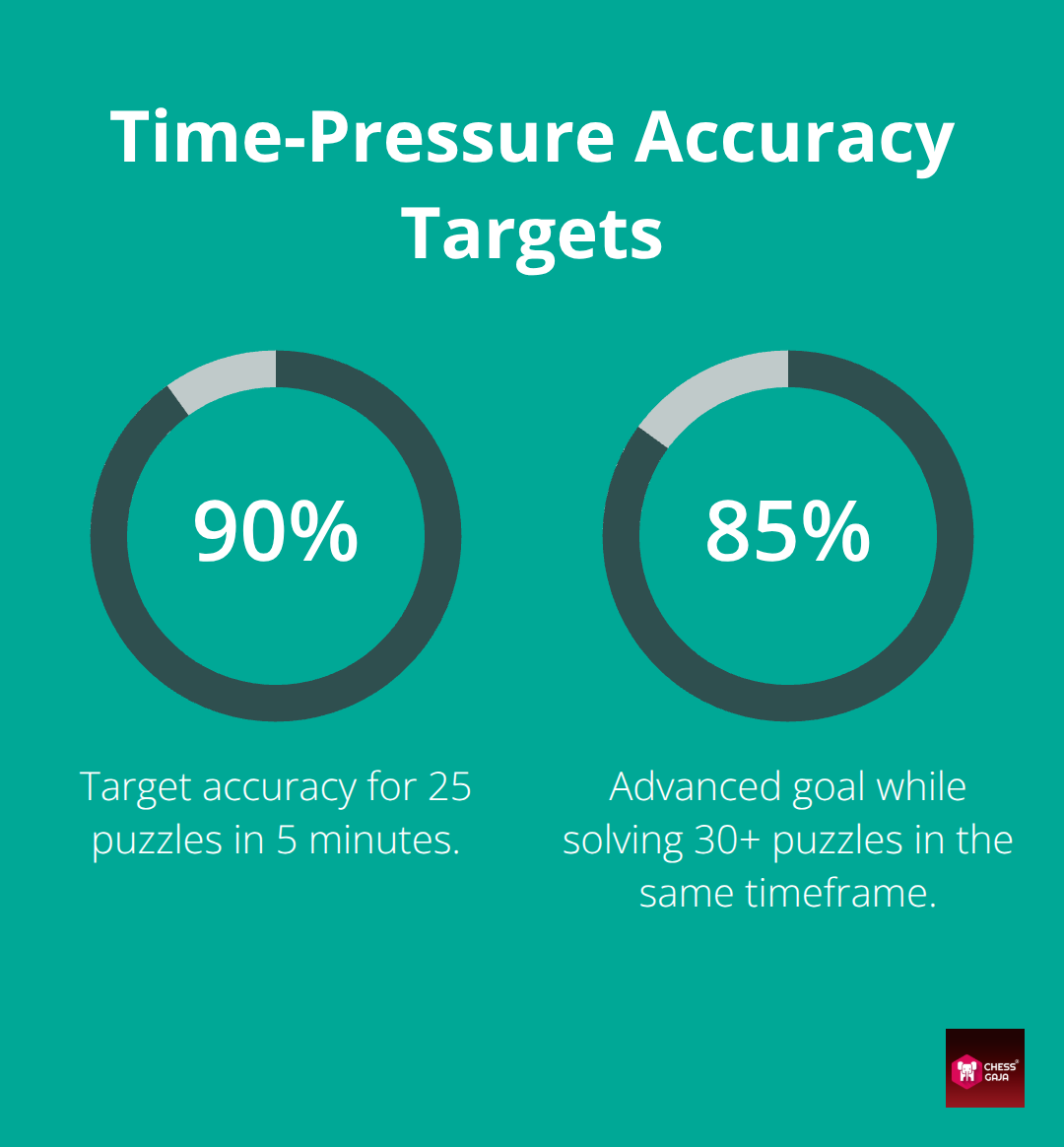
Practice tactics under tournament time pressure on Lichess Puzzle Storm or Chess.com Puzzle Rush. Set clear targets. First, solve 25 puzzles in 5 minutes with 90% accuracy. This builds the speed and precision you need when time gets critical in real games. Advanced players should aim higher. They should solve 30+ puzzles in the same time while keeping accuracy above 85%.
The pressure simulation helps bridge the gap between practice and competitive play.
These methods work because they mirror real game conditions and build lasting tactical skills. Next, we’ll show you how to fit these methods into a daily practice routine.
Building a Structured Chess Tactics Training Routine
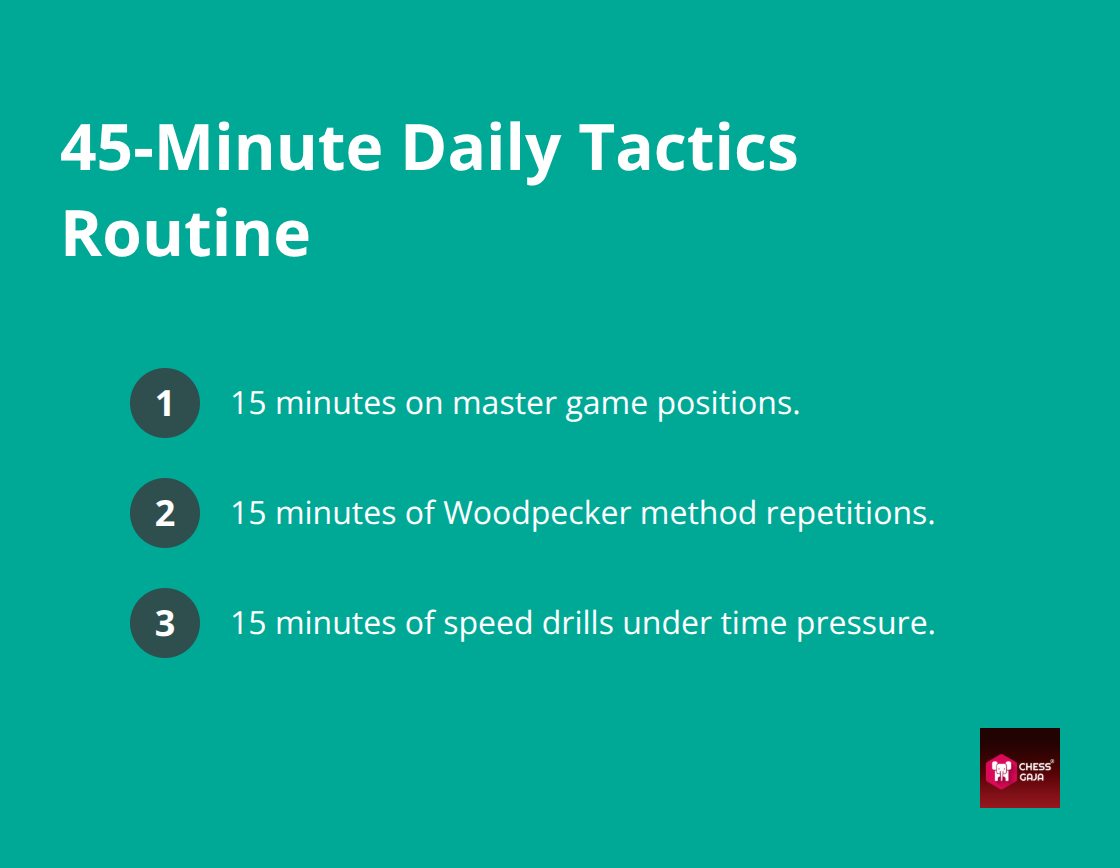
A structured chess tactics training routine turns random puzzle sessions into steady skill growth. Set aside 45 minutes daily. Split this time into three 15-minute blocks. First, engage in strategic game analysis by studying new tactical positions from master games. Next, do Woodpecker method repetitions. Then finish with speed drills under time pressure. This split builds pattern recognition and calculation speed together. It also trains your brain to spot these patterns fast during real games. As a result, structured routines beat random puzzle solving every time.
Daily Training Schedule for Rating Improvement
Start each session with one fresh tactical position from a grandmaster game. Pick positions with multiple candidate moves, not obvious puzzles. Spend 15 minutes on this phase. Work through the candidate moves and forced lines. Then move to your Woodpecker repetitions. Complete the same set of 50 basic tactical positions. Cut your time per position with each cycle.
Finish with speed drills on platforms like Lichess Puzzle Storm or Chess.com Puzzle Rush (aim for 25 puzzles in 5 minutes with 90% accuracy).
Tracking Progress and Identifying Weak Patterns
Document every missed tactic by pattern type in a simple spreadsheet. Note whether you failed to spot pins, forks, discovered attacks, or deflection tactics. After 50 recorded mistakes, clear patterns emerge. These patterns guide your focus areas. Players who track their errors improve much faster than those who practice without direction. Use platforms like Lichess insights to analyze your puzzle data automatically. Then spend 60% of your practice time on your three weakest tactical motifs.
Combining Online Tools with Coach Feedback
Schedule weekly tactical sessions with a qualified instructor. He reviews your practice positions and catches calculation errors you miss when training alone. Share your tracking data with your coach to build targeted lesson plans. Coaches can also show positions from their own games. These give you real examples that computer-generated puzzles cannot match. This mix of structured self-practice and expert guidance speeds up improvement far more than solo study alone.
Final Thoughts
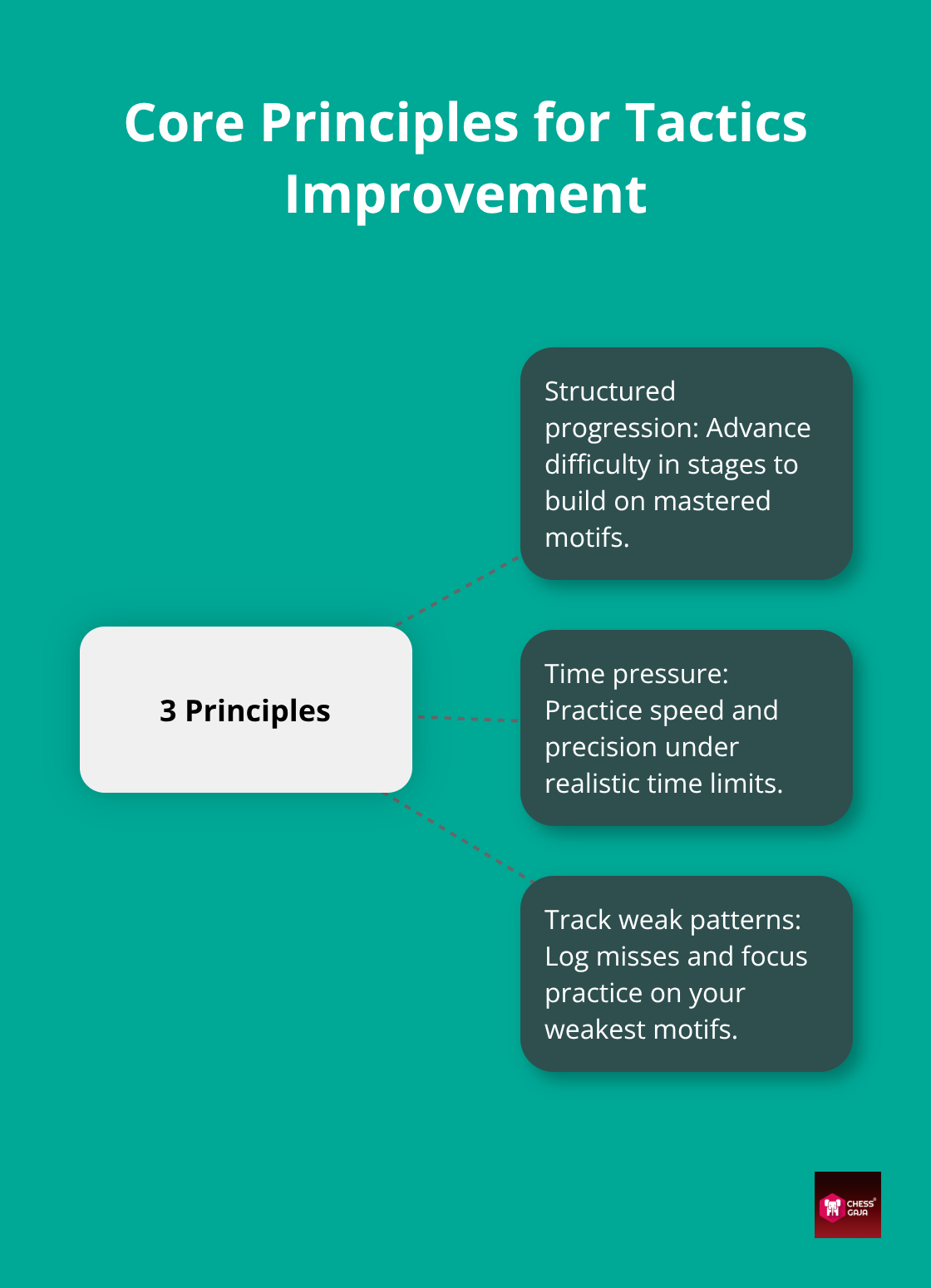
Effective tactics training in chess rests on three principles. First, use structured progression through difficulty levels. Second, practice consistently under time pressure. Third, track your weak patterns systematically. Players who follow these methods often see 100-150 rating point gains within three months. Results vary based on starting level and consistency. Continued improvement occurs over six to twelve months of dedicated practice.
Take action now. Start with the 45-minute daily routine. First, tackle master game positions. Then progress to Woodpecker method repetitions. Finally, finish with speed drills. Track every missed pattern in a spreadsheet. Focus 60% of your practice time on your three weakest tactical motifs. This creates targeted improvement instead of random practice.
We at Chess Gaja provide personalized instruction and detailed analysis. We help you accelerate your tactical development. Our coaches help students implement structured training methods for chess tactics that produce measurable results. Begin your structured tactics training today. Watch your tactical vision transform from random pattern matching into precise calculation skills that win games.