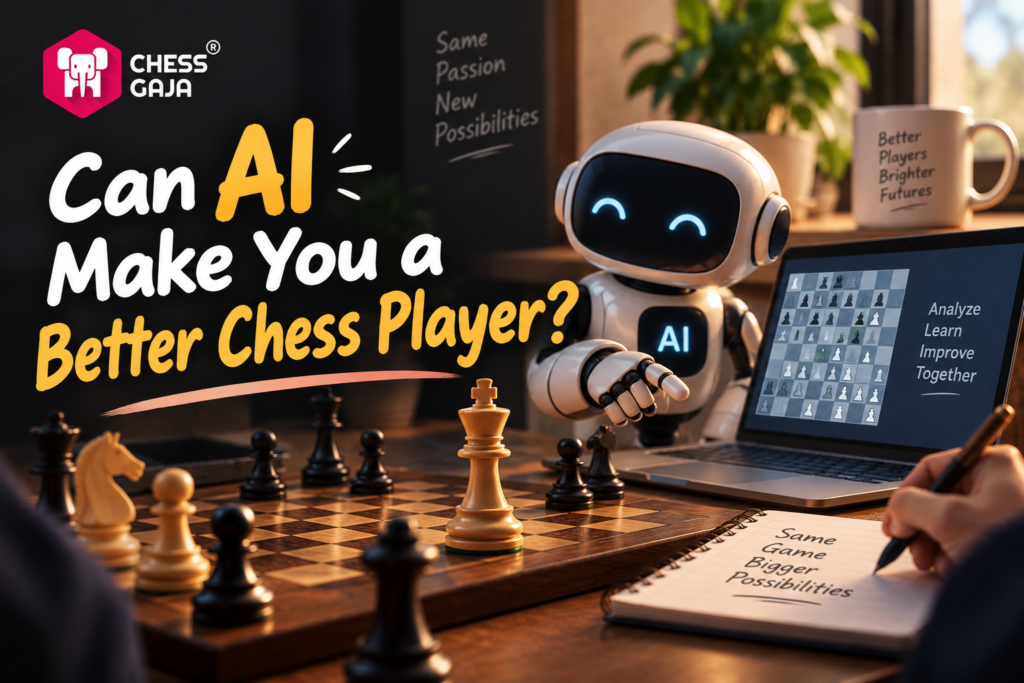
Your chess coach used to spend hours analyzing your games alone. Now, AI-aided coaching changes that equation by handling routine analysis instantly, freeing your coach to focus on what matters: your strategic growth and competitive confidence.
At Chess Gaja, we’ve seen firsthand how combining Grandmaster guidance with AI tools accelerates student improvement across 40+ countries. The misconception that AI replaces human coaches couldn’t be further from the truth-it amplifies them.
Human expertise plus AI precision isn’t the future of chess development. It’s happening right now.
How AI Instantly Analyzes Your Games While You Play
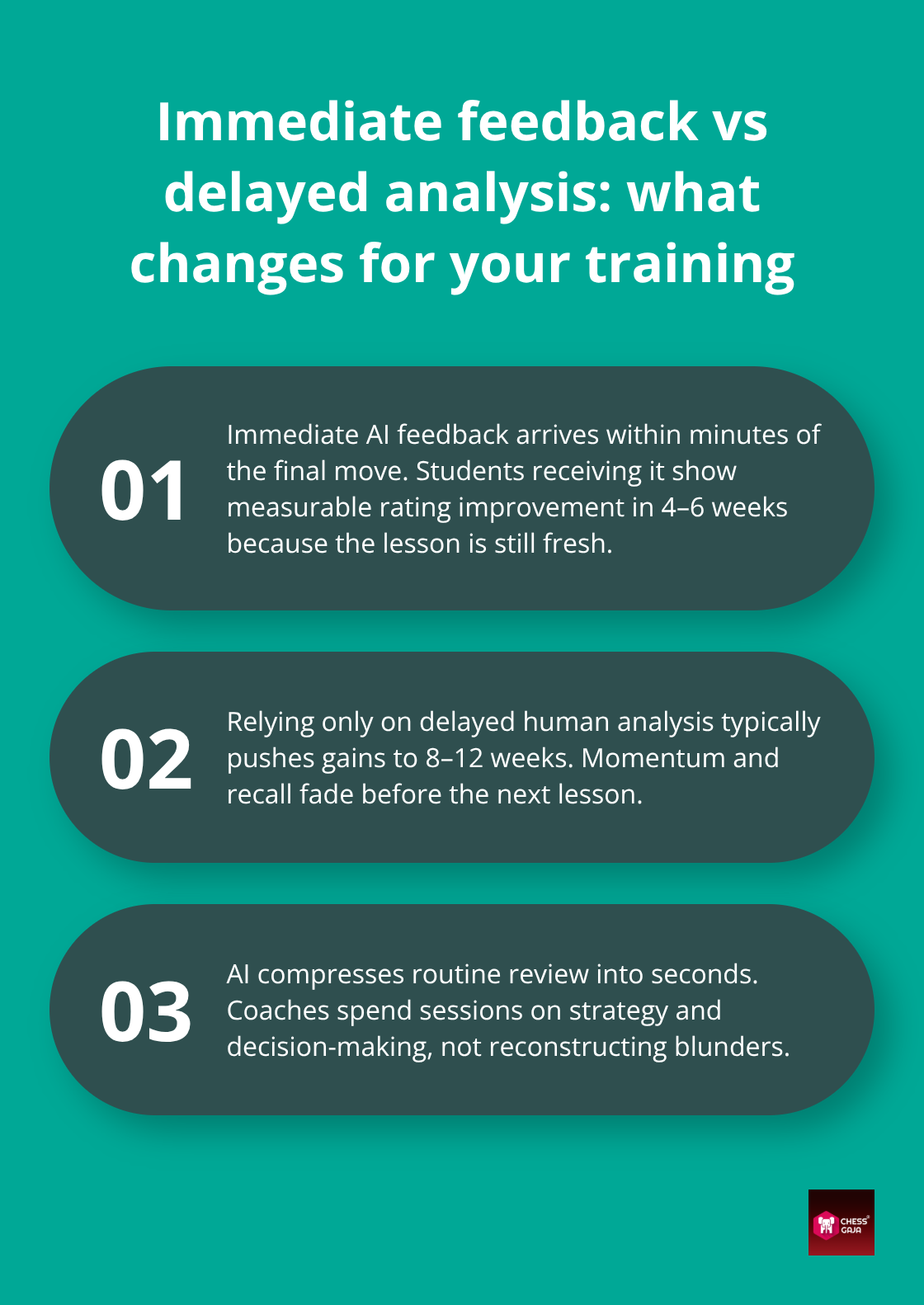
When a student in Dubai finishes an online tournament game at 11 PM, their coach doesn’t need to wait until the next morning to begin analysis. AI-powered systems now process game data in real time, flagging critical mistakes, missed tactics, and positional errors within minutes of the final move. This speed matters. Students who receive immediate game feedback experience faster rating progress than those relying solely on delayed analysis. The advantage is psychological. When you review mistakes while decisions remain fresh, lessons stick far better.
AI does not replace human judgment. It compresses routine work into seconds. This allows your coach to focus session time on strategy rather than explaining a move-15 blunder.
Real-Time Pattern Recognition Across Your Game History
AI systems connected to your Chess.com or Lichess account identify recurring weaknesses that you might not see yourself. A student in Singapore might notice they’re losing games in the endgame, but AI analysis reveals the actual problem: they consistently misplace their king in the middlegame, creating vulnerabilities three moves later. This granular insight-drawn from analyzing 50, 100, or even 500 of your games-creates a personalized learning path that targets your specific blind spots rather than generic chess concepts. Your coach then prioritizes training on precisely those positions, using targeted drills that mimic your actual mistakes. Studies on learning retention show that error-specific feedback produces substantially faster skill acquisition than general instruction.
Automated Session Summaries That Track Real Progress
After every coaching session, AI generates a summary document within hours: what was covered, which concepts you struggled with, which you mastered, and what to practice before the next session. This isn’t generic-it references your specific games, your rating trajectory, and your goals. A student in New York can review the summary on their phone during lunch, see the exact positions their coach analyzed, and understand the homework without waiting days for email notes. Progress tracking becomes transparent: you can see your improvement in specific areas (tactical vision, opening preparation, endgame technique) measured week to week, not just your rating points. When improvement is visible and measurable, motivation compounds.
How Coaches Redirect Their Focus
The time AI saves on routine analysis creates space for what human coaches do best. Your coach shifts from spending two hours annotating your games to spending that time designing custom drills, explaining strategic concepts, and building your competitive confidence. This reallocation of effort means your coach addresses the thinking patterns behind your mistakes, not just the mistakes themselves. A coach in the UAE can now work with five students instead of three, each receiving deeper strategic mentorship because the administrative burden has shrunk. The result: more personalized attention, not less.
Your games now feed directly into your next lesson, creating a continuous feedback loop where AI-assisted analysis handles the data and your coach handles the development.
What AI Actually Does in Chess Coaching
The fear that AI will replace human coaches is understandable but misses how the technology actually works in practice. AI cannot teach competitive confidence, adjust strategy mid-lesson based on a student’s emotional state, or mentor a young player through the psychological pressure of their first tournament. What AI does is handle the mechanical work: analyzing 50 games to find patterns, organizing position databases, and producing session summaries. This allows coaches to deliver higher-quality, individualized attention to every player because automated data processing replaces hours of manual analysis.
The coach’s expertise becomes sharper, not redundant.
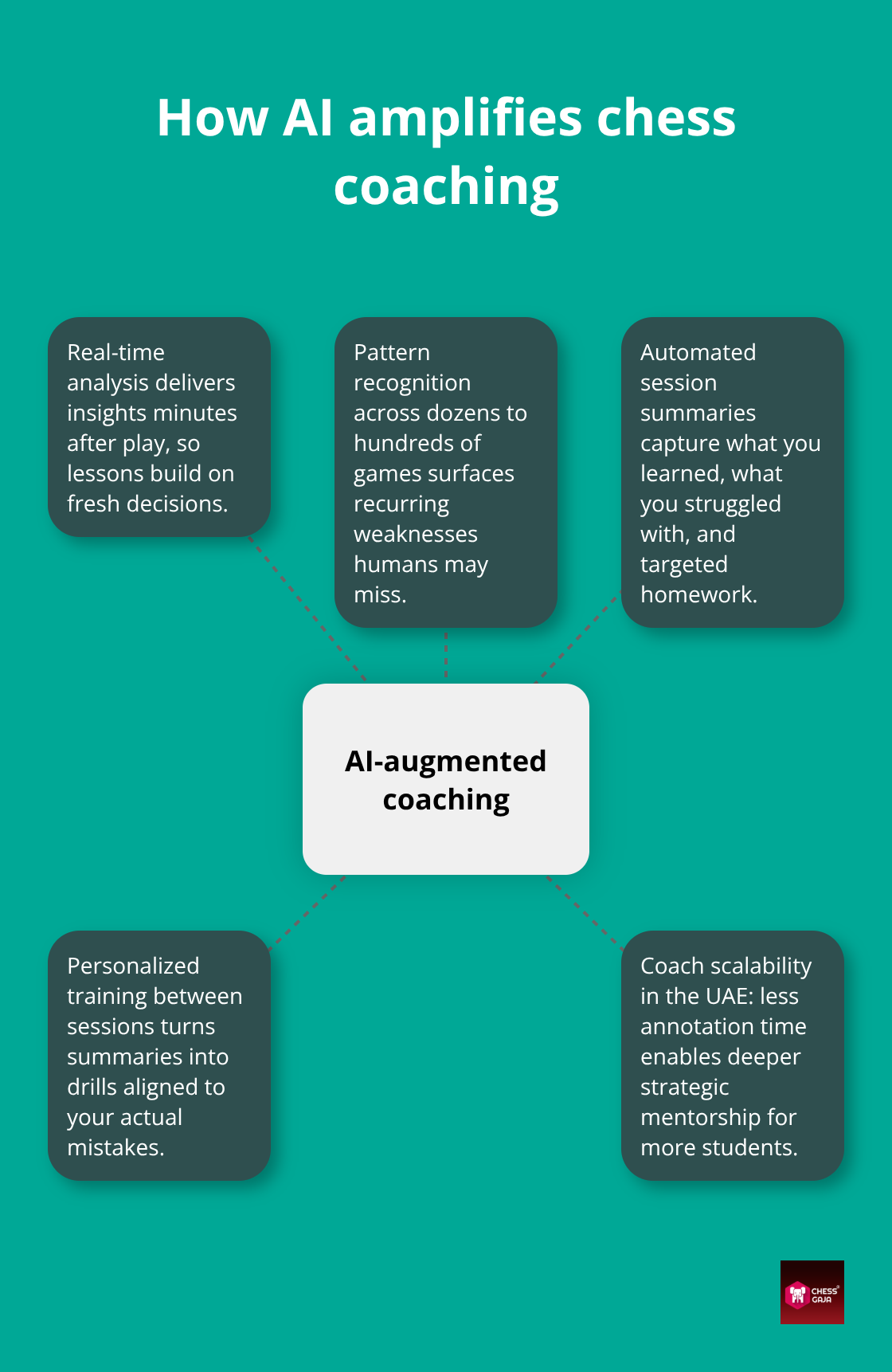
AI Handles Routine Work So Coaches Focus on Strategy
After every session, AI produces a personalized summary within hours—not a generic template, but analysis tied directly to that student’s games, rating trajectory, and goals. Your coach reviews this summary before your next lesson to target recurring tactical patterns and positional gaps. By replacing hours of manual game annotation with instant data-driven insights, your coach can focus entirely on strategic development, psychological preparation, and actionable game plans.
Real Personalization Requires Data, Not Assumptions
Many coaches claim instruction is personalized, yet assign identical drills to every student. Real personalization relies on data. It pinpoints your exact positional mistakes and tactical confusion across your game history. AI connected to your Chess.com or Lichess account, AI analyzes dozens of games automatically. A student in Singapore may blame time management, but AI shows recurring piece placement errors in closed positions. Your coach then builds drills for that exact flaw. AI analyzing your last hundred games learns how you think.
Beginners Benefit Just as Much as Advanced Players
The belief that AI coaching only works for strong players comes from confusing raw engines with guided coaching systems. Engines require deep chess knowledge to interpret. In contrast, beginner-focused AI-powered coaching systems simplify analysis into clear language, explain why a move failed, and suggest what to practice next. A young player in Abu Dhabi can receive instant, age-appropriate feedback—something a busy coach cannot deliver for ten students at once.
Immediate feedback accelerates growth at every stage. Beginners learn where their piece placement failed, intermediate players grasp missed strategic ideas, and advanced players refine deep variations. By adapting feedback depth to your current level, AI coaching provides equal value for club players and seasoned competitors alike.
The Real Advantage: Training Between Sessions
The students who benefit most are often the ones who train between lessons-and AI-powered tools make that training focused and efficient rather than directionless. A student in New York can review session summaries right from their phone. They see analyzed positions instantly without waiting days for email notes. Progress tracking becomes clear across specific skills like tactical vision, opening prep, and endgame technique. When growth is visible week to week, motivation compounds. Your games feed straight into your next lesson. This creates a tight loop where AI manages the data and your coach guides your development.
How to Train Smarter Between Coaching Sessions
Real improvement happens between lessons. Most students waste this time solving generic puzzles unrelated to their weaknesses. AI-powered coaching systems fix this by turning your session summaries into a clear, personalized training roadmap. After your lesson ends, AI generates specific recommendations within hours: which tactical patterns to practice, which opening positions to study, which endgame positions to master. A student in Dubai receives homework tied directly to mistakes made in their last tournament game, not a generic list of topics. This specificity matters because focused practice produces faster skill acquisition in competitive domains. Your coach identifies the weak spot; AI creates the drill; you practice the exact position that cost you a game last week. This cycle repeats every session, meaning your training compounds week after week rather than drifting toward whatever interests you most.
Connect Your Account for Automatic Game Analysis
The real power emerges when you connect your Chess.com or Lichess account. AI analyzes your games automatically to track opening setups, middlegame struggles, and endgame conversion rates. A student may suspect a king safety problem, but AI reveals flawed rook endgame technique. Your coach then focuses upcoming sessions on rook activity and pawn pushes. Meanwhile, AI monitors your progress in similar online positions.
Measure Progress in Specific Skills
Progress becomes measurable in specific areas: your tactical calculation in sharp lines tightens up, your opening evaluation stability improves, and your endgame conversion rate becomes far more consistent. Clear performance metrics appear in your progress dashboard week to week, creating tangible evidence that your work between sessions actually moves you forward.
Students who track progress report higher motivation. Concrete data proves you are mastering the skills that matter, not just grinding rating points.
Transform Homework Into Targeted Practice
AI-powered systems convert generic homework into position-specific drills that match your actual mistakes. Instead of solving random puzzles, you practice the exact tactical pattern that appeared in your last game. Instead of studying opening theory broadly, you focus on the specific lines you play. This targeted approach ensures every training hour addresses a proven weakness. The feedback loop tightens quickly. Your online games feed straight into your next lesson while your coach guides strategic growth.
Final Thoughts
The fastest-improving students are not those buying expensive software. They are players whose coaches focus on strategy, psychology, and skill development rather than routine game analysis. AI-aided coaching handles mechanical reviews. This frees your coach to teach what only humans can teach: high-level strategic thinking.
At Chess Gaja, our FIDE-rated coaches across 40+ countries combine Grandmaster guidance with AI-powered feedback between lessons. Your coach brings competitive experience and psychological insight. Meanwhile, AI analyzes your game history to reveal hidden patterns. When lesson time focuses purely on strategic concepts and your homework targets exact mistakes, your growth accelerates rapidly.
Book a Paid Starter Class with Chess Gaja to experience how Grandmaster guidance combined with AI-aided coaching accelerates your development. Your coach will evaluate your current level, identify your specific weaknesses, and design a personalized study plan that works for your rating and goals.